AI estimate as of July 28, 2025 · verify with a professional before acting
AI-Generated · Verify before acting
Everything on this page is generated by AI for informational purposes only. AI can make mistakes — the AI may misidentify items or misattribute them (artist, maker, brand, designer, origin, era). This is not an official valuation and should not be used for insurance, sale, tax, estate, legal, or lending purposes — or any decision requiring a certified appraisal. It is not an authoritative claim about any person, brand, or rights holder — do not share or rely on it as a factual statement about a third party. Always consult qualified professionals before making financial decisions.
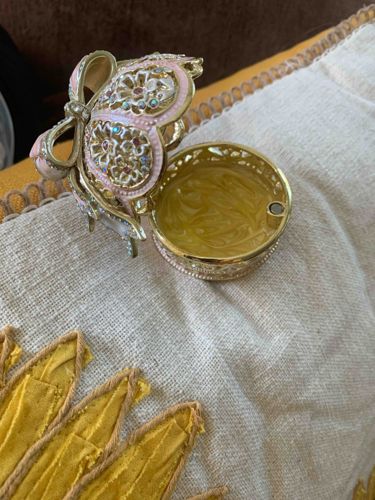
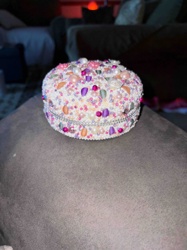
This item is a decorative trinket box, designed to resemble a butterfly or possibly a stylized bow. The overall construction appears to be of a metal, likely an alloy, with a gold-tone finish that gives it a luxurious appearance. The dominant colors are a soft, delicate pink enamel on the 'wings' or main body, accented by numerous small, multi-colored rhinestones or crystals. These crystals, in shades of blue, red, clear, and possibly yellow/orange, are set into ornate, openwork patterns on the surface, adding sparkle and intricate detail. A prominent feature is the top, which opens on a hinge to reveal a small, circular compartment. The interior of this compartment is finished with a marbled or swirled yellow enamel, presenting a smooth, glossy surface ideal for holding tiny items. The inner rim of the bottom portion of the box, as well as the outer edge of the lid, show fine scrollwork or beaded detailing, indicative of attention to ornamental design. A small, circular magnet is visible on the interior rim of the bottom piece, suggesting a magnetic closure mechanism for the lid, ensuring it stays shut securely. The craftsmanship suggests it is a mass-produced item, though with a good level of detail for its type. There are no obvious signs of significant wear or damage, such as scratches or chips to the enamel, and the rhinestones appear to be intact. The gold-tone finish seems well-preserved. It likely dates from the latter half of the 20th century to early 21st century, falling into a contemporary decorative style, possibly Shabby Chic or a similar ornate aesthetic. Its primary function is decorative storage for small valuables like rings or pills.
AI Appraisal Report
Upon visual examination of the Butterfly/Bow Enamel and Rhinestone Trinket Box, I note its very good condition. The piece is constructed from a gold-tone metal alloy, adorned with soft pink enamel on the exterior and a marbled yellow enamel on the interior. The surface is further embellished with colorful, intact rhinestones set in an ornate pattern. The hinge and magnetic clasp appear functional, and there are no significant chips, scratches, or missing stones visible. Based on its design and materials, I assess this to be a mass-produced decorative item from the late 20th or early 21st century, rather than a fine antique. Its value is primarily decorative rather than being tied to precious metals or gemstones.
The market for such trinket boxes is broad and active, particularly on online platforms like Etsy and eBay. Comparable items, often sold under brand names like 'Keren Kopal' or as unbranded 'Faberge-style' pieces, typically fetch prices in a modest range. The primary value drivers are aesthetic appeal and condition. The demand is steady for decorative and giftable items like this, but its mass-produced nature limits its rarity and potential for high value appreciation.
A significant limitation of this appraisal is that it is based solely on images. An in-person examination would be required to confirm the base metal, test the stones to rule out genuine crystals, and identify any maker's marks that are not visible in the photos. Without such marks or provenance, definitive identification of the manufacturer or specific era is impossible. However, based on the current market data for similar decorative objects, the value is well-established.