AI estimate as of July 6, 2025 · verify with a professional before acting
AI-Generated · Verify before acting
Everything on this page is generated by AI for informational purposes only. AI can make mistakes — the AI may misidentify items or misattribute them (artist, maker, brand, designer, origin, era). This is not an official valuation and should not be used for insurance, sale, tax, estate, legal, or lending purposes — or any decision requiring a certified appraisal. It is not an authoritative claim about any person, brand, or rights holder — do not share or rely on it as a factual statement about a third party. Always consult qualified professionals before making financial decisions.
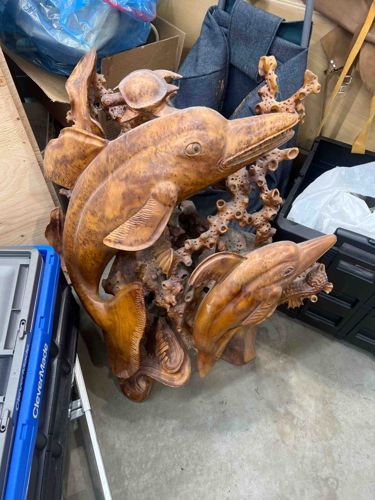
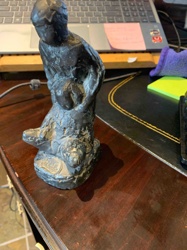
This appears to be a large, intricate wooden sculpture depicting marine life, primarily dolphins, amidst coral and possibly a sea turtle. The sculpture is crafted from a medium to dark brown wood, exhibiting a rich, natural grain visible throughout. The surface appears to be polished or varnished, giving it a smooth, semi-gloss finish. Two prominent dolphins are carved with anatomical accuracy, showcasing their typical sleek bodies, fins, and distinctive snouts. The eyes of the larger dolphin are discernible and appear to be inlaid or painted for a lifelike effect. Surrounding the dolphins is an elaborate representation of coral, characterized by its porous, branching formations. A smaller sea turtle is also visible, perched on the coral. The entire composition rests on a substantial, organic-shaped base, which seems to be seamlessly integrated into the sculptural elements, mimicking natural rock or twisted roots. The craftsmanship indicates a detailed and skilled hand, with attention paid to the textures of the animals and the coral. There are no obvious signs of significant damage like cracks or breaks, but some minor wear or dust might be present given its apparent storage location. The overall aesthetic suggests a naturalistic or coastal decorative style, likely from the late 20th century or early 21st century. The size appears considerable, likely a floor-standing or large table-top piece, though exact dimensions are not provided. The quality of the carving, especially the naturalistic forms and textural rendering, points to a piece made with considerable skill.
AI Appraisal Report
Upon my virtual examination of this large wooden sculpture depicting dolphins, coral, and a sea turtle, I find it to be a skillfully carved piece. The condition appears very good, with no obvious cracks or significant damage visible in the image. The polished finish and detailed carving suggest a high level of craftsmanship. Authenticity, based solely on visual cues, indicates it is a genuine hand-carved wooden artwork, likely from the late 20th or early 21st century. I can discern the natural wood grain and the intricate details, which is consistent with hand carving. However, full authentication would require in-person examination to verify the type of wood, carving techniques (e.g., tool marks), and to rule out any composite materials or synthetic finishes that might mimic wood. Provence documentation, if available, would also be crucial to confirm its origin and artist.
In terms of market conditions, large-scale, well-executed animal sculptures, especially marine themes, generally hold a steady demand within the decorative arts market. Comparables for such intricate wooden sculptures range widely depending on the artist's renown, size, and wood type. Pieces of this apparent quality and size often sell in the mid to high hundreds. While not exceptionally rare, the quality of carving elevates it above mass-produced items. Factors significantly impacting its value include its excellent condition, the intricate detail, and the aesthetically pleasing composition. The lack of a known artist's signature or specific provenance limits its 'collectible' value to some extent, placing it more firmly in the decorative art category. Should an artist be identified, or if provenance can be established, the value could increase.