AI identification & appraisal estimate

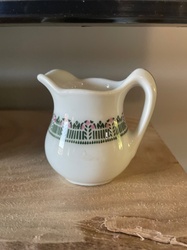
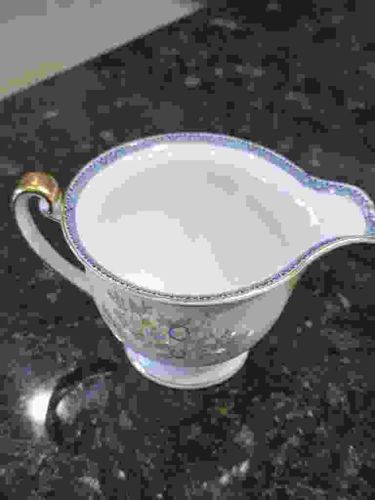
Vintage Gild-Trimmed Fine China Creamer

This name is the AI's identification of the item — it may be incorrect.

Submitted photo of Vintage Gild-Trimmed Fine China Creamer
Photo submitted by the user — not generated by AI

User's notes

lip has damage

These notes were written by the person who submitted this item. Appraiser.AI has not verified them, and the AI's identification and estimate may rely on them.

AI Estimated Value

Not an official valuation

$5.00 - $12.00

AI estimate as of March 10, 2026 · verify with a professional before acting

AI-Generated · Verify before acting

Everything on this page is generated by AI for informational purposes only. AI can make mistakes — the AI may misidentify items or misattribute them (artist, maker, brand, designer, origin, era). This is not an official valuation and should not be used for insurance, sale, tax, estate, legal, or lending purposes — or any decision requiring a certified appraisal. It is not an authoritative claim about any person, brand, or rights holder — do not share or rely on it as a factual statement about a third party. Always consult qualified professionals before making financial decisions.

This analysis also relies on unverified notes provided by the user, which may be incomplete or inaccurate and could affect the result.

Read the full disclaimer

AI Item Analysis

This item is a vintage fine china creamer, likely part of a mid-20th-century tea or dinner service. It is constructed from white porcelain or bone china, featuring a translucent quality typical of high-quality ceramic. The piece has a traditional globular body tapering down to a raised pedestal foot. A distinctive feature is the ornate scrolling handle, which is heavily accented with gold gilt. The rim is decorated with a patterned blue border, possibly a Greek key or floral motif, flanked by thin gold pinstriping. There appears to be a faint, monochromatic floral or damask-style transfer pattern on the main body of the vessel. Regarding condition, the user has noted damage to the pouring lip, which significantly affects the structural integrity and value of the piece. There is visible wear to the gilding on the handle and the rim, consistent with regular use and age. No maker's mark is visible from this angle, but the style is reminiscent of English or Japanese export porcelain from the 1940s-1960s. The craftsmanship shows refined thin-walled construction, though the noted fracture on the spout is a primary detractor.
AI Appraisal Report

I have carefully examined the provided images and descriptions of this vintage fine china creamer. My visual assessment identifies the piece as likely mid-20th-century bone china, potentially of English or Japanese origin. While the translucent porcelain and the ornate, gold-gilt scrolling handle suggest a high level of original craftsmanship, the item’s condition is the primary factor in its valuation. The significant damage to the pouring lip—a structural fracture—severely compromises the vessel's utility and aesthetic appeal. In the current secondary market for vintage ceramics, 'damaged' pieces typically lose 75-90% of their potential value unless they possess extreme rarity or historical provenance, which does not appear to be the case here. Similar creamers from makers like Noritake or Aynsley in pristine condition typically retail between $25 and $45; however, with visible wear to the gilding and a fractured spout, this item is valued primarily as a decorative 'cabinet' piece or for 'shabby chic' upcycling. Authentication is limited by the absence of a visible maker's mark or backstamp. To provide a definitive origin, I would need to inspect the underside of the pedestal foot for hallmarks. Without physical inspection, I cannot rule out later-period reproductions or verify the exact composition of the gilding. Furthermore, a physical examination would determine if the fracture is stable or likely to propagate. For insurance or high-value authentication, provenance documentation or a confirmed manufacturer mark would be necessary.

Keep exploring

More antique and vintage kitchenware / ceramics appraisals

Get your items appraised

Instant AI-powered appraisal estimates from a photo

Browse More Appraisals