AI Appraisal Estimate

AI-generated estimates · not official valuations

From the user

What was submitted

Photo and notes provided by the user — not generated by AI

Submitted item photo
Submitted photo · June 24, 2026

User's notes

No additional notes provided.

AI analysis below

AI appraisal

AI analysis & estimate

AI-Generated · Verify before acting

Everything below is generated by AI for informational purposes only. AI can make mistakes — the AI may misidentify items or misattribute them (artist, maker, brand, designer, origin, era). This is not an official valuation and should not be used for insurance, sale, tax, estate, legal, or lending purposes — or any decision requiring a certified appraisal. It is not an authoritative claim about any person, brand, or rights holder — do not share or rely on it as a factual statement about a third party. Always consult qualified professionals before making financial decisions.

Read the full disclaimer

AI Identification

·Not independently authenticated·Verify before acting

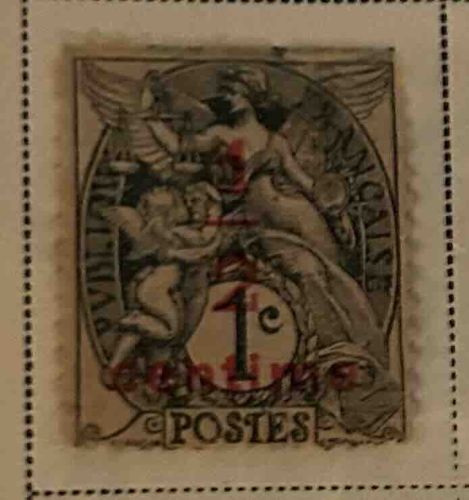
French Sower Type Revenue Stamp (1 Centime)

Revenue Stamp

AI Estimated Value

·Not an official valuation·Verify before acting

$5 - $15

As of June 24, 2026

AI Item Analysis

·AI can make mistakes·Verify before acting
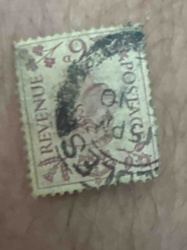
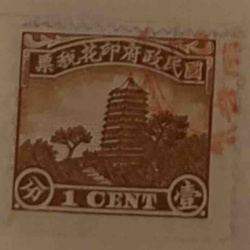
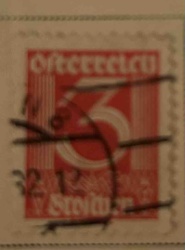
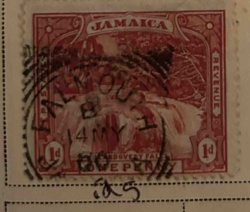
This item is a vintage French revenue stamp, likely from the early 20th century. While it appears to use the iconic 'Sower' design, typically associated with French postal stamps, its primary denomination of '1c' (1 centime) and the prominent 'POSTES' inscription at the bottom strongly suggest it is a fiscal or revenue stamp. The design features a classical allegorical figure, possibly symbolizing Liberty or the Republic, with flowing drapery and wings, holding scales of justice. To her left, a putto or cherubic figure is depicted. The overall composition is intricate, with fine lines and shading indicative of engraving. The colors are predominantly sepia or a muted grayish-brown, with a distinct red overprint indicating the '1c' (1 centime) denomination. The stamp exhibits visible signs of age, including some discoloration and minor wear consistent with its assumed age. The perforations are present around the edges, suggesting it was once part of a larger sheet. The 'R E P V B L I Q V E F R A N Ç A I S E' inscription is visible along the top arc of the design. The quality of printing appears to be good, with crisp details for an item of its type and age, though some areas show slight fading or ink wear. There are no obvious tears or major creases, however, slight creasing may be present due to handling. The exact year of issue would require more specialized philatelic knowledge, but the style is characteristic of French governmental issues from the late 19th or early 20th century.
AI Appraisal Report

·AI can make mistakes·Verify before acting
I have examined the provided image of the French Sower Type Revenue Stamp (1 Centime). Based on my visual assessment, the item appears to be an authentic revenue stamp from France, likely late 19th to early 20th century, utilizing the Sower design. The 'POSTES' inscription and '1c' denomination, combined with the allegorical figure, are consistent with known fiscal issues. The condition is fair to good for its age; I observe visible signs of age including some discoloration and minor wear, consistent with an item over a century old. The perforations are intact, and while slight creasing may be present, there are no obvious tears or significant damage. The red overprint for the denomination is clear. In terms of market conditions, French revenue stamps, particularly lower denominations like the 1 Centime, generally have a steady but not exceptionally high demand. While the Sower design is iconic, revenue stamps typically do not command the same prices as their postal counterparts unless they are a rare variety or in pristine condition. Comparables for common Sower revenue issues in this condition typically range in the single to low double digits. Factors impacting value positively include the clear imprint and the absence of major faults like tears or heavy creasing. Negatively, its common denomination and used condition limit its upper market potential. Rarity for this specific issue is low; similar stamps are readily available in the philatelic market. It is crucial to note the limitations of my authenticity verification. Without physical inspection, I cannot confirm the paper type, watermarks (if any), gum condition, or microscopic printing details that would be essential for full authentication and definitive condition assessment. An in-person examination, potentially including UV light testing, and a review of any existing provenance documentation would be required to rule out counterfeits, reprints, or forgeries, and to confirm the exact catalog number and shade variations that might influence value significantly.

Get your items appraised

Instant estimates of your treasures with AI-powered appraisals

Browse More Appraisals