AI Appraisal Estimate

AI-generated estimates · not official valuations

From the user

What was submitted

Photo and notes provided by the user — not generated by AI

Submitted item photo
Submitted photo · June 17, 2026

User's notes

Italy

AI analysis below

AI appraisal

AI analysis & estimate

AI-Generated · Verify before acting

Everything below is generated by AI for informational purposes only. AI can make mistakes — the AI may misidentify items or misattribute them (artist, maker, brand, designer, origin, era). This is not an official valuation and should not be used for insurance, sale, tax, estate, legal, or lending purposes — or any decision requiring a certified appraisal. It is not an authoritative claim about any person, brand, or rights holder — do not share or rely on it as a factual statement about a third party. Always consult qualified professionals before making financial decisions.

Note

This analysis also relies on unverified notes provided by the user, which may be incomplete or inaccurate and could affect the result.

Read the full disclaimer

AI Identification

·Not independently authenticated·Verify before acting

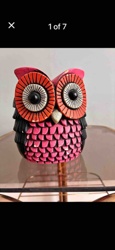
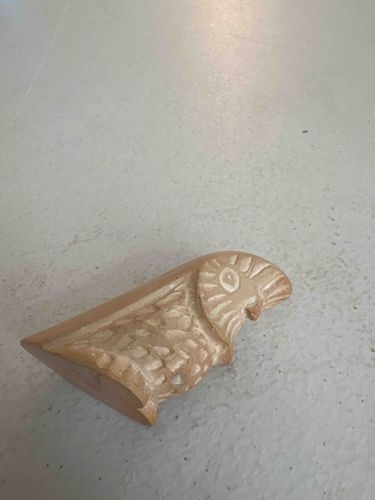
Italian Hand-Carved Alabaster or Soapstone Owl Figurine

Decorative Arts / Collectible Figurines

AI Estimated Value

·Not an official valuation·Verify before acting

$40 - $75

As of June 17, 2026

AI Item Analysis

·AI can make mistakes·Verify before acting
This item is a small, hand-carved stylized owl figurine, likely crafted from Italian alabaster or a similar soft stone such as soapstone or soaprock. The sculpture displays a minimalist, mid-century modern aesthetic, characterized by its geometric, reclining posture and simplified anatomical features. The stone possesses a warm, honey-toned beige or tan coloration with natural white veining and mottling throughout, which is typical of mineral deposits found in the Volterra region of Italy. Physically, the piece features a flat, rectangular base that transitions into a sloped back. The owl's face is defined by deeply incised concentric circular patterns around the eyes and a small, pointed beak. The body is decorated with repetitive scalloped or U-shaped chisel marks intended to represent feathers. The craftsmanship exhibits typical artisan hand-tooling, with visible variations in the depth and spacing of the carvings. The surface appears to have a semi-matte to satin finish, suggesting it was polished but not high-gloss. In terms of condition, there is minor softening of the carved edges due to handling and age, and some localized surface abrasions consistent with its vintage nature. No significant cracks or major chips are immediately visible from this angle, though the stone is naturally soft and prone to minor scuffing. Based on the style and material, it likely dates from the late 1950s to the 1970s, a period when Italian souvenir and decorative stonework was highly popular for export.

AI Appraisal Report

·AI can make mistakes·Verify before acting
Based on my visual examination of this figurine, it is a charming example of mid-century Italian decorative stonework, likely dating to the 1960s or 1970s. The piece exhibits the classic characteristics of alabaster carving from the Volterra region, distinguishable by the warm, honey-toned matrix and cloudy white veining. The stylized, geometric form aligns well with the modernist souvenir aesthetic popular during the post-war tourism boom in Italy. The carving technique—specifically the U-shaped gouges representing feathers and the deep concentric circles for eyes—is consistent with hand-tooling, though likely produced in a workshop setting rather than by a named master artist. The condition appears fair to good for its age. I note the expected surface abrasions and softening of the details, which confirms the softness of the material (moh hardness of 1-2 for soapstone or 3 for alabaster). There are no visible catastrophic fractures, though these soft stones are notorious for 'bruising' which can be hard to spot in photos. Market comparables for similar mid-century Italian animal figurines generally trade in the $40 to $75 range. While genuine alabaster pieces from Volterra can command higher prices if they are larger or signed by a specific atelier, this example is relatively small and unsigned, placing it firmly in the decorative collectible category rather than fine art. Limitations: Without physical handling, I cannot confirm the specific density or 'feel' of the stone to definitively distinguish between high-grade alabaster and softer soapstone variations. An in-person inspection would also be necessary to check the base for any faint remnants of 'Made in Italy' foil labels or etched signatures that often wear off over time.

Get your items appraised

Instant estimates of your treasures with AI-powered appraisals

Browse More Appraisals