AI Appraisal Estimate

AI-generated estimates · not official valuations

From the user

What was submitted

Photo and notes provided by the user — not generated by AI

Submitted item photo
Submitted photo · May 30, 2026

User's notes

No additional notes provided.

AI analysis below

AI appraisal

AI analysis & estimate

AI-Generated · Verify before acting

Everything below is generated by AI for informational purposes only. AI can make mistakes — the AI may misidentify items or misattribute them (artist, maker, brand, designer, origin, era). This is not an official valuation and should not be used for insurance, sale, tax, estate, legal, or lending purposes — or any decision requiring a certified appraisal. It is not an authoritative claim about any person, brand, or rights holder — do not share or rely on it as a factual statement about a third party. Always consult qualified professionals before making financial decisions.

Read the full disclaimer

AI Identification

·Not independently authenticated·Verify before acting

Exfoliated Vermiculite Concentrate

Industrial Minerals / Horticultural Supplies

AI Estimated Value

·Not an official valuation·Verify before acting

$45.00 - $65.00 per 4-cubic foot bag (bulk market rate)

As of May 30, 2026

AI Item Analysis

·AI can make mistakes·Verify before acting
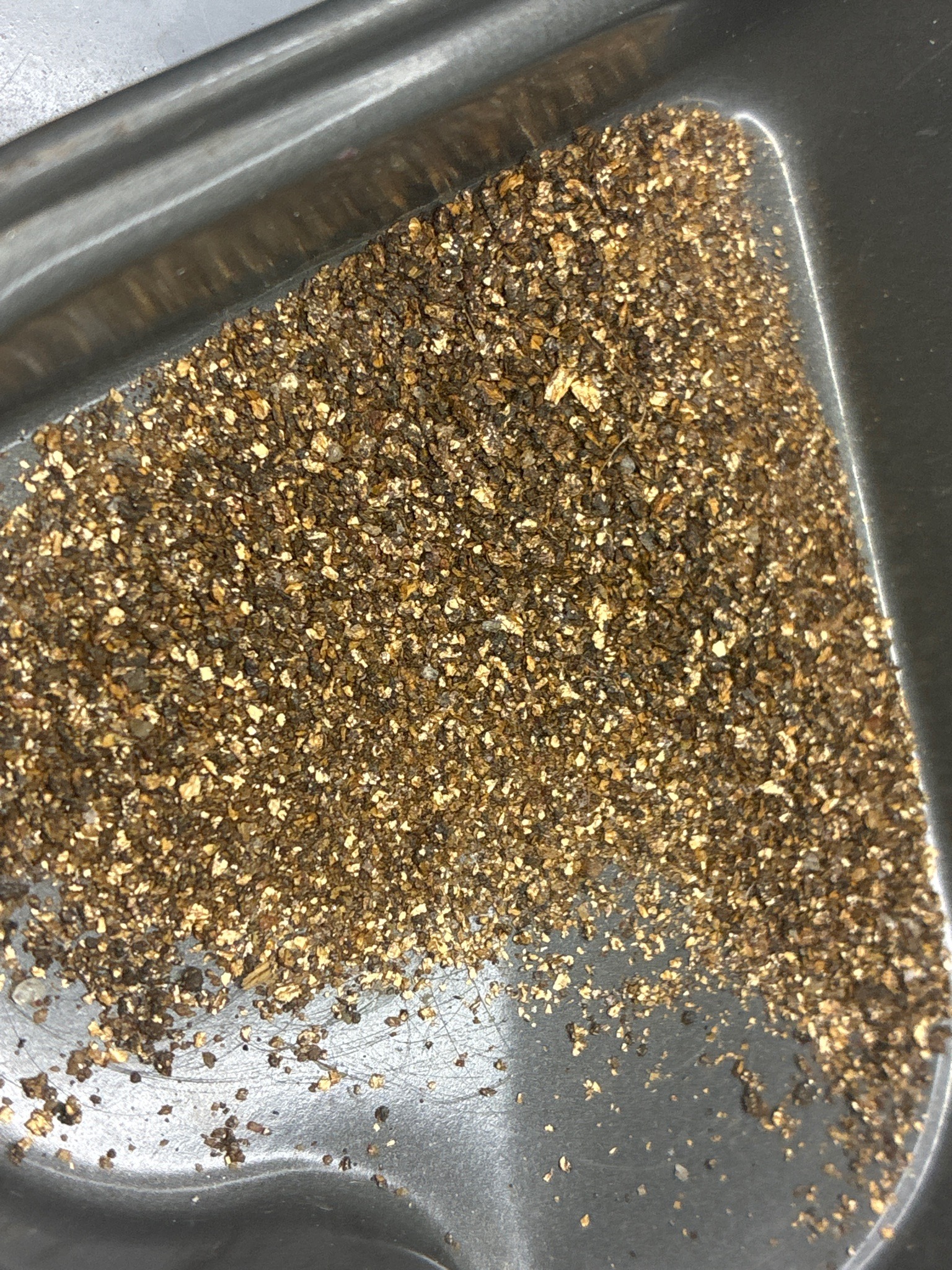
This material consists of a significant quantity of exfoliated vermiculite, characterized by its distinct multi-cellular, accordion-like structure. The individual particles exhibit a range of metallic hues, primarily lustrous bronze, gold, and tan, interspersed with darker brown or black fragments of unexfoliated rock or mica-like minerals. The texture is granular and flaky, with particle sizes appearing to range from fine sand to approximately 3mm in diameter. The substance is contained within a grey metallic or high-density plastic tray, showing fine scratches on the interior surface, which suggests regular use for sorting or measuring granular minerals. The material appears dry and friable; there are no signs of moisture or significant organic contamination, though small darker specks may indicate naturally occurring accessory minerals. The color variation is typical of a high-grade horticultural or industrial vermiculite, where the heating process (exfoliation) has expanded the mica-type mineral into lightweight, absorbent flakes. No specific maker's marks or stamps are visible on the material itself, as it is a bulk commodity product. Its condition appears consistent with freshly processed mineral stock intended for agricultural, construction, or filtration purposes.
AI Appraisal Report

·AI can make mistakes·Verify before acting
I have virtually examined this sample of exfoliated vermiculite. The material displays high technical proficiency in the exfoliation process, evidenced by the characteristic accordion-like expansion and metallic luster ranging from bronze to tan. The particle size distribution (fine to 3mm) suggests a 'Medium' or 'Fine' grade, commonly utilized in horticultural potting mixes for moisture retention or as a lightweight aggregate in specialty construction plasters. The absence of moisture and organic clumps indicates a well-stored, dry commodity consistent with standard industrial outputs. Market value for vermiculite is driven by volume and purity. As a bulk industrial mineral, it is rarely rare, but it is currently in high demand due to its utility in sustainable agriculture and fire-proofing. Comparable pricing at the retail/professional level typically places a standard 4-cubic foot bag between $45 and $65, depending on local shipping costs and mineral purity. Significant value factors include the high expansion ratio and the visual absence of 'fines' (dust), which increases the item's drainage capabilities. Limitations and Authentication: A definitive appraisal of industrial minerals requires physical verification beyond imagery. To confirm its safety and commercial grade, I would require a certified laboratory analysis (XRD or PLM) to ensure the absence of asbestiform minerals often associated with lower-quality vermiculite deposits. Additionally, I would need to verify the material's bulk density through a displacement test to determine if it meets specific ASTM standards for construction or horticultural use. This assessment assumes the material is free from hazardous contaminants and is based solely on the visual uniformity and texture observed in the provided sample tray.

Get your items appraised

Instant estimates of your treasures with AI-powered appraisals

Browse More Appraisals