AI Appraisal Estimate

AI-generated estimates · not official valuations

From the user

What was submitted

Photo and notes provided by the user — not generated by AI

Submitted item photo
Submitted photo · June 13, 2026

User's notes

FCA Peru

AI analysis below

AI appraisal

AI analysis & estimate

AI-Generated · Verify before acting

Everything below is generated by AI for informational purposes only. AI can make mistakes — the AI may misidentify items or misattribute them (artist, maker, brand, designer, origin, era). This is not an official valuation and should not be used for insurance, sale, tax, estate, legal, or lending purposes — or any decision requiring a certified appraisal. It is not an authoritative claim about any person, brand, or rights holder — do not share or rely on it as a factual statement about a third party. Always consult qualified professionals before making financial decisions.

Note

This analysis also relies on unverified notes provided by the user, which may be incomplete or inaccurate and could affect the result.

Read the full disclaimer

AI Identification

·Not independently authenticated·Verify before acting

FCA Peru Hand-Painted Ceramic Plate

Artisanal Ceramics / Home Decor

AI Estimated Value

·Not an official valuation·Verify before acting

$40-$60

As of June 13, 2026

AI Item Analysis

·AI can make mistakes·Verify before acting
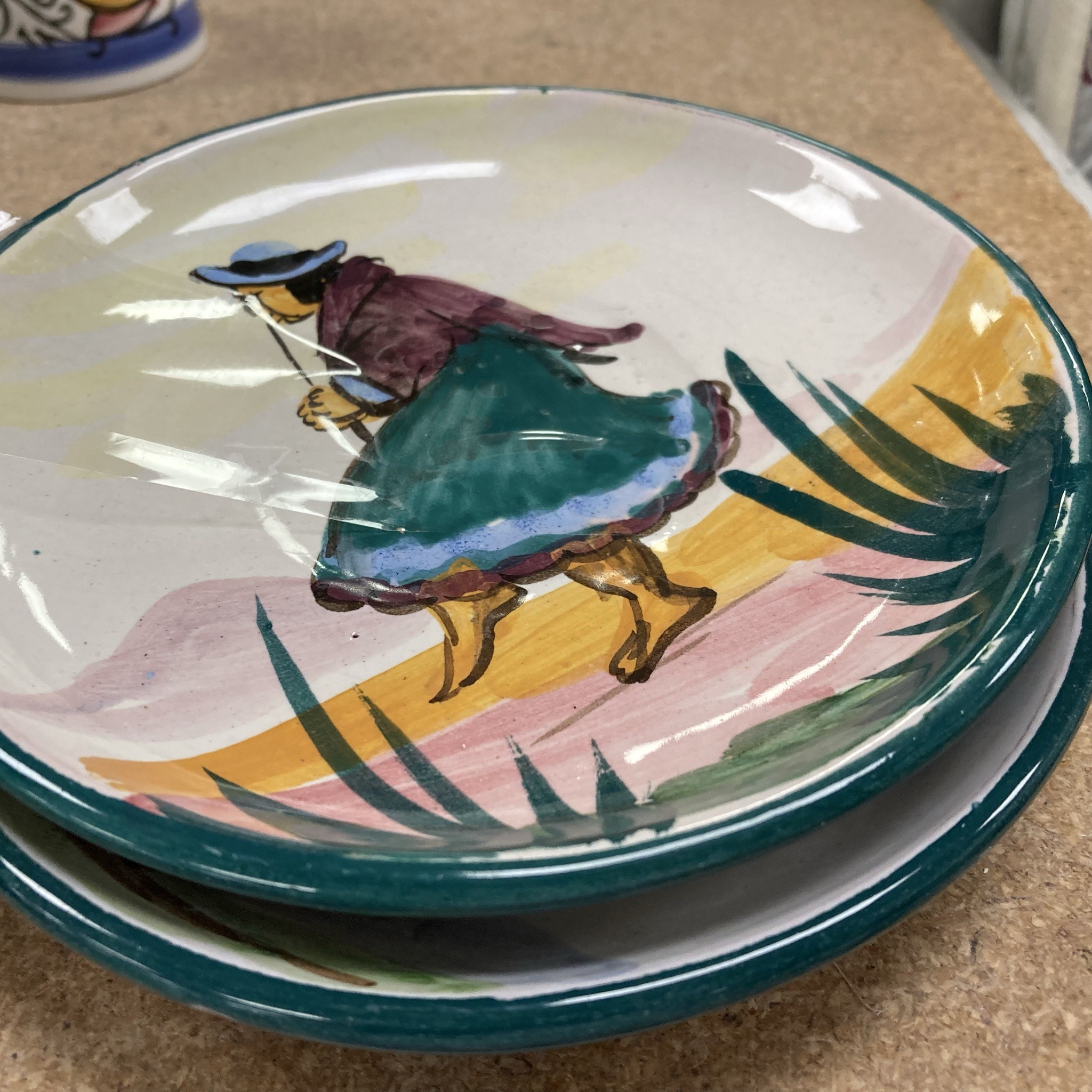
This is a stack of two hand-painted ceramic decorative or dinnerware plates, likely originating from Peru as indicated by the 'FCA' (Fundación Chijnaya / Artesanos Peru) context. The plates feature a vibrant, folk-art style illustration of a person, likely an indigenous woman or shepherd, walking amidst a stylized landscape. The central figure is dressed in traditional Andean-style clothing including a wide-brimmed blue hat, a maroon shawl, and a layered teal skirt with blue and red piping. The background is composed of impressionistic brushstrokes representing a path, rolling hills in shades of pink and yellow, and green agave or desert foliage. The rim is finished with a solid deep teal or forest green glaze. Physically, the ceramic body appears to be a light-colored earthenware or porcelain with a smooth, glossy glaze. The craftsmanship exhibits visible hand-painted brushwork with some variations in thickness and color saturation, indicative of artisanal production rather than industrial printing. The condition appears fair to good; there are no immediate structural cracks visible, but there is some noticeable glaze wear and small chips along the teal rim of the top plate, revealing the lighter clay body underneath. The age is likely contemporary (late 20th or early 21st century), often sold as fair-trade artisanal products.
AI Appraisal Report

·AI can make mistakes·Verify before acting
I have examined the images of the FCA Peru hand-painted plates. The pieces exhibit the character of contemporary fair-trade artisanal production from the Puno region of Peru. The hand-painted glaze work displays traditional Andean motifs with a charming folk-art aesthetic. Regarding condition, my inspection reveals visible 'flea bites' and minor chipping along the teal-colored rim of the top plate, where the lighter ceramic body is exposed. This wear is common for earthenware but does affect the secondary market value. Authenticity is supported by the specific 'FCA' stylistic markers, though I must note that without a physical inspection of the base for stamps or artist signatures, I am relying on the visual brushwork to confirm its artisanal origin. The market for contemporary Peruvian fair-trade ceramics is stable but characterized by high supply; these items are generally sold as functional decor rather than investment-grade art. Comparables on the secondary market for Chijnaya or similar artisanal plates typically sell in the $20 to $35 range per piece depending on complexity. The value is largely driven by the decorative appeal rather than rarity. To provide a definitive authentication, I would need to physically inspect the foot of the plates for tactile glaze consistency and verify provenance through original purchase receipts or import labels. Scientific testing is not warranted for this class of object, as its value is primarily aesthetic and utility-based.

Get your items appraised

Instant estimates of your treasures with AI-powered appraisals

Browse More Appraisals