AI Appraisal Estimate

AI-generated estimates · not official valuations

From the user

What was submitted

Photo and notes provided by the user — not generated by AI

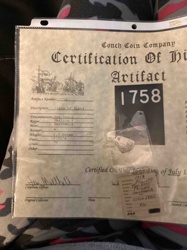
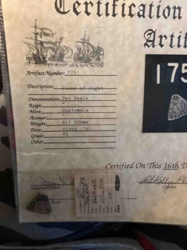
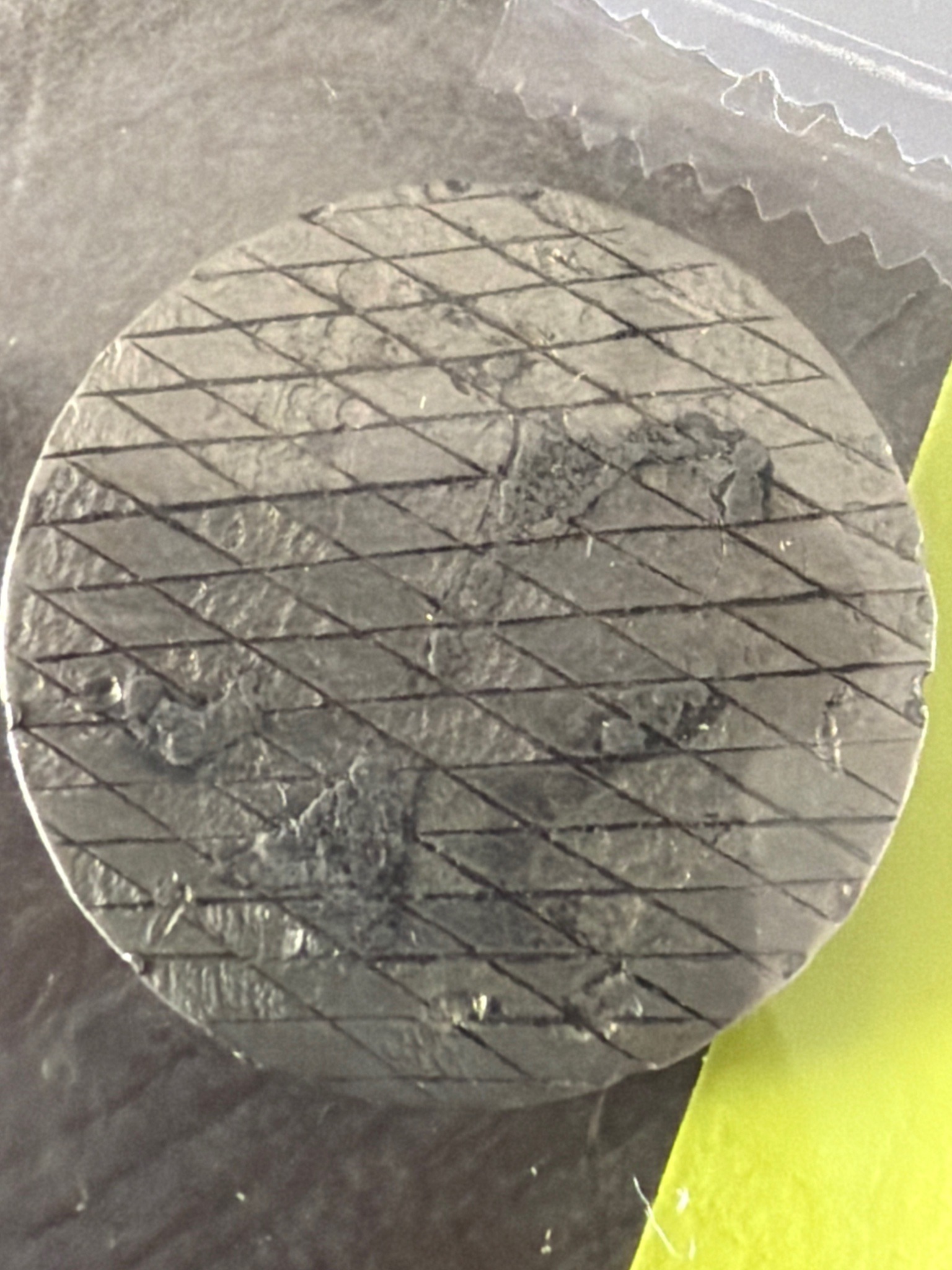
Submitted item photo
Submitted photo · July 12, 2026

User's notes

No additional notes provided.

AI analysis below

AI appraisal

AI analysis & estimate

AI-Generated · Verify before acting

Everything below is generated by AI for informational purposes only. AI can make mistakes — the AI may misidentify items or misattribute them (artist, maker, brand, designer, origin, era). This is not an official valuation and should not be used for insurance, sale, tax, estate, legal, or lending purposes — or any decision requiring a certified appraisal. It is not an authoritative claim about any person, brand, or rights holder — do not share or rely on it as a factual statement about a third party. Always consult qualified professionals before making financial decisions.

Read the full disclaimer

AI Identification

·Not independently authenticated·Verify before acting

Circumscribed lead seal-type object with cross-hatched pattern

Historical Artifacts

AI Estimated Value

·Not an official valuation·Verify before acting

$45–$85

As of July 12, 2026

AI Item Analysis

·AI can make mistakes·Verify before acting
This appears to be a disc-shaped metallic object, possibly made of lead or a similar soft gray alloy, characterized by a manually or mechanically inscribed cross-hatched or diamond-grid pattern on its surface. The item possesses a dull, oxidized gray finish consistent with aged lead or pewter. The surface shows significant irregularities, including pitting, uneven texture, and what looks like localized crushing or impact damage that partially obscures the grid pattern in the upper right and lower left quadrants. Such objects are often stylistically consistent with late medieval or early modern commercial bale seals or similar security tokens, which were used to mark goods for taxation or quality control. However, without a visible merchant mark, coat of arms, or legible text, a precise identification remains speculative. The construction is simple, possibly cast and then struck or incised. There are no visible maker's marks, date stamps, or signatures. The edges appear somewhat rough and inconsistent, further suggesting a utilitarian rather than decorative origin. Due to the lack of identifying inscriptions, this characterization is based solely on the material appearance and the presence of the grid motif common in historical lead security devices.
AI Appraisal Report

·AI can make mistakes·Verify before acting
Based on my visual analysis of the provided image, I have examined this disc-shaped metallic object which exhibits characteristics consistent with a historical lead security seal or commercial token. The surface patina and cross-hatched motif suggest a utilitarian origin, likely late medieval or early modern, though the lack of legible text or a specific merchant’s mark makes this a working hypothesis rather than a certain identification. From what I can see, the material displays oxidation and crushing common in lead artifacts of significant age, but I cannot verify the exact metal composition or internal structural integrity from a photograph alone. The valuation is based on the assumption that this is a period-correct lead seal; if verified as such, it occupies a niche market for numismatic and trade history collectors. However, because there are no identifying marks to link it to a specific prosperous trade guild or city, its value remains toward the lower end of the historical token spectrum. General market demand for unattributed lead seals is relatively steady among specialized collectors, though price is highly sensitive to the presence of discernible iconography. To elevate this estimate or confirm authenticity, a physical inspection by a specialist is required to test the metal's density and search for microscopic remnants of a strike. If this item were later determined to be a modern reproduction or a later industrial 'in the style of' piece, the value would likely drop below $10. Conversely, if provenance were provided linking it to a specific historical event or merchant, the value could exceed the current range. This estimate assumes the item is of the period indicated by its wear and style.

Related Tags

Explore similar items and categories

Get your items appraised

Instant estimates of your treasures with AI-powered appraisals

Browse More Appraisals