Carved Onyx Lion Sculpture
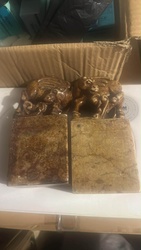
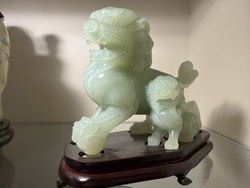
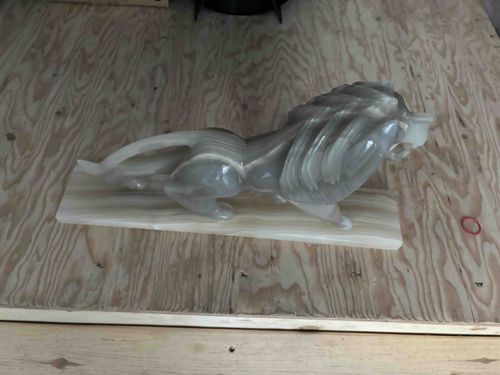
This item is a decorative sculpture of a male lion, hand-carved from a single block of banded onyx or architectural alabaster. The figure is depicted in a powerful, low-slung prowling stance, integrated into a rectangular plinth of the same material. The stone exhibits characteristic translucent properties with distinct horizontal banding in shades of cream, grey, and light tan. The lion's mane is carved with stylized, deep grooves providing a sense of volume and texture, while the body shows smooth, polished muscular contours. Notable features include the open mouth and the long, curved tail that rests along the haunch. The craftsmanship suggests a mid-20th-century origin, likely Italian or Mexican in production, where such stone carvings were popular for export. The condition appears fair to good; however, visible fracture lines are present along the rear legs and base, which are common in these brittle stones but can impact structural integrity. The surface maintains a high-gloss polish, emphasizing the natural mineral patterns of the stone. No visible maker's marks or signatures are apparent in the provided view.
AI-Generated Appraisal Disclaimer
Estimated Value
$150 - $250
Basic Information
Category
Decorative Arts / Stone Carvings
Appraised On
February 11, 2026
Estimated Value
$150 - $250
Item Description
This item is a decorative sculpture of a male lion, hand-carved from a single block of banded onyx or architectural alabaster. The figure is depicted in a powerful, low-slung prowling stance, integrated into a rectangular plinth of the same material. The stone exhibits characteristic translucent properties with distinct horizontal banding in shades of cream, grey, and light tan. The lion's mane is carved with stylized, deep grooves providing a sense of volume and texture, while the body shows smooth, polished muscular contours. Notable features include the open mouth and the long, curved tail that rests along the haunch. The craftsmanship suggests a mid-20th-century origin, likely Italian or Mexican in production, where such stone carvings were popular for export. The condition appears fair to good; however, visible fracture lines are present along the rear legs and base, which are common in these brittle stones but can impact structural integrity. The surface maintains a high-gloss polish, emphasizing the natural mineral patterns of the stone. No visible maker's marks or signatures are apparent in the provided view.
Related Tags
Get Your Items Appraised
Instant estimates of your treasures with AI-powered instant appraisals