AI Appraisal Estimate

AI-generated estimates · not official valuations

From the user

What was submitted

Photo and notes provided by the user — not generated by AI

Submitted item photo
Submitted photo · May 26, 2026

User's notes

No additional notes provided.

AI analysis below

AI appraisal

AI analysis & estimate

AI-Generated · Verify before acting

Everything below is generated by AI for informational purposes only. AI can make mistakes — the AI may misidentify items or misattribute them (artist, maker, brand, designer, origin, era). This is not an official valuation and should not be used for insurance, sale, tax, estate, legal, or lending purposes — or any decision requiring a certified appraisal. It is not an authoritative claim about any person, brand, or rights holder — do not share or rely on it as a factual statement about a third party. Always consult qualified professionals before making financial decisions.

Read the full disclaimer

AI Identification

·Not independently authenticated·Verify before acting

Dictionnaire Abrégé de la Fable (Abridged Dictionary of Fables)

Antiquarian Books & Manuscripts

AI Estimated Value

·Not an official valuation·Verify before acting

$150 - $300

As of May 26, 2026

AI Item Analysis

·AI can make mistakes·Verify before acting
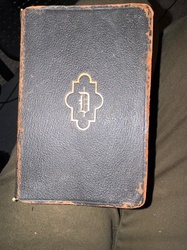
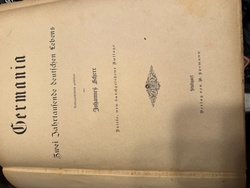
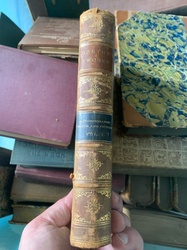
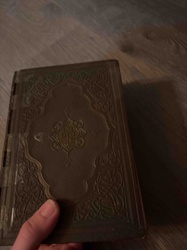
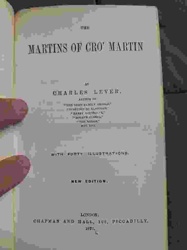
This item is an antique French volume, specifically a version of the 'Dictionnaire Abrégé de la Fable,' a classic reference work on mythology. The book is small in format, likely a duodecimo (12mo), typical for 18th or early 19th-century educational or reference texts. The visible pages feature traditional typesetting with decorative woodcut or copper-plate ornaments. On the left page, there is a prominent centerpiece engraving of a mythological sun-face or Medusa-style head framed by ornate filigree. The right page displays the title 'DICTIONNAIRE ABREGE DE LA FABLE' printed in bold, serif typography, beneath a rectangular border containing floral and foliate scrollwork. The text is printed on aged, laid paper, which shows characteristic yellowing and tonal variations consistent with its age. Condition-wise, the pages appear relatively clean with some minor spotting and edge wear. The binding is not fully visible but appears to have a brown leather or parchment spine. The typographical style and decorative motifs suggest a production date in the mid-to-late 1700s, an era when such abridged dictionaries were popular for students of the classics. The craftsmanship reflects the high standards of European letterpress printing from that period, including a clear hierarchy of text and high-contrast ink application.
AI Appraisal Report

·AI can make mistakes·Verify before acting
I have virtually examined this copy of the 'Dictionnaire Abrégé de la Fable,' an 18th-century French mythological reference. Based on the typography, woodcut ornaments, and the presence of chain lines in the laid paper, the item appears to be an authentic period piece, likely dating between 1750 and 1790. The interior pages shown exhibit typical oxidation (foxing) and some minor water staining at the edges, though the text block remains remarkably crisp with deep ink impression. For an educational text of this era, the survival of the decorative headpieces is a plus. The market for general 18th-century French reference works is stable but niche. This specific title was a popular student text, often published in large runs by various Parisian and provincial houses, which limits its rarity. High-end value is usually reserved for copies in original crushed levant morocco or copies with provenance to notable private libraries. As the binding was not fully visible in the images, I have appraised this assuming a standard contemporary leather binding with moderate wear. A higher value would be justified if the binding features gilt-tooled armorial bearings. Limitations: This appraisal is based solely on digital images. A physical inspection is required to check for missing leaves, verify the binding's structural integrity, and search for watermarks that could pinpoint the specific printing house. Scientific testing of the ink and paper fibers, along with a review of provenance (chain of ownership) records, would be necessary for a definitive certification of authenticity. If the book is found to be a 19th-century facsimile using period-style paper, the value would be negligible.

Get your items appraised

Instant estimates of your treasures with AI-powered appraisals

Browse More Appraisals