AI estimate as of October 13, 2025 · verify with a professional before acting
AI-Generated · Verify before acting
Everything on this page is generated by AI for informational purposes only. AI can make mistakes — the AI may misidentify items or misattribute them (artist, maker, brand, designer, origin, era). This is not an official valuation and should not be used for insurance, sale, tax, estate, legal, or lending purposes — or any decision requiring a certified appraisal. It is not an authoritative claim about any person, brand, or rights holder — do not share or rely on it as a factual statement about a third party. Always consult qualified professionals before making financial decisions.
This item is a ceramic figural vase, likely depicting a crane or peacock, characterized by its ornate and stylized design. The primary colors are a glossy off-white or cream for the body of the birds, accented with vibrant blue and warm peach or light orange details. The form comprises multiple bird figures integrated into a single vase structure, with the largest bird forming the base and main body. Its tail feathers, rendered in a textured, fan-like shape, extend upwards and outwards, forming the primary opening of the vase. These tail feathers are painted in a striking blue, fading to white at the tips, and incorporate some light orange accents near the base where they merge with the bird's body. Smaller birds, likely chicks or younger birds, are depicted nestled among the larger bird's feathers, their heads and necks emerging. One such smaller bird is clearly visible near the top left, with an orange head and neck. Another bird's head and neck are visible on the right side, extending downwards, suggesting it's part of the main body or another smaller bird. The craftsmanship features molded details, indicating feathers and avian forms, which are further enhanced by the painted accents. The glaze appears vibrant and reflective, suggesting a high-gloss finish. The overall aesthetic points to a mid-20th-century decorative item, possibly from the 1950s or 1960s, known for whimsical and somewhat exaggerated ceramic designs. There are no obvious signs of chips, cracks, or repairs visible from the angle provided, and the colors appear well-preserved.
AI Appraisal Report
Based on my visual examination of the provided image, this ceramic figural vase, likely depicting a crane or peacock, appears to be in very good condition. I observe no obvious chips, cracks, or repairs, and the vibrant glaze and painted details seem well-preserved. The high-gloss finish suggests a decorative item designed to catch the eye. The craftsmanship, with its molded details and stylized design, is consistent with mid-20th-century ceramic trends, likely from the 1950s or 1960s, a period known for its whimsical and somewhat exaggerated decorative arts.
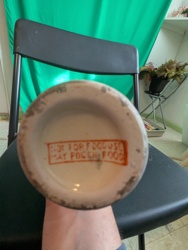
In terms of market conditions, items of this nature, while charming, generally fall into the broader category of vintage decorative ceramics. Comparative sales for similar stylized animal figural vases from this era tend to range from $100 to $300, depending on size, artist recognition (if any), and specific design appeal. Demand for such pieces is steady among collectors of vintage home decor, but it is not typically high-demand or rare enough to command premium prices unless attributed to a specific renowned manufacturer or artist, which is not ascertainable from the image. The lack of visible maker's marks or provenance documentation limits its potential value significantly.
The main factor impacting value here is the decorative appeal and condition. While aesthetically pleasing, without maker's marks, original labels, or documented history, its value remains within the general vintage decorative market. For full authentication and to ascertain potential manufacturer or artist, close in-person examination for impressed or painted marks, along with provenance documentation, would be essential. Scientific testing, such as thermoluminescence dating, could confirm age but is generally not economically warranted for items in this price range.