AI Appraisal Estimate

AI-generated estimates · not official valuations

From the user

What was submitted

Photo and notes provided by the user — not generated by AI

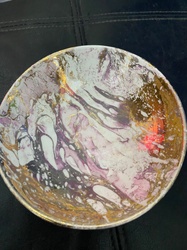
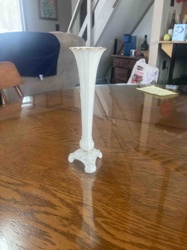
Submitted item photo
Submitted photo · June 4, 2026

User's notes

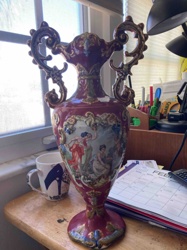
Ceramic vase

AI analysis below

AI appraisal

AI analysis & estimate

AI-Generated · Verify before acting

Everything below is generated by AI for informational purposes only. AI can make mistakes — the AI may misidentify items or misattribute them (artist, maker, brand, designer, origin, era). This is not an official valuation and should not be used for insurance, sale, tax, estate, legal, or lending purposes — or any decision requiring a certified appraisal. It is not an authoritative claim about any person, brand, or rights holder — do not share or rely on it as a factual statement about a third party. Always consult qualified professionals before making financial decisions.

Note

This analysis also relies on unverified notes provided by the user, which may be incomplete or inaccurate and could affect the result.

Read the full disclaimer

AI Identification

·Not independently authenticated·Verify before acting

Decorative Ceramic Vase Base with Safety Warning

Decorative Arts / Ceramics

AI Estimated Value

·Not an official valuation·Verify before acting

$15.00 - $35.00

As of June 4, 2026

AI Item Analysis

·AI can make mistakes·Verify before acting
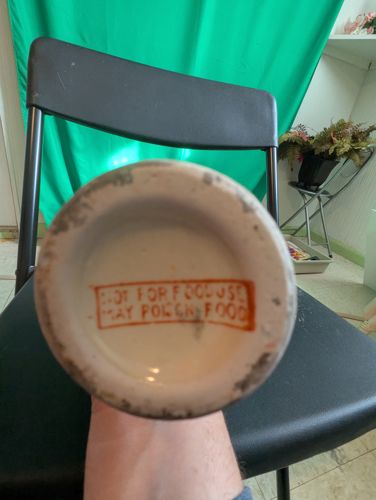
This is the underside base of a cylindrical ceramic vase, characterized by a circular, unglazed foot rim. The material appears to be a low-to-mid-fire white ceramic or earthenware, given the slightly porous and off-white appearance of the exposed clay. A prominent orange or iron-red rectangular stamp is centered on the base, featuring the text 'NOT FOR FOOD USE / MAY POISON FOOD' in all-caps, sans-serif lettering. This marking is a critical regulatory indicator often found on decorative ceramics imported into Western markets—particularly from East Asia (likely Japan or China)—during the late 20th century (circa 1970s-1990s). The warning indicates that the glazes used on the exterior may contain high levels of lead or cadmium, making it unsafe for culinary applications. The condition shows visible shelf wear, with dark scuffing and greyish accumulation along the contact point of the foot ring. There are fine specks of kiln debris and slight surface pitting within the recessed center of the base. The overall craftsmanship suggests a mass-produced decorative object rather than a high-end artisanal piece, evidenced by the utilitarian nature of the safety stamp and the standard industrial finishing of the base.
AI Appraisal Report

·AI can make mistakes·Verify before acting
I have conducted a visual examination of the base of this cylindrical ceramic decorative vase. The presence of the warning stamp 'NOT FOR FOOD USE / MAY POISON FOOD' is the primary diagnostic feature for dating and origin. This specific phrasing was mandated by international safety regulations, most prominently during the 1970s and 1980s, to identify imported decorative wares—predominantly from Japan and China—that utilized lead-based glazes. The item exhibits characteristics of a mass-produced, industrial export piece rather than a studio or artisanal work. The unglazed foot rim shows typical shelf wear and atmospheric kiln debris, consistent with mid-to-late 20th-century manufacture. Since the object is explicitly marked as hazardous for food consumption, its utility is strictly limited to decorative purposes, which significantly suppresses its market value compared to food-safe functional ceramics or high-end collectible pottery. Market demand for such pieces is currently low, as they are viewed as utilitarian 'vintage' decor rather than investment-grade art. Comparables on the secondary market frequently sell in the modest $15–$35 range at estate sales or online auctions. Limitations: This appraisal is based strictly on a photographic review of the base. For a definitive authentication and valuation of the entire piece, I would need to inspect the exterior glaze quality, decorative motifs, and overall structural integrity in person. Scientific testing (such as an XRF scan) would be required to measure exact lead levels, though the stamp itself serves as a legal admission of toxicity. Provenance documentation or the original importer's label would further clarify the specific manufacturer.

Get your items appraised

Instant estimates of your treasures with AI-powered appraisals

Browse More Appraisals