AI estimate as of December 9, 2025 · verify with a professional before acting
AI-Generated · Verify before acting
Everything on this page is generated by AI for informational purposes only. AI can make mistakes — the AI may misidentify items or misattribute them (artist, maker, brand, designer, origin, era). This is not an official valuation and should not be used for insurance, sale, tax, estate, legal, or lending purposes — or any decision requiring a certified appraisal. It is not an authoritative claim about any person, brand, or rights holder — do not share or rely on it as a factual statement about a third party. Always consult qualified professionals before making financial decisions.
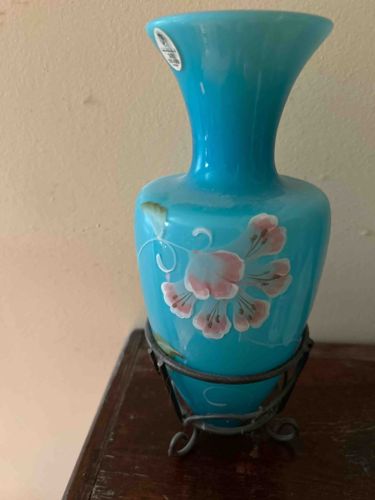
This item is a decorative teal-colored milk glass vase, shaped with a narrow neck flaring out to a trumpet-style mouth, and a bulbous body that tapers slightly towards the base. The vase features a hand-painted floral design on its front, depicting a cluster of light pink blossoms with darker pink accents, possibly roses or similar multi-petaled flowers, accompanied by stylized green leaves and white curled lines indicating vines or flourishes. The paint appears to be applied externally, possibly enamel or a similar cold-painted technique. The color of the glass is a vibrant, opaque teal or turquoise blue. A small white label, possibly a manufacturer's sticker or price tag, is visible near the rim, though its details are illegible. The vase is housed within a separate, dark-colored (likely black or dark brown) wrought iron stand. This stand is constructed from twisted metal rods forming an open, cage-like structure that cradles the lower half of the vase, providing stability and an ornamental element. The wrought iron stand exhibits a rustic or antique finish, with some visible wear, suggesting potential age or intentional distressing. The overall condition of the glass appears good, with no obvious chips or cracks from the visible angles. The hand-painted decoration shows no significant signs of flaking or damage, although very fine details or imperfections are hard to discern from the image quality. The combination of milk glass and hand-painting suggests a possible mid-20th century to contemporary creation, likely mass-produced but with individual artistic touches. The craftsmanship is decent for a decorative item of this style, with the glass exhibiting a consistent opaque color and the ironwork being functional and aesthetically complementary.
AI Appraisal Report
Upon visual examination of the provided image, I assess this teal milk glass vase with hand-painted floral decoration, presented in a wrought iron stand. The vase appears to be in good overall condition, with no visible chips, cracks, or significant wear to the glass or the applied paintwork. The hand-painted floral design, likely cold-painted, adds a decorative touch, common in mid-20th century to contemporary decorative glass. The wrought iron stand complements the vase well and shows appropriate wear for its likely age. A small, illegible white label near the rim prevents identification of a specific manufacturer, which limits precise authentication and valuation.
Market conditions for decorative milk glass, especially pieces of unconfirmed origin or without highly desirable makers, are generally moderate. While the teal color and hand-painting are aesthetically pleasing, the item does not present as rare. Comparables in the resale market (e.g., online marketplaces, antique malls) for similar decorative milk glass vases with hand-painting, often from manufacturers like Fenton or Westmoreland (if authenticated, which this is not), typically range from $30 to $80, with the iron stand adding slightly to the appeal. Demand is steady for attractive decorative items, but not exceptionally high for unaccredited milk glass.
Factors significantly impacting value include the unconfirmed manufacturer and the mass-produced nature of similar items. For full authentication, in-person examination would be crucial to assess paint application quality, glass characteristics (seams, pontil marks), and decipher any markings beneath the illegible label. Provenance documentation would also be ideal. Without these, the appraisal is based solely on visual characteristics and general market trends for comparable decorative glassware.