AI estimate as of October 3, 2025 · verify with a professional before acting
AI-Generated · Verify before acting
Everything on this page is generated by AI for informational purposes only. AI can make mistakes — the AI may misidentify items or misattribute them (artist, maker, brand, designer, origin, era). This is not an official valuation and should not be used for insurance, sale, tax, estate, legal, or lending purposes — or any decision requiring a certified appraisal. It is not an authoritative claim about any person, brand, or rights holder — do not share or rely on it as a factual statement about a third party. Always consult qualified professionals before making financial decisions.
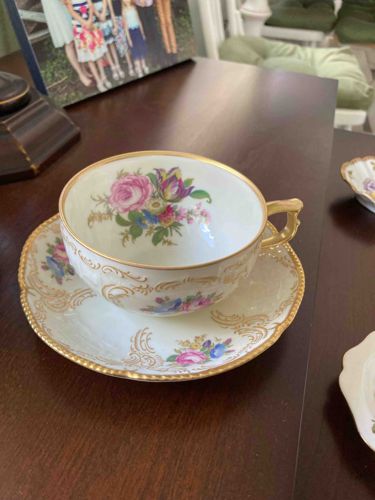
This exquisite vintage demitasse cup and saucer set is crafted from fine porcelain, featuring a predominantly off-white or ivory base color. The cup's interior lip is adorned with a delicate gold band, and a vibrant floral bouquet is centrally painted within, comprising shades of pink, purple, blue, and green. The exterior of the cup continues this floral motif, interspersed with intricate gold rococo-style scrollwork. The handle of the cup is C-shaped and appears to be fully gilded, adding to its opulent aesthetic. The matching saucer echoes the cup's design, featuring a scalloped or gently ruffled edge outlined in gold, followed by another band of gold. The main surface of the saucer is decorated with the same elaborate gold scrollwork and smaller, dispersed floral clusters. The gold detailing throughout the set exhibits a raised or textured quality, suggesting hand-applied gilt work. The overall condition appears to be very good with no immediate visible chips, cracks, or significant wear to the gold, which suggests careful handling over time. The style of the decoration, particularly the rich floral application and extensive gilding, points towards a mid-20th century European design, possibly Bohemian or German. The evident craftsmanship, especially the detailed painting and gilding, indicates a piece of higher quality porcelain ware, designed for decorative display or elegant tea/coffee service.
AI Appraisal Report
Based on my visual examination of the provided image, this vintage demitasse cup and saucer set presents in very good condition. I observe no immediate chips, cracks, or significant wear to the vibrant floral decoration or the extensive, apparently hand-applied, gold gilding. The clarity of the patterns suggests careful handling. A limitation of this assessment, however, is that fine hairline cracks, crazing, or minor repairs cannot be definitively ruled out without a physical inspection under good lighting and magnification. The style, characterized by rich floral motifs, rococo-style gold scrollwork, and a scalloped edge on the saucer, strongly suggests a mid-20th century European origin, likely German or Bohemian, known for their quality porcelain and decorative artistry.
In terms of market conditions, demitasse sets of this type, while charming, generally do not command extremely high prices unless they are from a highly renowned manufacturer or have exceptional rarity. Comparables for similar mid-century decorative porcelain demitasse sets, especially those without definitive maker's marks visible, typically fall into the $40-$80 range. The gold detailing appears raised, indicating higher quality application, which positively impacts its aesthetic appeal and value slightly. Demand for such items is moderate; collectors of vintage tea and coffee ware, or individuals seeking decorative accent pieces, are the primary market. Rarity is not particularly high for general decorative sets of this era.
To fully authenticate the origin and maker, an in-person examination would be crucial to locate any manufacturer's marks on the base of both the cup and saucer. Provenance documentation, though rare for such items, would also assist in confirming its history. Scientific testing is generally not applied to items of this nature for authentication. The current assessment is based purely on aesthetic quality, apparent condition, and stylistic characteristics discernable from the image.