Vintage Coronet Ware Parrott & Co England Coffee Set 5 Cups Pagoda Chinoiserie
These notes were written by the person who submitted this item. Appraiser.AI has not verified them, and the AI's identification and estimate may rely on them.
AI Estimated Value
Not an official valuation
$350-550
AI estimate as of August 25, 2025 · verify with a professional before acting
AI-Generated · Verify before acting
Everything on this page is generated by AI for informational purposes only. AI can make mistakes — the AI may misidentify items or misattribute them (artist, maker, brand, designer, origin, era). This is not an official valuation and should not be used for insurance, sale, tax, estate, legal, or lending purposes — or any decision requiring a certified appraisal. It is not an authoritative claim about any person, brand, or rights holder — do not share or rely on it as a factual statement about a third party. Always consult qualified professionals before making financial decisions.
This analysis also relies on unverified notes provided by the user, which may be incomplete or inaccurate and could affect the result.
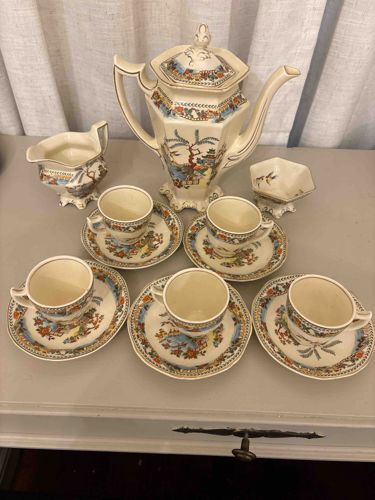
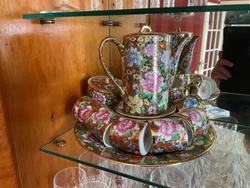
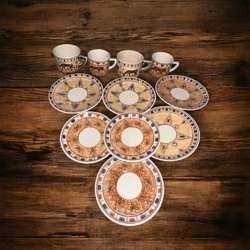
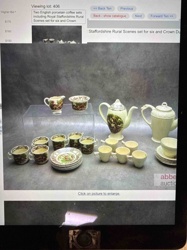
This is a vintage Coronet Ware coffee set, likely produced by Parrott & Co. in England, featuring a charming Chinoiserie pagoda design. The set appears to include a tall, elegant coffee pot with a distinct octagonal body, a creamer, a sugar bowl (though only a portion is clearly visible, it appears to be a unique hexagonal or octagonal shape on a footed base), and five coffee cups with matching saucers. The primary color is a creamy off-white or ivory, with detailed transferware or hand-painted decorations in an array of colors including blue, orange-red, green, and brown, depicting Asian-inspired landscapes with pagodas, trees, and possibly figures. The coffee pot and creamer feature elaborate, footed bases, adding to their decorative appeal. A notable feature is the gilt or gold trim accentuating the edges, handles, and finials of each piece, indicating a level of quality and a nod to luxury. The rims of the cups and saucers are scalloped or gently undulating, further enhancing the aesthetic. Given its age, the set shows some signs of wear consistent with vintage porcelain, such as potential minor crazing or slight fading of the gilt trim, but overall presents as well-preserved. There are no obvious chips, cracks, or repairs visible in the provided image. The craftsmanship evident in the intricate designs and the multi-part construction of the pot and creamer suggests a skilled manufacturing process typical of late 19th to mid-20th century ceramic production.
AI Appraisal Report
Upon visual examination of the provided image, this Vintage Coronet Ware Parrott & Co. England Pagoda Chinoiserie Coffee Set presents as a charming and relatively well-preserved example of early to mid-20th century ceramic artistry. The intricate Chinoiserie design featuring pagodas and landscapes is characteristic of the period's aesthetic preferences. The set appears complete with a coffee pot, creamer, sugar bowl, and five cups with saucers. The off-white/ivory primary color, combined with the detailed polychrome transferware decoration and significant gilt accents, suggests a higher-quality production.
Condition appears good for its age; no obvious chips, cracks, or repairs are discernible from the image. Minor wear to the gilt trim and potential subtle crazing would be expected and do not significantly detract from value unless severe. The footed bases of the coffee pot and creamer enhance its decorative appeal and perceived value.
Market conditions for vintage decorative items like this are generally stable, with specific demand for highly decorative, complete sets in good condition. Chinoiserie themes often maintain a consistent appeal. Comparables include other decorative coffee/tea sets from similar English manufacturers of the period, with detailed designs and gold accents. Rarity is moderate; while not unique, finding a full, intact set in this condition is less common. Factors significantly impacting value include the completeness of the set, the integrity of the gilt work, and the absence of damage.
It is crucial to note that this appraisal is based solely on high-resolution images and owner-provided details. Authenticity verification is limited without physical inspection. An in-person examination would be necessary to confirm the absence of subtle cracks, repairs, or significant crazing, assess the true condition of the gilt, and verify maker's marks for full authentication. Scientific testing for material composition is generally not required for this type of item unless specific doubts about age or origin arise. Provenance documentation, if available, would significantly enhance certainty regarding its history and authenticity.