These notes were written by the person who submitted this item. Appraiser.AI has not verified them, and the AI's identification and estimate may rely on them.
AI Estimated Value
Not an official valuation
$25-50
AI estimate as of July 18, 2025 · verify with a professional before acting
AI-Generated · Verify before acting
Everything on this page is generated by AI for informational purposes only. AI can make mistakes — the AI may misidentify items or misattribute them (artist, maker, brand, designer, origin, era). This is not an official valuation and should not be used for insurance, sale, tax, estate, legal, or lending purposes — or any decision requiring a certified appraisal. It is not an authoritative claim about any person, brand, or rights holder — do not share or rely on it as a factual statement about a third party. Always consult qualified professionals before making financial decisions.
This analysis also relies on unverified notes provided by the user, which may be incomplete or inaccurate and could affect the result.
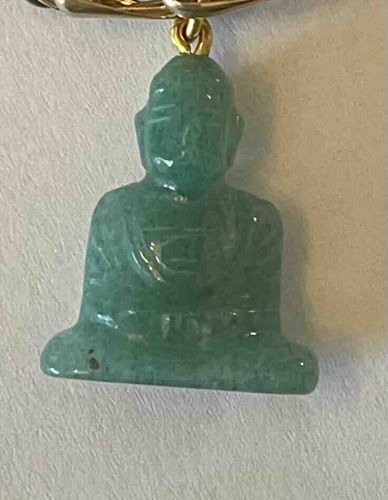
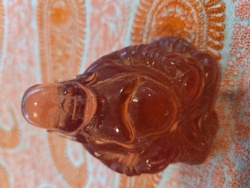
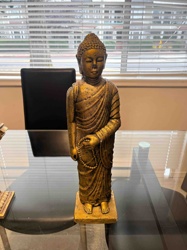
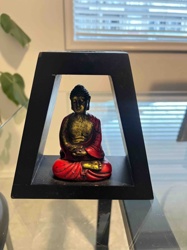
This item is a small, carved gemstone pendant or charm depicting a seated Buddha figure. The carving is approximately 2 cm in height and 1.5 cm in width, crafted from a translucent to semi-translucent green stone, likely a type of jade, aventurine, or similar mineral, given its color and textural appearance. The color is a consistent medium to dark jade green, with some lighter inclusions or natural variations visible within the stone. The Buddha is depicted in a meditative pose. The carving shows a relatively smooth, polished finish, with some slight surface irregularities or nicks visible, particularly on the base and around the face, suggesting either natural imperfections of the stone, minor wear from handling, or potentially light manufacturing marks. The details of the face, hands, and drapery are carved in low relief, suggesting a stylized yet recognizable form. There are no readily apparent maker's marks or signatures visible from the provided images. A small, simple gold-colored metal bail or loop is attached at the top of the Buddha's head, indicating its use as a pendant or charm. The craftsmanship appears to be commercial grade, possibly mass-produced, but with reasonable attention to detail for its size. The overall condition appears good, with no significant chips or cracks visible, apart from the aforementioned minor surface imperfections. Its small size suggests it was intended for personal adornment on a necklace or bracelet, or as a small collectible figurine.
AI Appraisal Report
Upon examining the Seated Buddha Green Gemstone Pendant/Charm, its condition appears good, with minor surface irregularities consistent with use or manufacturing. Its authenticity, as a genuine gemstone carving, seems plausible based on the visible translucent characteristics and color variations within the stone. However, definitive authentication of the stone type (e.g., jade vs. aventurine) and confirmation of natural vs. treated color or composition cannot be made from an image alone. Market conditions for small, commercial-grade gemstone carvings of this nature are generally stable, with demand driven by personal spiritual significance or decorative appeal rather than investment value. Comparables available online or in specialty shops typically range from inexpensive mass-produced items to more finely carved pieces from reputable sources. Rarity is not a significant factor here; similar items are widely available. The small size, commercial-grade craftsmanship, and lack of identifiable artist or provenance are primary factors limiting its value. The gold-colored bail is likely base metal, further diminishing intrinsic material value. To fully authenticate the stone type and confirm its natural origin, an in-person gemological examination and testing would be essential. Without this, and given the volume of similar items in the market, the appraisal reflects its likely commercial retail value as a decorative or spiritual accessory, rather than a rare collectible. My assessment is based on the provided image and description, acknowledging the inherent limitations of remote appraisal.