AI estimate as of August 9, 2025 · verify with a professional before acting
AI-Generated · Verify before acting
Everything on this page is generated by AI for informational purposes only. AI can make mistakes — the AI may misidentify items or misattribute them (artist, maker, brand, designer, origin, era). This is not an official valuation and should not be used for insurance, sale, tax, estate, legal, or lending purposes — or any decision requiring a certified appraisal. It is not an authoritative claim about any person, brand, or rights holder — do not share or rely on it as a factual statement about a third party. Always consult qualified professionals before making financial decisions.
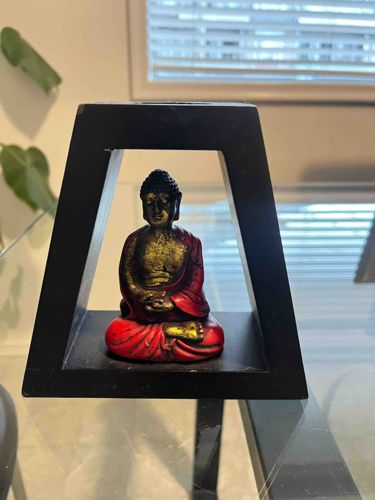
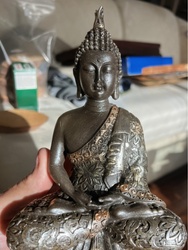
This appears to be a small, decorative Buddha figurine encased within a black, geometric display frame. The Buddha figure is seated in the traditional lotus position (Padmasana) with hands in the Dhyana mudra (meditation gesture). It features a dark, possibly bronze or oxidized metal-like finish on the upper body and head, contrasted sharply with a vibrant, deep red robe draped over the legs and lower torso. There are distinct gold accents on the Buddha's chest, indicating the folds of the robe, and on the feet, emphasizing the prominent display of the soles. The head is adorned with tightly curled hair, characteristic of Buddha depictions, and the facial features, though small, appear serene with downcast eyes. The overall condition of the Buddha figure seems good, with no obvious chips or cracks, although the gold accents show some rubbing or patina, giving it an aged appearance. The black display frame is a minimalistic, contemporary design made of wood or a wood composite, painted or stained black. It forms an open, rectangular prism or an inverted 'U' shape, providing a clear viewing window for the Buddha. The frame shows some signs of wear, particularly on the edges and corners, with minor scuffs and loss of finish, suggesting handling or age. The base of the frame, where the Buddha sits, is flat. The combination of the traditionally styled Buddha and the sleek, modern frame suggests a contemporary decorative piece, likely manufactured in the late 20th or early 21st century, designed for home decor. The craftsmanship appears to be of a mass-produced standard, but with sufficient detail to be aesthetically pleasing. The statue is small in scale, likely suitable for a desk, shelf, or end table.
AI Appraisal Report
Upon visual examination, this Decorative Art / Religious Figurine, a Seated Buddha in a black geometric frame, appears to be in good condition overall, consistent with a decorative home accent piece. The Buddha figure itself shows good detail, with typical gold accents exhibiting some rubbing or patina, suggesting age or handling rather than significant damage. The black display frame presents minor scuffs and finish loss on edges and corners. Authenticity, in the sense of being an antique or historically significant artifact, is not suggested; rather, it appears to be a contemporary decorative item. The combination of traditional Buddha iconography with a modern frame points to a late 20th or early 21st-century mass-produced piece. Market conditions for such items are generally stable, driven by aesthetic appeal and current home decor trends. Comparables include similar mass-produced Buddha figurines or decorative sculptures found in gift shops, home goods stores, or online marketplaces. Demand is moderate for such decorative items, but rarity is low due to mass production. Factors impacting value include its decorative appeal, material quality (which appears standard), and condition. This item is primarily valued for its aesthetic contribution to a living space. Limitations in authenticity verification from images alone include the inability to definitively confirm materials (e.g., specific metal composition, type of wood for the frame) or manufacturing techniques. A physical in-person examination would allow for tactile inspection of materials, assessment of weight, and closer scrutiny for manufacturing marks or details that could indicate a higher-end production. Provenance documentation or scientific testing would be unnecessary for an item of this likely vintage and decorative nature, as it's not presented as an antique or rare collectible.