Persian or Indo-Persian Hand-Hammered Copper Aftaba
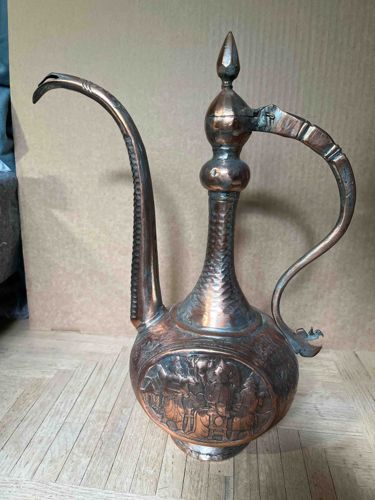
This item is a decorative water vessel known as an aftaba, traditionally used for washing hands and or ritual ablutions in the Middle East and South Asia. It is constructed from heavy-gauge copper and features a warm, aged reddish-brown patina with visible oxidation and verdigris in the recesses. The vessel is characterized by a bulbous teardrop body supported by a flared pedestal foot. A long, gracefully curved swan-neck spout rises from one side, while an ornate, S-curved handle with a stylized integrated thumb-rest is riveted to the opposite side. The body is decorated with repoussé and chased techniques, showcasing an oval central medallion depicting figures in traditional dress, possibly in a courtly or hunting scene. The neck and shoulders exhibit decorative hammered texturing and geometric patterns. The lid is domed with a multi-tiered finial terminating in a sharp point. There are visible signs of aging, including minor surface scratches, small dents on the body, and wear on the lid hinge. The craftsmanship suggests a 19th-century or early 20th-century origin, likely from the Persian (Qajar) or Northern Indian artisan traditions. The piece shows high levels of hand-wrought detail, indicating significant artisanal time and skill.
AI-Generated Appraisal Disclaimer
Estimated Value
$450 - $700
Basic Information
Category
Antique Metalwork
Appraised On
February 11, 2026
Estimated Value
$450 - $700
Item Description
This item is a decorative water vessel known as an aftaba, traditionally used for washing hands and or ritual ablutions in the Middle East and South Asia. It is constructed from heavy-gauge copper and features a warm, aged reddish-brown patina with visible oxidation and verdigris in the recesses. The vessel is characterized by a bulbous teardrop body supported by a flared pedestal foot. A long, gracefully curved swan-neck spout rises from one side, while an ornate, S-curved handle with a stylized integrated thumb-rest is riveted to the opposite side. The body is decorated with repoussé and chased techniques, showcasing an oval central medallion depicting figures in traditional dress, possibly in a courtly or hunting scene. The neck and shoulders exhibit decorative hammered texturing and geometric patterns. The lid is domed with a multi-tiered finial terminating in a sharp point. There are visible signs of aging, including minor surface scratches, small dents on the body, and wear on the lid hinge. The craftsmanship suggests a 19th-century or early 20th-century origin, likely from the Persian (Qajar) or Northern Indian artisan traditions. The piece shows high levels of hand-wrought detail, indicating significant artisanal time and skill.
Get Your Items Appraised
Instant estimates of your treasures with AI-powered instant appraisals