AI Appraisal Estimate

AI-generated estimates · not official valuations

From the user

What was submitted

Photo and notes provided by the user — not generated by AI

Submitted item photo
Submitted photo · June 20, 2026

User's notes

No additional notes provided.

AI analysis below

AI appraisal

AI analysis & estimate

AI-Generated · Verify before acting

Everything below is generated by AI for informational purposes only. AI can make mistakes — the AI may misidentify items or misattribute them (artist, maker, brand, designer, origin, era). This is not an official valuation and should not be used for insurance, sale, tax, estate, legal, or lending purposes — or any decision requiring a certified appraisal. It is not an authoritative claim about any person, brand, or rights holder — do not share or rely on it as a factual statement about a third party. Always consult qualified professionals before making financial decisions.

Read the full disclaimer

AI Identification

·Not independently authenticated·Verify before acting

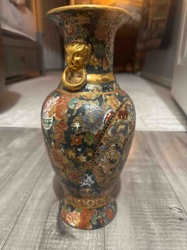
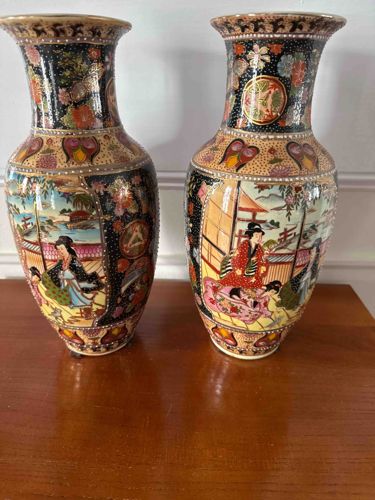
Pair of Japanese Satsuma Style Baluster Vases

Asian Art & Antiquities / Decorative Ceramics

AI Estimated Value

·Not an official valuation·Verify before acting

$150 - $350

As of June 20, 2026

AI Item Analysis

·AI can make mistakes·Verify before acting
This is a matching pair of ceramic baluster-shaped vases, decorated in the Satsuma style. The vases feature a slightly flared rim, a constricted neck, and a swelling body that tapers toward a footed base. The primary decorative scheme consists of large framed cartouches depicting traditional Japanese figural scenes, including Bijin (beautiful women) in kimonos within a landscape setting featuring architecture and foliage. These central panels are surrounded by a dense decorative field of 'millefleur' floral patterns against a black overglaze ground. The color palette is rich, utilizing heavy moriage (raised enamel) in shades of gold, red, pink, and green, which adds a tactile, three-dimensional quality to the surface. Fine gold stippling and geometric borders further define the various regions of the vases. While styled after 19th-century Meiji period wares, the high-gloss finish and specific application of the enamels suggest these are likely mid-to-late 20th-century decorative exports. Condition appears generally good with no visible chips or cracks from the front, though there is typical light wear to the gold gilding on the rims and some minor surface abrasions consistent with age and handling. The craftsmanship shows a high level of detail in the repetitive floral borders and the layered enamel work.
AI Appraisal Report

·AI can make mistakes·Verify before acting
Based on my visual examination of the provided images, this lot consists of a matching pair of mid-to-late 20th-century Satsuma-style baluster vases. While they effectively emulate Meiji-period aesthetics with their use of 'moriage' (raised enamel work) and the classic 'millefleur' (thousand flower) motif surrounding figural cartouches, several indicators point to later production. The high-gloss finish of the black ground and the somewhat stylized, less fluid brushwork on the Bijin figures are characteristic of Japanese decorative export ware from the 1960s to 1980s, rather than the meticulous artisanship of the late 19th century. The gold application, while abundant, lacks the intricate, hand-burnished subtlety of finer antique pieces. Condition appears stable; I observed no obvious structural damage such as hairline cracks or chips on the visible surfaces, though there is expected rubbing to the gilt rims, which is consistent with their decorative age. The market for mid-century Satsuma-style export ware is currently steady but softer than for genuine Meiji antiques. These are primarily valued as decorative objects rather than serious collector's pieces. Comparables for similar vintage export pairs generally realize modest sums at auction, heavily dependent on size and the integrity of the gold work. To confirm a precise date and origin, I would need to physically inspect the underside for maker's marks, which are not visible here. Often these export pieces are marked 'Made in Japan' or bear generic faux-signatures. Without handling the item to assess the weight and the specific crackle of the glaze (kannyu), this appraisal assumes a 20th-century export origin.

Get your items appraised

Instant estimates of your treasures with AI-powered appraisals

Browse More Appraisals