AI Appraisal Estimate

AI-generated estimates · not official valuations

From the user

What was submitted

Photo and notes provided by the user — not generated by AI

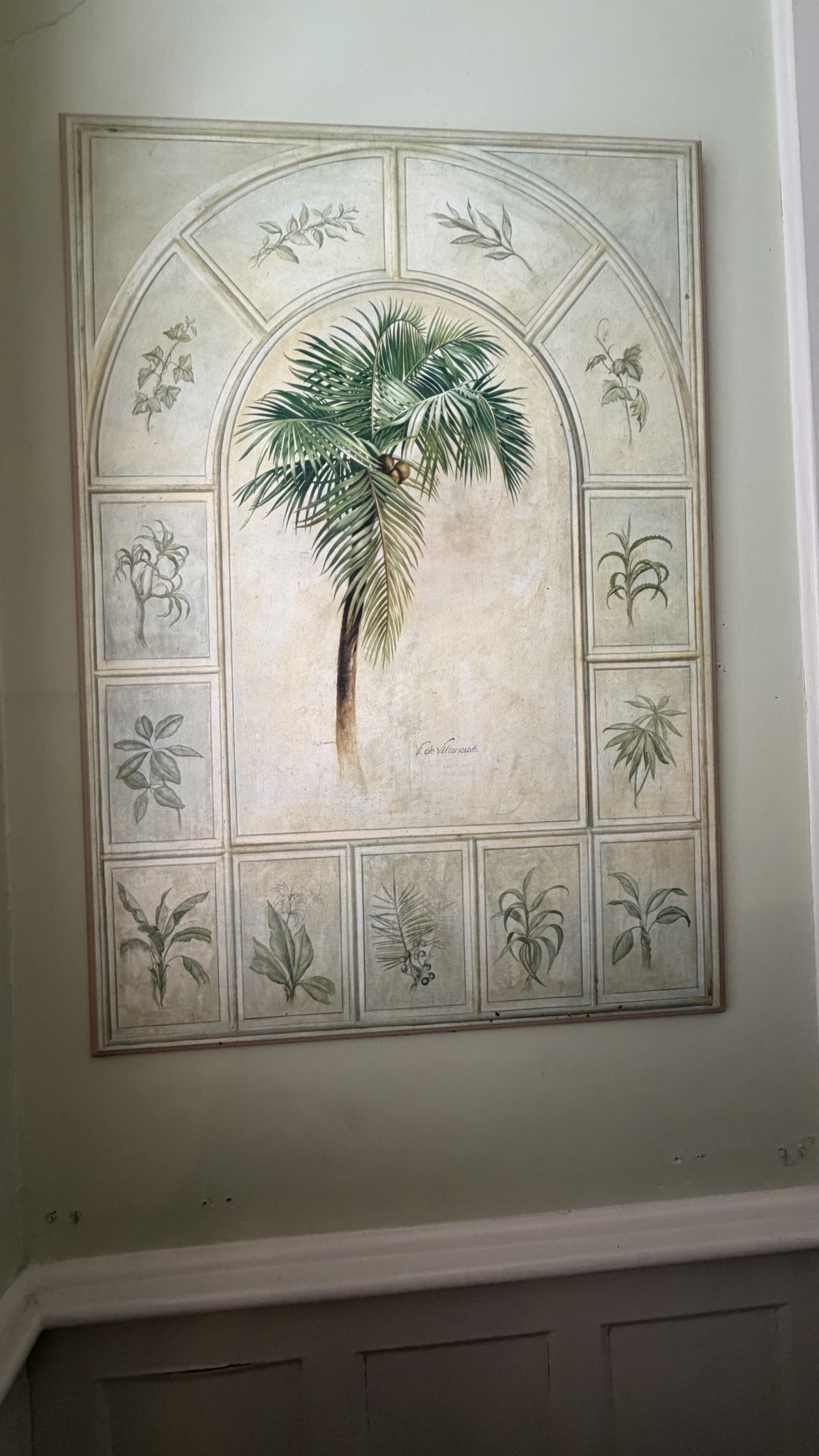
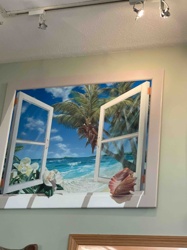
Submitted item photo
Submitted photo · June 23, 2026

User's notes

No additional notes provided.

AI analysis below

AI appraisal

AI analysis & estimate

AI-Generated · Verify before acting

Everything below is generated by AI for informational purposes only. AI can make mistakes — the AI may misidentify items or misattribute them (artist, maker, brand, designer, origin, era). This is not an official valuation and should not be used for insurance, sale, tax, estate, legal, or lending purposes — or any decision requiring a certified appraisal. It is not an authoritative claim about any person, brand, or rights holder — do not share or rely on it as a factual statement about a third party. Always consult qualified professionals before making financial decisions.

Read the full disclaimer

AI Identification

·Not independently authenticated·Verify before acting

Trompe-l'oeil Botanical Mural depicting a Coconut Palm and Specimen Panels

Fine Art - Decorative Mural / Trompe-l'oeil Painting

AI Estimated Value

·Not an official valuation·Verify before acting

$4,500 - $6,500

As of June 23, 2026

AI Item Analysis

·AI can make mistakes·Verify before acting
This is a large-scale, wall-mounted decorative painting or mural executed in a trompe-l'oeil style. The central composition features a detailed coconut palm tree (Cocos nucifera) rendered in earthy greens, browns, and cream tones. The tree is framed by a painted architectural archway consisting of multiple individual recessed panels, each containing a unique botanical specimen including various tropical leaves and vining plants. The artwork is signed 'V. de Villancourt' in the lower-right quadrant of the central panel. The palette is muted and sophisticated, utilizing grisaille and sepia-adjacent tones to create a sense of neoclassical antiquity. The piece appears to be painted on a flat substrate, likely canvas or a composite wood panel, framed in a thin, simple molding. Notable features include the delicate linework and shaded depth that mimics stone masonry. The condition shows minor superficial scuffing and faint darkening consistent with age and exposure to a domestic environment. The style is reminiscent of 18th-century botanical illustrations and European architectural decorative arts, likely a mid-to-late 20th-century commission in the Neoclassical or Regency Revival tradition. The craftsmanship is of high quality, displaying a confident hand in both the botanical anatomy and the dimensional illusionism of the bordering stonework.
AI Appraisal Report

·AI can make mistakes·Verify before acting
Based on my visual analysis, this high-quality trompe-l'oeil mural by V. de Villancourt represents an excellent example of late 20th-century Neoclassical revivalism. The execution of the central Cocos nucifera is anatomically precise, but the value is driven primarily by the sophisticated architectural framing. The use of grisaille and muted earth tones mimics traditional 18th-century European masonry with remarkable depth. The condition appears to be 'Good to Very Good,' with minor scuffing and oxidation noted; however, these age-related imperfections often enhance the desired antique aesthetic of such decorative commissions. Marketplace demand for large-scale botanical murals remains steady among interior designers specializing in the 'Grandmillennial' or Regency styles. Comparable works of this scale and technical proficiency typically realize strong prices at specialized decorative arts auctions. Factors influencing this valuation include the artist's signature and the complex layout of the specimen panels. Please note that this appraisal is based on photographic evidence only. A physical inspection is required to confirm the substrate (canvas vs. panel) and to check for structural warping or previous restoration work. For full authentication, I would recommend a provenance review to determine if this was part of a specific interior commission, as well as a microscopic examination of the pigment layers to definitively rule out digital under-printing. Without a physical UV-light inspection, internal stability and hidden repairs cannot be fully verified.

Get your items appraised

Instant estimates of your treasures with AI-powered appraisals

Browse More Appraisals