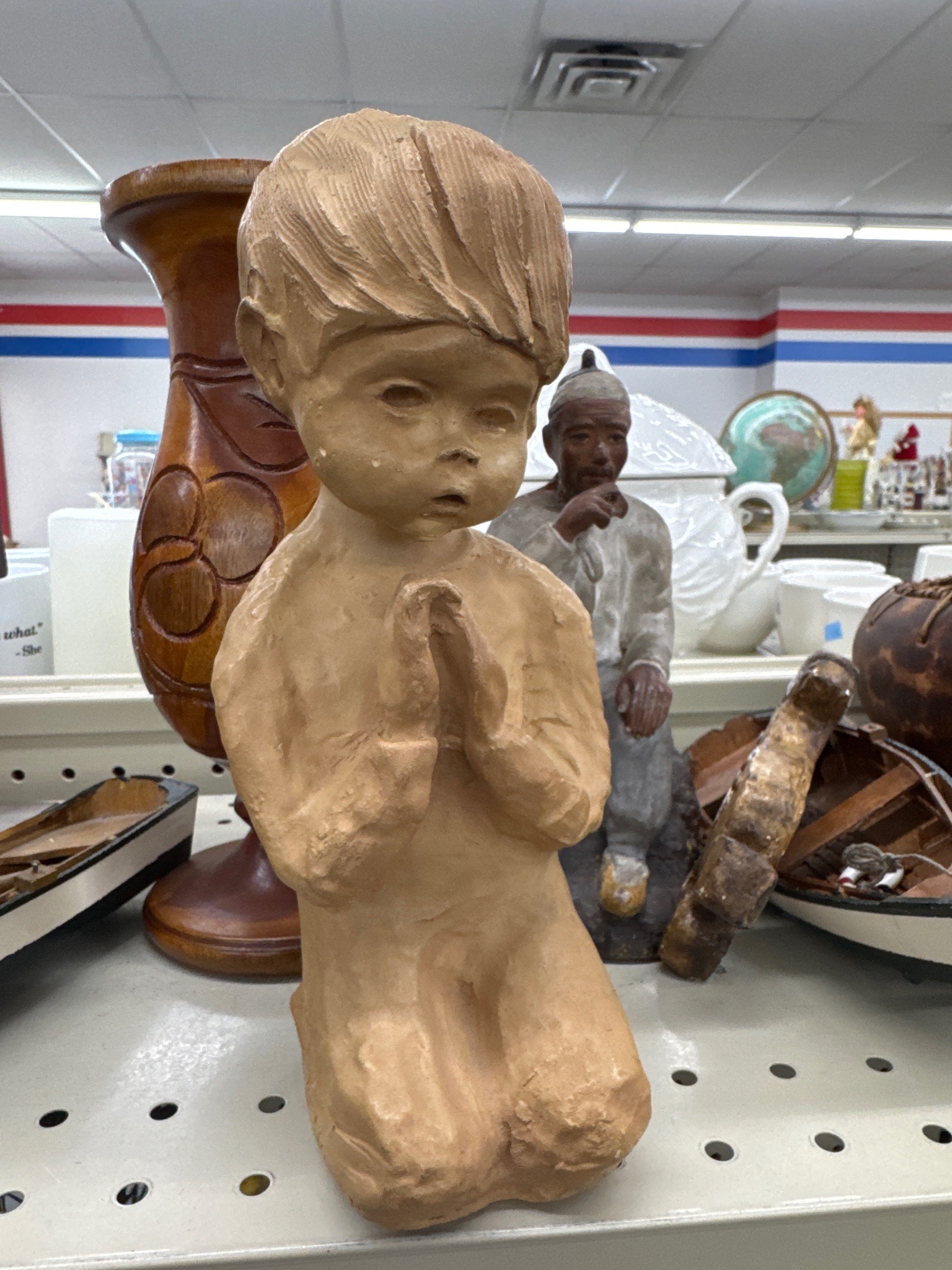
Terracotta Kneeling Child Figurine
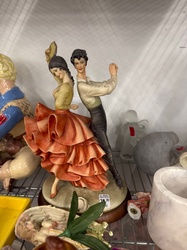
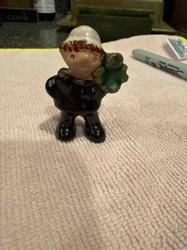
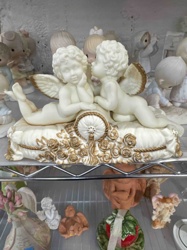
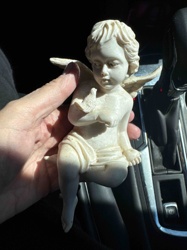
This is a hand-sculpted or molded terracotta figurine of a young child in a kneeling, prayerful pose. The piece measures approximately 10-12 inches in height and is characterized by its monochromatic, unglazed earthy tan or ochre color. The child features a stylized, slightly oversized head with textured, swept-back hair that shows clear tool markings or carving lines. The facial features are soft, with hollowed eyes and a contemplative expression. The body is modestly modeled, with hands pressed together at the chest. The construction appears to be a fired clay material with a matte, porous finish. Notable condition issues include minor chipping and surface wear, particularly around the nose and the base, as well as accumulated dust in the recessed areas. There are no visible maker's marks or signatures on the front, suggesting it may be a mass-produced decorative piece from the mid-to-late 20th century, likely in a folk art or souvenir style. The craftsmanship is decent for a decorative object, focusing more on emotional evocation than anatomical precision.
AI-Generated Appraisal Disclaimer
Estimated Value
$45-85
Basic Information
Category
Decorative Collectibles / Figurines
Appraised On
May 9, 2026
Estimated Value
$45-85
Item Description
This is a hand-sculpted or molded terracotta figurine of a young child in a kneeling, prayerful pose. The piece measures approximately 10-12 inches in height and is characterized by its monochromatic, unglazed earthy tan or ochre color. The child features a stylized, slightly oversized head with textured, swept-back hair that shows clear tool markings or carving lines. The facial features are soft, with hollowed eyes and a contemplative expression. The body is modestly modeled, with hands pressed together at the chest. The construction appears to be a fired clay material with a matte, porous finish. Notable condition issues include minor chipping and surface wear, particularly around the nose and the base, as well as accumulated dust in the recessed areas. There are no visible maker's marks or signatures on the front, suggesting it may be a mass-produced decorative piece from the mid-to-late 20th century, likely in a folk art or souvenir style. The craftsmanship is decent for a decorative object, focusing more on emotional evocation than anatomical precision.

Get Your Items Appraised
Instant estimates of your treasures with AI-powered instant appraisals