AI estimate as of August 27, 2025 · verify with a professional before acting
AI-Generated · Verify before acting
Everything on this page is generated by AI for informational purposes only. AI can make mistakes — the AI may misidentify items or misattribute them (artist, maker, brand, designer, origin, era). This is not an official valuation and should not be used for insurance, sale, tax, estate, legal, or lending purposes — or any decision requiring a certified appraisal. It is not an authoritative claim about any person, brand, or rights holder — do not share or rely on it as a factual statement about a third party. Always consult qualified professionals before making financial decisions.
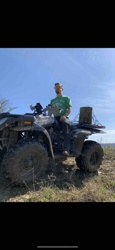
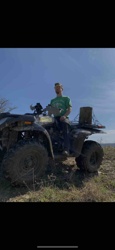
The item depicted is a four-wheeled all-terrain vehicle (ATV), commonly known as a quad bike, appearing to be a utility or recreational model given its size and features. It is predominantly dark-colored, likely black or dark green, and shows significant signs of use in off-road conditions, evidenced by mud splatters on the body, tires, and undercarriage. The ATV features robust, knobby tires designed for traction on uneven or soft terrain. Notable features include front and rear cargo racks; the rear rack has a netted or bungee system holding what appears to be a camouflaged or natural-colored bag or tubular item, suggesting its use for hauling gear. The headlights are visible at the front, and the overall construction points to durability. The visible condition issues are consistent with regular off-road use, including dirt and mud accretion, which suggests a well-used but potentially well-maintained machine. No specific maker's marks or model names are clearly discernible from the image, but its robust build and the presence of cargo racks indicate it's designed for utility or adventurous use. The overall impression is that of a contemporary ATV, likely manufactured within the last 15-20 years, rather than a vintage model, given its modern design elements.
AI Appraisal Report
I have examined the provided image of a four-wheeled ATV. Based on its appearance, this is a contemporary utility or recreational quad bike, likely manufactured within the last 15-20 years owing to its modern design. The dominant dark color, robust knobby tires, and evident mud splatters across the body, tires, and undercarriage strongly suggest regular off-road use. Features such as front and rear cargo racks (the rear currently holding a camouflaged bag) enhance its utility aspect. The visible headlights and durable construction further support its design for adventurous use.
From a visual examination, the ATV appears to be in 'good, used' condition. While heavily soiled with mud, which is expected for such an item, there are no immediately apparent signs of major structural damage, significant dents, or missing components. This suggests a well-used but potentially well-maintained machine. Authenticity, based solely on this image, refers to it being a genuine ATV rather than a replica; its construction and features align with standard ATV designs. However, without clear maker's marks or model identification, I cannot confirm its specific brand or year.
Market conditions for used ATVs are generally strong, particularly for utility models, as they offer practical use for property maintenance, hunting, or recreational trail riding. Comparables would include models from manufacturers like Honda, Yamaha, Polaris, or Kawasaki in similar utility/recreational configurations. Demand for these vehicles remains consistent, particularly in rural or recreational areas. Rarity is not a factor here; this appears to be a mass-produced item.
Factors significantly impacting value include the lack of specific brand and model identification, which prevents me from checking reliability records or typical resale values for that specific make. The 'good, used' condition implies it's operational, but an in-person assessment would be crucial to confirm engine health, transmission, suspension integrity, and electrical systems. The mud, while indicative of use, also obscures a detailed view of potential cosmetic damage (scratches, scuffs) or more serious mechanical issues (leaks, rust).
For full authentication and a more precise valuation, an in-person examination is critical. This would involve a mechanical inspection, starting the engine, testing all functions, and verifying the Vehicle Identification Number (VIN) for provenance documentation (e.g., title, service records). Scientific testing is not applicable here.