AI estimate as of July 20, 2025 · verify with a professional before acting
AI-Generated · Verify before acting
Everything on this page is generated by AI for informational purposes only. AI can make mistakes — the AI may misidentify items or misattribute them (artist, maker, brand, designer, origin, era). This is not an official valuation and should not be used for insurance, sale, tax, estate, legal, or lending purposes — or any decision requiring a certified appraisal. It is not an authoritative claim about any person, brand, or rights holder — do not share or rely on it as a factual statement about a third party. Always consult qualified professionals before making financial decisions.
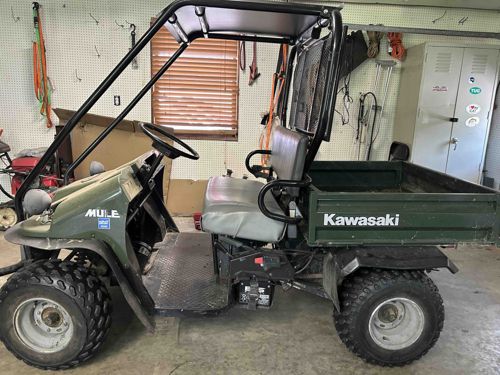
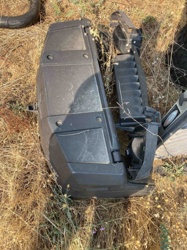
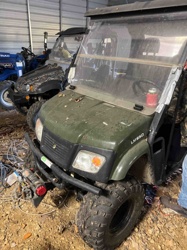
This is a Kawasaki Mule utility vehicle, characterized by its olive green body panels and dump bed, likely an older model given the styling and visible wear. The primary construction appears to be a robust metal frame, covered with molded plastic body components. It features a roll-over protection structure (ROPS) made of black tubular metal, extending from the front of the vehicle over the occupant's area to the rear. The vehicle has four wheels with large, aggressive tread tires, indicative of off-road or varied terrain use. The wheels themselves appear to be silver-colored steel or aluminum. The front body panel on the driver's side clearly displays "MULE" lettering in white with a blue rectangular sticker below it. The grey upholstered bench seat shows some signs of wear and dirt consistent with outdoor use. The rear cargo bed is made of olive green metal, with the 'Kawasaki' logo prominently displayed in white lettering on the side. The bed appears to be a dump bed feature, ideal for hauling materials. Observable condition issues include general dirt and dust accumulation, minor scuffs on the body panels, and some potential surface rust on metal components, although none of these appear to be significant damage. The floorboard area is a textured black material, likely for grip. The overall appearance suggests a well-used but functional utility vehicle, designed for durability and practical tasks rather than aesthetic appeal. The presence of the "MULE" and "Kawasaki" branding indicates the manufacturer and specific product line. The exact age is not discernible without a model number or VIN, but it likely dates from the late 1990s to early 2000s based on the design cues.
AI Appraisal Report
Upon my virtual examination of this Kawasaki Mule utility vehicle, I assess it to be an authentic Kawasaki product, evidenced by the clear 'MULE' and 'Kawasaki' branding. The design cues strongly suggest a model from the late 1990s to early 2000s. Its condition appears to be well-used but functional. I observe general dirt, minor scuffs on body panels, and some potential superficial rust on metal components; however, these are consistent with a working utility vehicle and do not indicate significant structural damage. The robust metal frame, intact ROPS, and aggressive-tread tires point to continued utility.
From a market perspective, demand for functional utility vehicles like the Kawasaki Mule remains consistent, particularly for agricultural, landscaping, or large property maintenance. While not rare, older, well-maintained units hold value due to their durability and lower entry cost compared to new models. Comparables for similar vintage and condition Kawasaki Mules typically range from $2,500 to $4,500, depending heavily on confirmed mechanical functionality. The dump bed feature adds value due to increased utility.
Factors significantly impacting value here include: the confirmed operational status of the engine, transmission, and dump mechanism; the integrity of the hydraulic system if equipped; and the actual mileage/hours of use. My valuation below is based on the assumption of a mechanically sound and operational vehicle, despite the cosmetic wear.
Limitations in authenticity verification from images alone are significant. While branding is visible, I cannot confirm the originality of all parts or the absence of major hidden structural damage. For full authentication and a definitive valuation, an in-person examination is crucial. This would involve a mechanical inspection to verify engine health, transmission functionality, electrical systems, and hydraulic operation. Obtaining maintenance records or provenance documentation, such as the VIN, would also be essential to confirm the exact model year, service history, and mileage/hours, which directly influence market value.