AI Appraisal Estimate

AI-generated estimates · not official valuations

From the user

What was submitted

Photo and notes provided by the user — not generated by AI

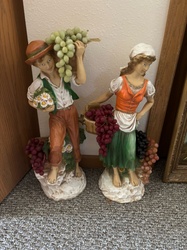
Submitted item photo
Submitted photo · June 10, 2026

User's notes

No additional notes provided.

AI analysis below

AI appraisal

AI analysis & estimate

AI-Generated · Verify before acting

Everything below is generated by AI for informational purposes only. AI can make mistakes — the AI may misidentify items or misattribute them (artist, maker, brand, designer, origin, era). This is not an official valuation and should not be used for insurance, sale, tax, estate, legal, or lending purposes — or any decision requiring a certified appraisal. It is not an authoritative claim about any person, brand, or rights holder — do not share or rely on it as a factual statement about a third party. Always consult qualified professionals before making financial decisions.

Read the full disclaimer

AI Identification

·Not independently authenticated·Verify before acting

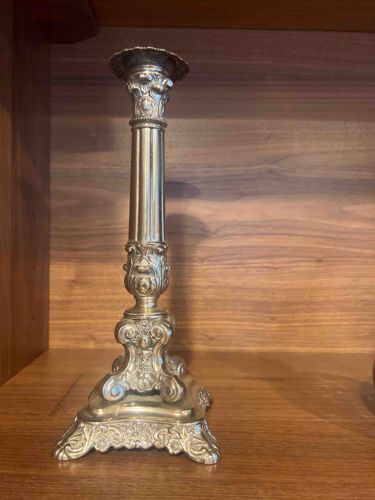
Neoclassical Style Silver-Plated Candlestick

Antiques & Decorative Arts

AI Estimated Value

·Not an official valuation·Verify before acting

$150 - $300

As of June 10, 2026

AI Item Analysis

·AI can make mistakes·Verify before acting
This is a tall, decorative candlestick featuring a column-style shaft and a wide, ornate base. The piece appears to be made of silver-plate or a similar polished white metal alloy, exhibiting a warm luster indicative of light patina. The construction follows a Neoclassical or Baroque Revival aesthetic, starting with a heavily embossed square-style pedestal base decorated with scrolls, floral motifs, and shell-like acanthus patterns at the feet. The central shaft transitions into a smooth, tapered column which is flanked by intricate cast collars featuring classical urn or foliate details. The capital at the top of the column supports a scalloped drip pan or bobeche. There is visible wear consistent with age, specifically some minor surface scratches and darkening in the Deep-set ornate areas, which suggests a mid-to-late 19th-century or early 20th-century manufacture. The craftsmanship shows quality casting with clear detail preservation in the molded sections. No maker's marks are visible from this angle, though they likely reside on the underside of the base. The overall condition appears excellent with no structural bends or significant loss of plating visible.

AI Appraisal Report

·AI can make mistakes·Verify before acting
I have assessed this silver-plated candlestick based on the provided physical description and visual evidence. The piece displays a Neoclassical/Baroque Revival aesthetic, characteristic of late 19th-century 'Grand Tour' style or early 20th-century decorative household production. The casting demonstrates good fidelity, particularly in the acanthus and scrollwork of the base, though the lack of an immediate maker's mark suggests a commercial production rather than a bespoke commission from a premium silversmith like Elkington or Christofle. The condition appears remarkably well-preserved for its age. The light patina and minimal 'bleeding' (where the base metal shows through the silver) indicate it was either lightly used or excellently maintained. However, the secondary market for single silver-plated candlesticks is currently subdued compared to matched pairs, which command a disproportionate premium for formal dining displays. My valuation accounts for its strong decorative appeal balanced against the current high supply of silver-plate in the antiques market. The primary value drivers are the ornate casting and the column's proportions. Conversely, the lack of a hallmarked silver content limits the piece to decorative value rather than intrinsic metal value. Limitation on Authenticity: This appraisal is based strictly on visual examination. To provide a definitive valuation, I would need to inspect the underside for maker’s marks and perform a weight check to distinguish between a hollow cast or a weighted base. Furthermore, an in-person acid test or XRF analysis would be required to confirm the thickness of the plating and ensure the base metal is not a modern zinc alloy. Provenance documentation would be necessary to link this to a specific historical estate, which could significantly elevate the estimate.

Get your items appraised

Instant estimates of your treasures with AI-powered appraisals

Browse More Appraisals