Vintage Brass Candle Wick Snuffer Scissors
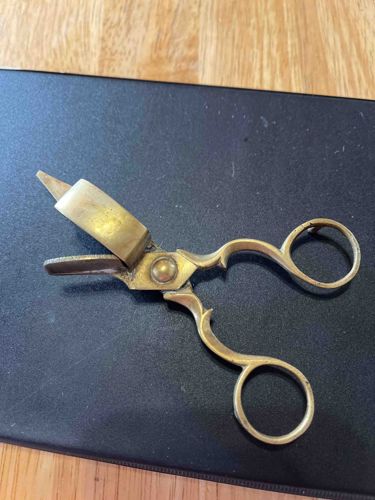
This is a vintage candle wick snuffer, designed in the form of specialized scissors with a unique box-like reservoir on one blade. The item is constructed from solid brass, exhibiting a muted yellow-gold hue with a moderate aged patina. The physical design features two finger rings connected to elegantly curved shanks that meet at a central dome-headed pivot screw. The functional end consists of one flat, broad blade that acts as a base and a second blade equipped with a semicircular metal box. This box is intended to trap the trimmed wick and any associated soot or debris, preventing it from falling into the wax. The tip of the device is pointed, likely to help straighten or move a wick before trimming. In terms of condition, the brass displays surface wear including small scratches, localized tarnishing, and some darker oxidation in the crevices of the finger loops and pivot. The craftsmanship is utilitarian yet decorative, typical of late 19th to early 20th-century metalwork. No distinct maker's marks are visible in the provided image, but the casting quality suggests a mass-produced item from the late Victorian or Edwardian style period. It remains in functional condition despite the surface aging.
AI-Generated Appraisal Disclaimer
Estimated Value
$35.00 - $65.00
Basic Information
Category
Antiques & Decorative Arts
Appraised On
February 8, 2026
Estimated Value
$35.00 - $65.00
Item Description
This is a vintage candle wick snuffer, designed in the form of specialized scissors with a unique box-like reservoir on one blade. The item is constructed from solid brass, exhibiting a muted yellow-gold hue with a moderate aged patina. The physical design features two finger rings connected to elegantly curved shanks that meet at a central dome-headed pivot screw. The functional end consists of one flat, broad blade that acts as a base and a second blade equipped with a semicircular metal box. This box is intended to trap the trimmed wick and any associated soot or debris, preventing it from falling into the wax. The tip of the device is pointed, likely to help straighten or move a wick before trimming. In terms of condition, the brass displays surface wear including small scratches, localized tarnishing, and some darker oxidation in the crevices of the finger loops and pivot. The craftsmanship is utilitarian yet decorative, typical of late 19th to early 20th-century metalwork. No distinct maker's marks are visible in the provided image, but the casting quality suggests a mass-produced item from the late Victorian or Edwardian style period. It remains in functional condition despite the surface aging.

Get Your Items Appraised
Instant estimates of your treasures with AI-powered instant appraisals