AI identification & appraisal estimate

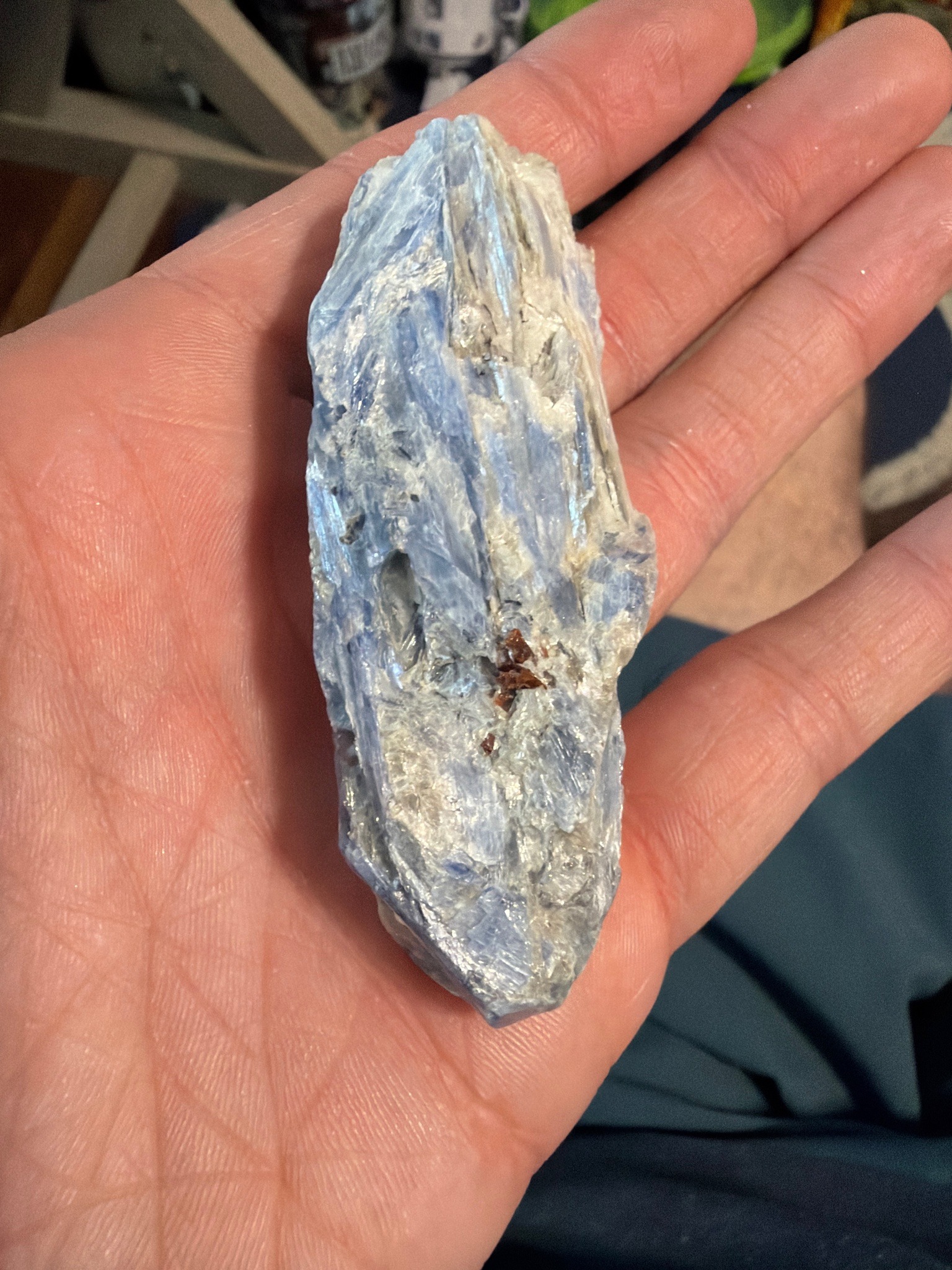
Raw mineral specimen consistent with Blue Kyanite

This name is the AI's identification of the item — it may be incorrect.

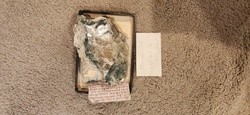
Submitted photo of Raw mineral specimen consistent with Blue Kyanite
Photo submitted by the user — not generated by AI

AI Estimated Value

Not an official valuation

$15 - $35

AI estimate as of June 10, 2026 · verify with a professional before acting

AI-Generated · Verify before acting

Everything on this page is generated by AI for informational purposes only. AI can make mistakes — the AI may misidentify items or misattribute them (artist, maker, brand, designer, origin, era). This is not an official valuation and should not be used for insurance, sale, tax, estate, legal, or lending purposes — or any decision requiring a certified appraisal. It is not an authoritative claim about any person, brand, or rights holder — do not share or rely on it as a factual statement about a third party. Always consult qualified professionals before making financial decisions.

Read the full disclaimer

AI Item Analysis

This item appears to be a raw, unpolished mineral specimen with physical characteristics strongly consistent with Blue Kyanite. It measures approximately 3 to 4 inches in length based on its scale relative to the person's hand. The specimen displays a distinct bladed crystal habit, consisting of elongated, columnar structures that are typical of the silicate mineral kyanite. Its color palette is primarily composed of various shades of sky blue and cornflower blue, interspersed with white to translucent silvery-gray areas of quartz or mica matrix. There is a visible pearly luster on the cleavage faces, which is a common optical property for this mineral. Small, dark reddish-brown inclusions are visible near the center, which could be garnets, a common companion mineral in kyanite-bearing metamorphic rocks. The piece shows natural fracturing and roughly textured edges, consistent with a field-collected or minimally processed geologic sample. No visible maker's marks or synthetic treatments are apparent from the image. Because mineral identification based solely on visual evidence can be misleading (as multiple minerals like celestite or certain quartz varieties can sometimes mimic this appearance), this identification is a hypothesis based on morphology and color, subject to a Mohs hardness test for verification.
AI Appraisal Report

Based on my visual analysis of the provided image, this specimen exhibits characteristics—such as a bladed crystal habit and pearly luster—strongly consistent with blue kyanite in a quartz or mica matrix. However, I cannot verify the mineral species with certainty from a photo alone, as a physical Mohs hardness test and specific gravity analysis would be required to rule out lookalikes. Assuming the hypothesis of blue kyanite is correct, the value is determined by its size (approximately 3-4 inches), the saturation of the blue color, and the presence of potential garnet inclusions which add mineralogical interest. The market for common kyanite specimens is stable but highly saturated. High-end collector pieces typically require larger individual blades or higher transparency, while this piece represents a quality decorative or educational sample. If this specimen were to be identified as a more common dyed material or a glass simulant, the value would likely drop below $5. Conversely, if the dark inclusions were confirmed as high-quality index minerals, it could sit at the higher end of the range. For a formal valuation, an in-person inspection by a mineralogist is recommended to confirm the lack of synthetic treatments and to verify the crystal structure.

Keep exploring

More minerals and fossils appraisals

Get your items appraised

Instant AI-powered appraisal estimates from a photo

Browse More Appraisals