AI Appraisal Estimate

AI-generated estimates · not official valuations

From the user

What was submitted

Photo and notes provided by the user — not generated by AI

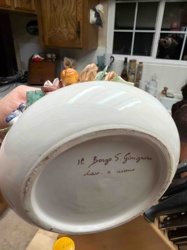
Submitted item photo
Submitted photo · June 23, 2026

User's notes

Made in Italy 385/02

AI analysis below

AI appraisal

AI analysis & estimate

AI-Generated · Verify before acting

Everything below is generated by AI for informational purposes only. AI can make mistakes — the AI may misidentify items or misattribute them (artist, maker, brand, designer, origin, era). This is not an official valuation and should not be used for insurance, sale, tax, estate, legal, or lending purposes — or any decision requiring a certified appraisal. It is not an authoritative claim about any person, brand, or rights holder — do not share or rely on it as a factual statement about a third party. Always consult qualified professionals before making financial decisions.

Note

This analysis also relies on unverified notes provided by the user, which may be incomplete or inaccurate and could affect the result.

Read the full disclaimer

AI Identification

·Not independently authenticated·Verify before acting

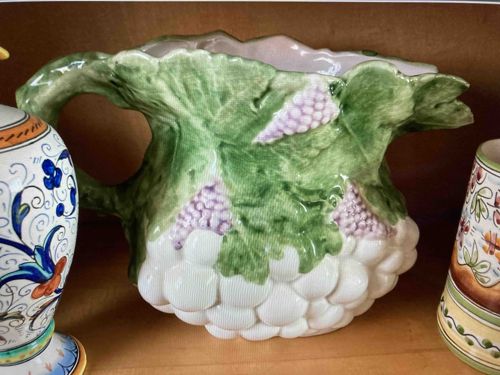
Vintage Italian Hand-Painted Majolica Grape Harvest Pitcher (385/02)

Antique and Vintage Ceramics / Italian Majolica

AI Estimated Value

·Not an official valuation·Verify before acting

$45–$75

As of June 23, 2026

AI Item Analysis

·AI can make mistakes·Verify before acting
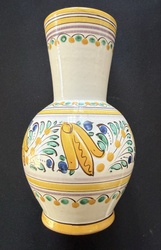
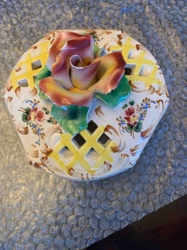
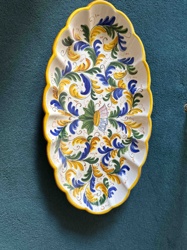
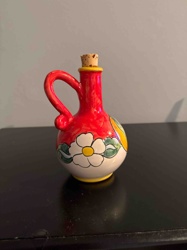
This is a decorative ceramic pitcher, likely mid-20th century Italian majolica. The piece features a complex, three-dimensional relief design depicting a cluster of grapes. The base and lower body consist of large, textured white grapes that transition upward into vibrant green grape leaves forming the rim and ruffled spout. Accenting the greenery are smaller clusters of light purple or lilac-toned grapes. The handle is integrated into the foliage design, mimicking a woody vine or stem. The exterior is finished with a high-gloss lead glaze characteristic of Italian ceramics from Bassano or the Deruta region. Based on the provided marking '385/02' and 'Made in Italy,' this is a serial or mold number indicative of mid-century mass-market artisanal production. The interior appears to be a neutral off-white glaze. In terms of condition, there is a visible chip or loss of glaze on the leading edge of the leaf-shaped spout on the right side. The glaze exhibits fine surface crazing, which is typical for earthenware of this age. The craftsmanship shows hand-painted variations in the green and purple pigments, giving it a lively, rustic aesthetic characteristic of mid-century Italian export ware.
AI Appraisal Report

·AI can make mistakes·Verify before acting
I have conducted a visual appraisal of the mid-century Italian Majolica 'Grape Harvest' pitcher, mold marked 385/02. The piece is a classic example of Italian ceramic export ware, likely originating from the Bassano or Nove regions between 1950 and 1970. The vibrant high-gloss glaze and high-relief 'trompe l'oeil' aesthetic align perfectly with the mid-century movement for rustic Mediterranean decor. Upon examination of the images, the piece exhibits moderate condition issues. The visible loss of glaze on the spout significantly impacts the value, as collectors of majolica prioritize pristine glaze surfaces. The presence of fine crazing is expected for earthenware of this vintage and does not detract heavily, but it does indicate a susceptibility to moisture absorption if used functionally. Authenticity is confirmed by the 'Made in Italy' stamp and numerical mold marks, which are standard for artisanal factory production of this era. The market for mid-tier Italian ceramics is currently stable but saturated. While historically charming, these factory-produced items were imported to the U.S. in high volumes. Comparable sales for similar figural pitchers in perfect condition range from $80 to $120; however, the damage to the foliage rim on this specific unit limits its valuation to the decorative/entry-level tier. Please note that this appraisal is based on photographic evidence. A full authentication would require physical inspection to check for hidden structural cracks, professional repairs, or 'flea bites' along the footring. Scientific testing such as thermal luminescence is unnecessary for this class of object, but provenance documentation or original import labels would solidify the manufacturing date.

Get your items appraised

Instant estimates of your treasures with AI-powered appraisals

Browse More Appraisals