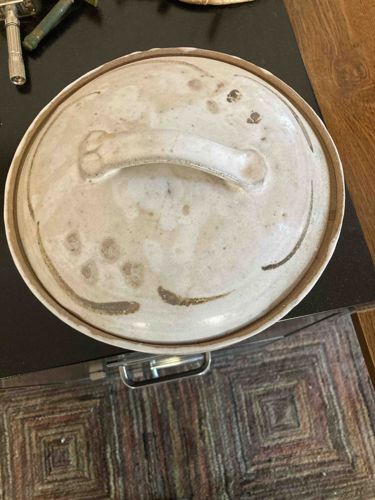
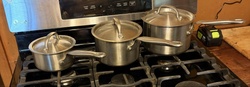
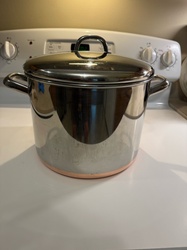
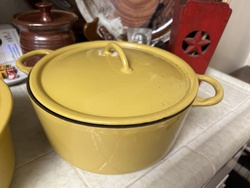
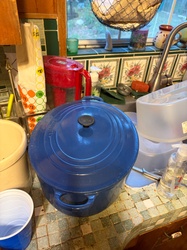
Approximately 9 inch round by 3 inch high clay ceramic pot with lid, year and brand unknown
These notes were written by the person who submitted this item. Appraiser.AI has not verified them, and the AI's identification and estimate may rely on them.
AI Estimated Value
Not an official valuation
$40-70
AI estimate as of November 11, 2025 · verify with a professional before acting
AI-Generated · Verify before acting
Everything on this page is generated by AI for informational purposes only. AI can make mistakes — the AI may misidentify items or misattribute them (artist, maker, brand, designer, origin, era). This is not an official valuation and should not be used for insurance, sale, tax, estate, legal, or lending purposes — or any decision requiring a certified appraisal. It is not an authoritative claim about any person, brand, or rights holder — do not share or rely on it as a factual statement about a third party. Always consult qualified professionals before making financial decisions.
This analysis also relies on unverified notes provided by the user, which may be incomplete or inaccurate and could affect the result.
This is a round, lidded casserole dish, likely crafted from stoneware or earthenware clay, measuring approximately 9 inches in diameter and 3 inches in height. The primary color of the glaze appears to be an off-white or cream, exhibiting a somewhat mottled or variegated texture, suggesting a hand-applied finish with potential intentional irregularities or firing effects. The surface displays various brown and darker speckled inclusions, some forming more prominent, irregular blotches, possibly from the firing process or deliberate glazing techniques. A distinct, integrated handle is centrally located on the lid, formed from the same ceramic material and finished with the same glaze, featuring a slightly raised, elongated oval shape for gripping. The rim of the lid is defined by a darker brown line, which also appears in stylized, expressive brushstrokes or marks on the lid's surface. These marks, along with the irregular speckling, contribute to a rustic, artisanal aesthetic. The overall condition appears used, with potential signs of wear consistent with a utilitarian kitchen item, though no overt chips or cracks are immediately visible from the provided image. The lack of clear manufacturer's marks or signatures, combined with the handmade appearance, suggests it may be a piece of studio pottery. The style leans towards a folk art or rustic stoneware tradition, potentially dating from the mid to late 20th century. The craftsmanship, though not perfectly uniform, indicates a handmade item with individual character.
AI Appraisal Report
This studio pottery casserole dish with lid, approximately 9 inches in diameter and 3 inches high, presents as a charming, handcrafted piece. The off-white/cream glaze with brown speckling and darker brushstroke accents gives it a rustic, folk art aesthetic. The integrated handle on the lid further emphasizes its handmade nature. Based on the visual evidence, the condition appears good, consistent with a used utilitarian item of its type, with no visible chips or cracks. The mottled glaze and irregular speckling are typical of studio pottery and contribute to its unique character, rather than indicating flaws.
Authenticity is challenging to establish definitively from images alone. The lack of clear maker's marks or signatures, while common in studio pottery, means attribution to a specific artist or studio is impossible without physical inspection and provenance. Its style suggests a mid to late 20th-century origin. For full authentication, I would need an in-person examination to check for subtle firing flaws, clay body characteristics, and any faint, obscured marks. Provenance documentation, such as purchase receipts or artist's statements, would also be crucial.
In terms of market conditions, demand for unmarked studio pottery, while present, is typically for decorative or functional purposes rather than collector's items, unless attributed to a known artist. Comparables in the secondary market for similar-sized, unmarked studio stoneware casserole dishes generally fetch between $30 and $80, depending on condition, glaze appeal, and regional market trends. The handmade quality and functional utility drive its value. The absence of an identifiable maker significantly limits its upper valuation range, as rarity would typically stem from a known maker's output. The estimated value reflects its appeal as a functional and aesthetically pleasing handcrafted item, vintage kitchen item, considering its unmarked status and lack of specific provenance.