AI Appraisal Estimate

AI-generated estimates · not official valuations

From the user

What was submitted

Photo and notes provided by the user — not generated by AI

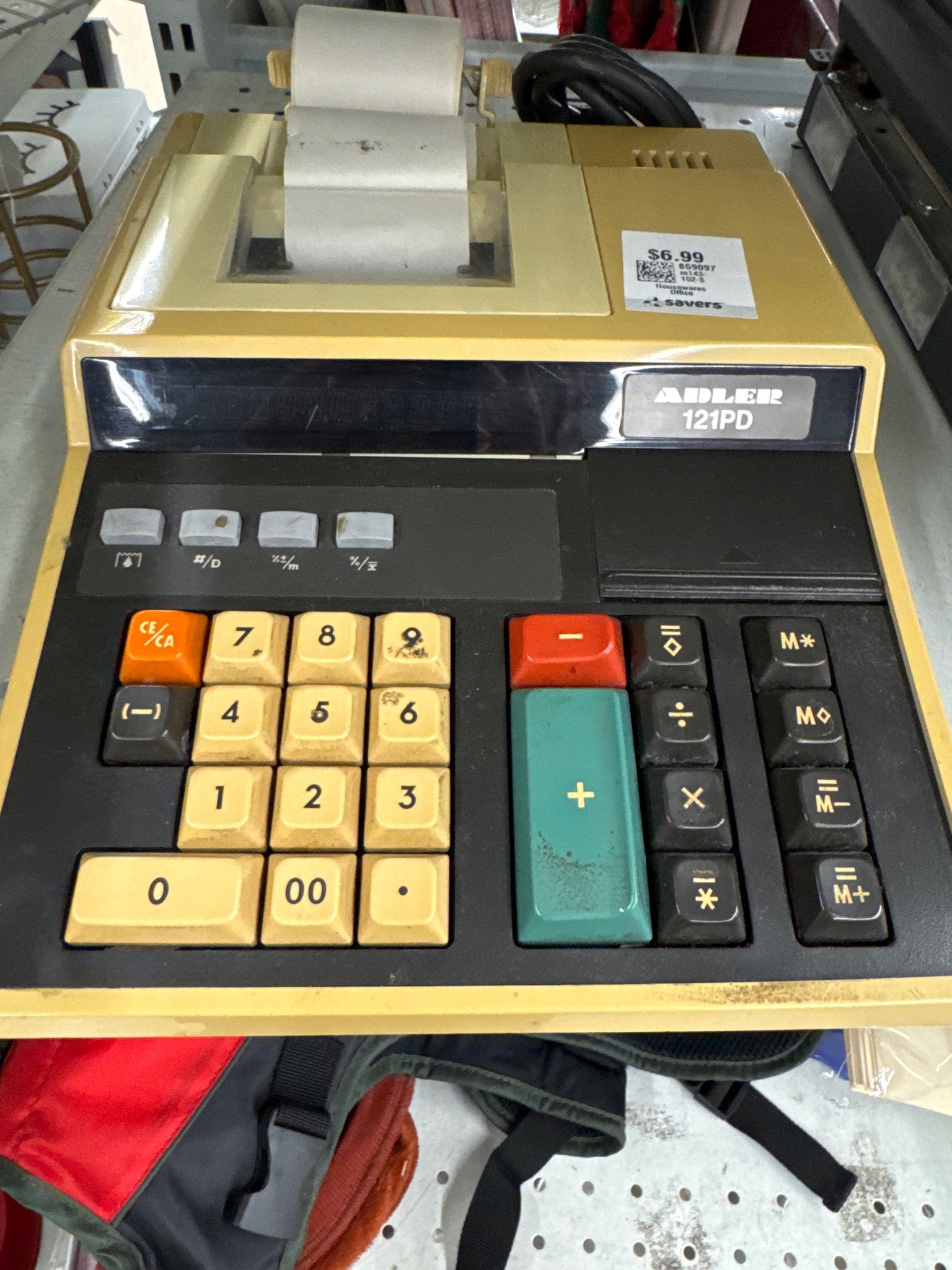
Submitted item photo
Submitted photo · June 1, 2026

User's notes

No additional notes provided.

AI analysis below

AI appraisal

AI analysis & estimate

AI-Generated · Verify before acting

Everything below is generated by AI for informational purposes only. AI can make mistakes — the AI may misidentify items or misattribute them (artist, maker, brand, designer, origin, era). This is not an official valuation and should not be used for insurance, sale, tax, estate, legal, or lending purposes — or any decision requiring a certified appraisal. It is not an authoritative claim about any person, brand, or rights holder — do not share or rely on it as a factual statement about a third party. Always consult qualified professionals before making financial decisions.

Read the full disclaimer

AI Identification

·Not independently authenticated·Verify before acting

Adler 121PD Desktop Printing Calculator

Vintage Office Equipment / Calculators

AI Estimated Value

·Not an official valuation·Verify before acting

$40-60

As of June 1, 2026

AI Item Analysis

·AI can make mistakes·Verify before acting
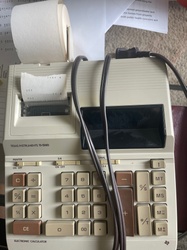
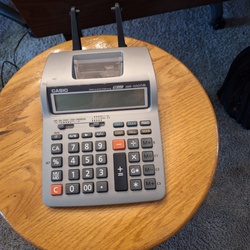
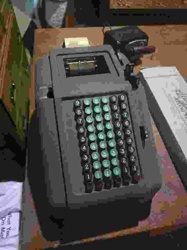
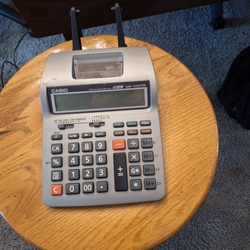
This is a vintage Adler 121PD electronic desktop printing calculator, likely dating from the mid-to-late 1970s. The unit features a cream-colored plastic housing that shows significant yellowing associated with age and exposure. It is equipped with a built-in paper roll printer at the top and a standard numerical keypad below. The interface includes color-coded keys: a large teal '+' bar, a red '-' bar, an orange 'C/CA' key, and black secondary function keys. The number keys are light yellow with black numerals. A prominent 'ADLER 121PD' branding plate is visible on the upper right of the control panel. Condition-wise, the item shows heavy signs of use and age, including surface grime, dirt accumulation between keys, and black ink or scuff marks on several numeric keys (notably the 6, 9, and 1 keys). The teal plus bar shows significant surface wear and staining. The paper roll currently loaded is partially used and slightly yellowed. The unit retains its original thick black power cord, which appears intact. A 'Savers' thrift store price sticker of $6.99 is adhered to the top casing. Measuring approximately 10-12 inches in length, this machine is a classic example of 20th-century office technology, showcasing the transition from mechanical to electronic accounting tools.

AI Appraisal Report

·AI can make mistakes·Verify before acting
I have conducted a visual examination of the Adler 121PD electronic desktop printing calculator. This unit, a staple of 1970s office technology, appears to be an authentic example of West German engineering from the Triumph-Adler era. The branding, key typography, and chassis design are consistent with the period; however, full authentication would require internal inspection of the logic boards and serial number verification against manufacturer catalogs. The condition of this specimen is 'fair' at best. The significant UV-induced yellowing of the cream plastic housing and the heavy grime accumulation between the keys suggest it was used in a high-traffic environment for decades. Notable wear, including scuffs on the numeric keys and staining on the teal addition bar, negatively impacts the aesthetic value for collectors looking for 'museum grade' examples. The presence of a $6.99 thrift store sticker suggests a lack of curated provenance. Technically, the market for vintage desktop calculators is niche. While there is a growing interest in 'retro-tech,' the 121PD is not as rare as the earlier Nixie tube models. Current market comparables for tested, working Adler units in better cosmetic condition range from $80 to $120. Given the current untested status and significant cleaning required, the value is suppressed. Limitations: This appraisal assumes the internal printing mechanism and thermal/impact head are functional. An in-person examination is necessary to test the capacitor health, ensure no battery leakage has occurred on the PCB, and verify the mechanical integrity of the paper feed. Without power-on testing, the item is valued primarily as a decorative 'prop' or for parts.

Get your items appraised

Instant estimates of your treasures with AI-powered appraisals

Browse More Appraisals