AI identification & appraisal estimate

Ceramic Ewer and Basin Set with Hand-Painted Fruit Motif

This name is the AI's identification of the item — it may be incorrect.

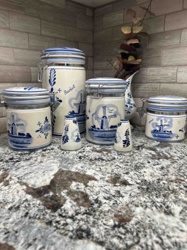
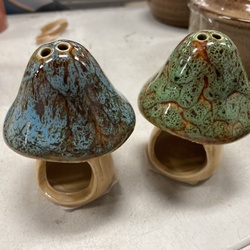
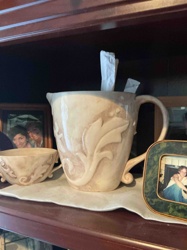
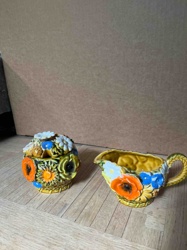
Submitted photo of Ceramic Ewer and Basin Set with Hand-Painted Fruit Motif
Photo submitted by the user — not generated by AI

AI Estimated Value

Not an official valuation

$60-100

AI estimate as of October 2, 2025 · verify with a professional before acting

AI-Generated · Verify before acting

Everything on this page is generated by AI for informational purposes only. AI can make mistakes — the AI may misidentify items or misattribute them (artist, maker, brand, designer, origin, era). This is not an official valuation and should not be used for insurance, sale, tax, estate, legal, or lending purposes — or any decision requiring a certified appraisal. It is not an authoritative claim about any person, brand, or rights holder — do not share or rely on it as a factual statement about a third party. Always consult qualified professionals before making financial decisions.

Read the full disclaimer

AI Item Analysis

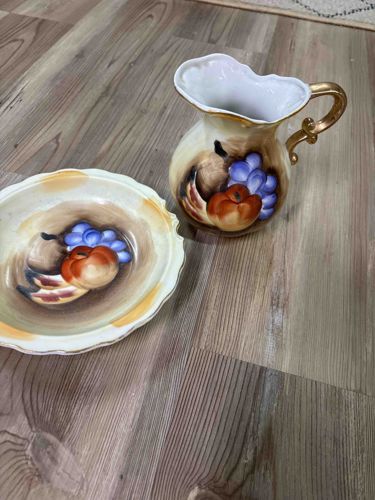
This is a two-piece ceramic set consisting of an ewer (pitcher) and a matching basin. Both pieces feature a lustrous white interior and a cream-to-light-brown gradient exterior, adorned with a hand-painted fruit motif. The ewer is squat and bulbous with a fluted rim and an ornate, scrolled handle finished in a metallic gold accent. The exterior painting displays a cluster of fruits, prominently featuring a bunch of purple grapes, a reddish-orange apple or similar round fruit, and possibly other brown-toned fruits or leaves. The basin is shallow with a scalloped edge and a similar fruit motif painted in its center, mirroring the ewer's design. The painting technique appears somewhat broad and expressive, characteristic of decorative ceramics rather than fine art pottery. Both pieces are likely earthenware or porcelain, judging by their smooth, glazed finish. The metallic gold accents on the ewer's handle and rim, and likely on the basin's rim, suggest a decorative or ornamental purpose. While no specific maker's marks or signatures are visible in the provided images, the style suggests a mid-20th-century decorative ceramic, possibly from Europe or Asia, designed for aesthetic display rather than utilitarian use. There are no immediately visible chips, cracks, or significant wear, but a closer inspection would be required to confirm the full condition and integrity of the glaze and paintwork. The craftsmanship appears to be of moderate quality, typical for mass-produced or semi-handcrafted decorative items.
AI Appraisal Report

I've examined this Ceramic Ewer and Basin Set with Hand-Painted Fruit Motif. Visually, the set appears to be in good condition with no obvious chips, cracks, or significant wear to the glaze or paintwork, though an in-person inspection would be crucial to confirm the integrity of the metallic accents and the hand-painted details. The design, featuring a cream-to-light-brown gradient exterior with a hand-painted fruit motif and metallic gold accents, suggests it’s a decorative ceramic item. Stylistically, I would place this piece in the mid-20th century, likely from a European or Asian manufacturer known for decorative home goods. The painting technique is broad and more decorative than artistic, indicative of mass-produced or semi-handcrafted items. While attractive, the lack of discernible maker's marks or signatures, coupled with the decorative quality, limits its collectible appeal. Comparable items on the market, such as similar vintage decorative ceramic ewer and basin sets, typically retail in the $50-$120 range, depending on condition and specific design appeal. Demand for such decorative ceramics is moderate, often driven by interior design trends rather than intrinsic rarity, as these were produced in fair quantities. Factors impacting value negatively include the absence of a known artist or manufacturer and its likely mass-produced origin. Conversely, its good visual condition and cohesive set presentation contribute positively. For full authentication and to ascertain manufacturing origin, I would need to perform a physical inspection to look for any hidden marks, assess the ceramic body type (earthenware vs. porcelain), and potentially conduct a blacklight test to check for repairs or touch-ups.

Keep exploring

More decorative ceramic set appraisals

Get your items appraised

Instant AI-powered appraisal estimates from a photo

Browse More Appraisals