AI estimate as of November 29, 2025 · verify with a professional before acting
AI-Generated · Verify before acting
Everything on this page is generated by AI for informational purposes only. AI can make mistakes — the AI may misidentify items or misattribute them (artist, maker, brand, designer, origin, era). This is not an official valuation and should not be used for insurance, sale, tax, estate, legal, or lending purposes — or any decision requiring a certified appraisal. It is not an authoritative claim about any person, brand, or rights holder — do not share or rely on it as a factual statement about a third party. Always consult qualified professionals before making financial decisions.
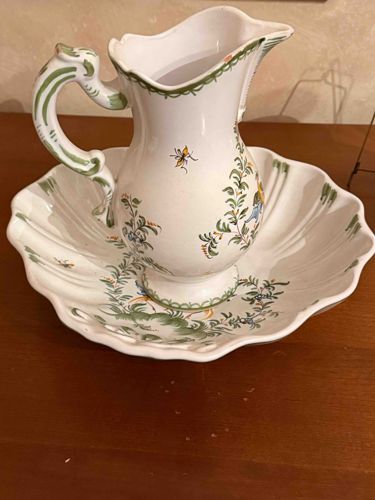
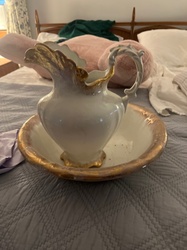
This is a two-piece faience set, consisting of a pitcher and a matching basin, likely used as a washstand or ewer and shallower set. The items are crafted from white-glazed earthenware, characteristic of traditional faience productions. Both pieces are adorned with hand-painted polychrome decorations featuring a vibrant floral and insect motif. The primary colors in the decoration are shades of green for the foliage, with accents of blue, yellow, and possibly a muted orange or brown for the flowers and small insects, such as the noticeable bee-like creature on the pitcher. The pitcher features an elegant, fluted or wavy rim and a decorative scrolled handle, also painted with green accents that outline its form. A delicate green scalloped or lattice pattern borders the rim of the pitcher. The basin is broadly shell-shaped or scallopped around its entire circumference, echoing the wavy rim of the pitcher, and is adorned with similar floral motifs spreading across its interior surface. The craftsmanship suggests a rustic yet refined aesthetic, typical of European faience from the 18th or 19th century. There are no visible chips, cracks, or repairs, indicating good preservation. Some minor crazing might be present in the glaze due to age, but it's not clearly discernible from the provided image. The overall condition appears to be excellent for its presumed age. The decorative style points towards a regional European faience, possibly French or Italian Majolica tradition, known for their elaborate hand-painted ceramics.
AI Appraisal Report
I have virtually examined this two-piece faience pitcher and basin set, showcasing a white-glazed earthenware body adorned with hand-painted polychrome floral and insect motifs. The pitcher features a fluted rim and a decorative scrolled handle, while the basin is broadly shell-shaped, mirroring the pitcher's aesthetics. The green, blue, yellow, and muted orange palette, coupled with the rustic yet refined craftsmanship, strongly suggests a European origin, likely 18th or 19th-century French or Italian Majolica tradition.
From the image, the condition appears excellent, with no visible chips, cracks, or repairs. Minor crazing, typical of age, may be present but is not clearly discernible. This level of preservation for an item of this presumed age is a significant value factor. The hand-painted decoration, featuring the charming insect details, adds to its appeal and desirability.
In terms of market conditions, European faience sets, particularly those with intricate hand-painted designs and good preservation, consistently attract collectors. Demand is steady for pieces that embody regional artistic traditions. Rarity is moderate; while faience ware was produced in volume, complete and undamaged sets with appealing decoration are less common. The overall aesthetic quality and apparent excellent condition drive its value.
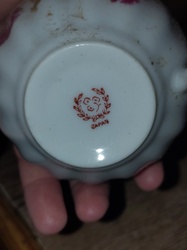
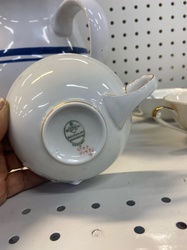
My appraisal is limited by the visual nature of this examination. Full authentication and a more precise valuation would benefit from an in-person inspection to verify the glaze quality, confirm the absence of subtle repairs or restorations, and accurately assess any crazing. Examination of the underside for maker's marks, if any exist, and a blacklight test for touch-ups, would be beneficial. Provenance documentation, detailing prior ownership and exhibition history, would also significantly enhance authenticity verification and value.