AI Appraisal Estimate

AI-generated estimates · not official valuations

From the user

What was submitted

Photo and notes provided by the user — not generated by AI

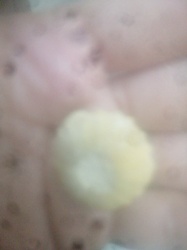
Submitted item photo
Submitted photo · June 23, 2026

User's notes

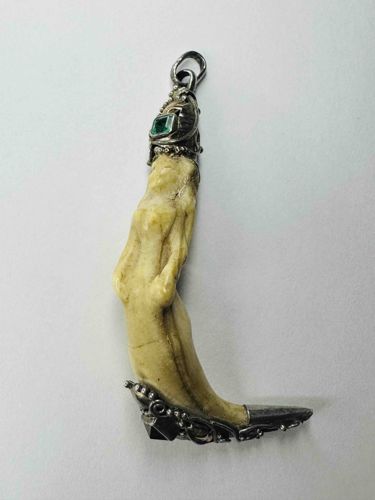
This piece was appraised & has a 4mm x 4mm natural table cut emerald at the top set in silver. The bottom is also silver with a 4mm x 4mm natural pyramid cut garnet. The appraisal says tusk & its 4” long

AI analysis below

AI appraisal

AI analysis & estimate

AI-Generated · Verify before acting

Everything below is generated by AI for informational purposes only. AI can make mistakes — the AI may misidentify items or misattribute them (artist, maker, brand, designer, origin, era). This is not an official valuation and should not be used for insurance, sale, tax, estate, legal, or lending purposes — or any decision requiring a certified appraisal. It is not an authoritative claim about any person, brand, or rights holder — do not share or rely on it as a factual statement about a third party. Always consult qualified professionals before making financial decisions.

Note

This analysis also relies on unverified notes provided by the user, which may be incomplete or inaccurate and could affect the result.

Read the full disclaimer

AI Identification

·Not independently authenticated·Verify before acting

Carved Tusk Pendant with Emerald and Garnet in Silver

Antique Jewelry / Curiosities

AI Estimated Value

·Not an official valuation·Verify before acting

$1,200 - $1,800

As of June 23, 2026

AI Item Analysis

·AI can make mistakes·Verify before acting
This is an intricate 4-inch long pendant featuring a natural organic tusk, carved with the stylized form of a reclining or curved figure. The tusk displays a creamy yellowish patina with visible longitudinal grain and natural age-related fissures, indicative of authentic organic material. The top of the pendant is mounted in a decorative silver cap featuring ornate granulation and scrollwork, housing a natural 4mm x 4mm table-cut emerald of a vibrant green hue. The metalwork is further embellished with a silver jump ring for suspension. The bottom of the tusk is encased in a secondary silver mount, also decorated with granular detail and filigree-style elements, which secures a natural 4mm x 4mm pyramid-cut garnet of a deep dark red tone. The silver components show a slight antiqued patina, suggesting significant age or an intentional oxidized finish to highlight the textural detail. The craftsmanship suggests a custom or artisan-made piece, likely reflecting an eclectic or Victorian-revival aesthetic. Condition appears good with some minor surface abrasions and natural drying lines in the tusk material, adding to its character without compromising structural integrity.
AI Appraisal Report

·AI can make mistakes·Verify before acting
Upon visual examination of this 4-inch carved tusk pendant, I find it to be a compelling example of eclectic artisan jewelry, likely 19th-century Victorian or early 20th-century revivalist. The tusk exhibits a characteristic Schreger line pattern or longitudinal grain consistent with authentic organic material. The juxtaposition of a 4mm table-cut emerald and a 4mm pyramid-cut garnet indicates a deliberate choice of historical gem cuts, which enhances the piece's curiosity value. The silver granulation and scrollwork are executed with high technical skill, suggesting a master artisan rather than mass production. The condition is commensurate with age; natural fissures and a warm patina are expected and do not detract from the market value. Market demand for unique 'Wunderkammer' or curiosity-style pieces is currently strong among collectors of Victorian jewelry and natural history specimens. Comparables for mixed-media organic carvings of this scale and gem quality typically range between $1,200 and $1,800 at specialized auctions. However, the value is significantly impacted by the legality and origin of the organic material. Without physical inspection, I cannot definitively distinguish between elephant ivory, walrus ivory, or bovine bone, which carries major legal implications for sale. A full authentication requires an FTIR spectroscopy test to determine material composition and provenance documentation to ensure compliance with CITES regulations. Furthermore, in-person testing is required to confirm the stones are natural and not synthetic or glass doublets. This valuation assumes the materials are authentic and legally saleable under current ivory ban exemptions.

Get your items appraised

Instant estimates of your treasures with AI-powered appraisals

Browse More Appraisals