AI Appraisal Estimate

AI-generated estimates · not official valuations

From the user

What was submitted

Photo and notes provided by the user — not generated by AI

Submitted item photo
Submitted photo · June 4, 2026

User's notes

No additional notes provided.

AI analysis below

AI appraisal

AI analysis & estimate

AI-Generated · Verify before acting

Everything below is generated by AI for informational purposes only. AI can make mistakes — the AI may misidentify items or misattribute them (artist, maker, brand, designer, origin, era). This is not an official valuation and should not be used for insurance, sale, tax, estate, legal, or lending purposes — or any decision requiring a certified appraisal. It is not an authoritative claim about any person, brand, or rights holder — do not share or rely on it as a factual statement about a third party. Always consult qualified professionals before making financial decisions.

Read the full disclaimer

AI Identification

·Not independently authenticated·Verify before acting

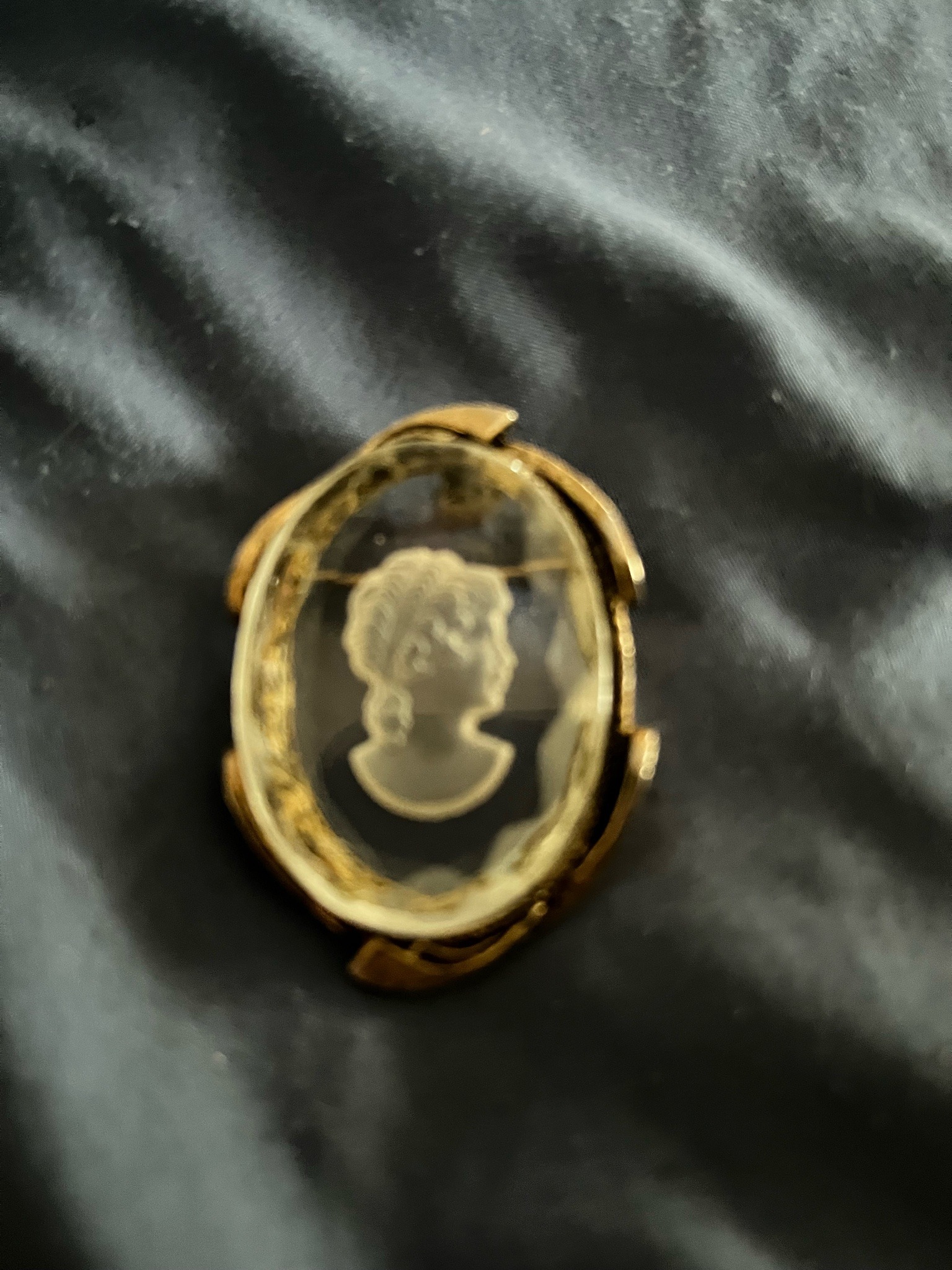
Oval intaglio brooch in the Victorian style

Jewelry

AI Estimated Value

·Not an official valuation·Verify before acting

$150 - $450

As of June 4, 2026

AI Item Analysis

·AI can make mistakes·Verify before acting
This item appears to be an oval brooch featuring a reverse-carved intaglio portrait of a female figure in profile. The central element is a transparent material, possibly glass or rock crystal, with the frosted silhouette of the figure visible from behind. This stylized portrait is set within a gold-toned metal frame that exhibits a mid-to-late 19th-century Victorian aesthetic. The frame is ornate, featuring scrolling or wrap-around accents that appear to secure the central cabochon. In terms of physical characteristics, the piece is small and portable, likely measuring approximately 3 to 5 centimeters in height. The clear element is thick with a polished surface, while the frosted etching appears consistent with traditional intaglio craftsmanship. There are no visible maker's marks, signatures, or metal purity stamps clearly legible in the image, so the material of the frame (whether gold-filled, plated, or solid) remains unverified without physical testing. Condition-wise, the image shows some evidence of surface wear and possible light oxidation on the metal components, which is consistent with an estate piece of some age. The overall design is stylistically consistent with mourning jewelry or sentimental cameos from the Victorian era, though a modern reproduction cannot be ruled out from the photograph alone. The identification remains a hypothesis pending in-person inspection of the construction and the clasp mechanism.
AI Appraisal Report

·AI can make mistakes·Verify before acting
Based on the image provided, I have evaluated this oval intaglio brooch featuring a reverse-carved female profile. The piece displays a Victorian aesthetic, though I cannot verify from a photo if it is a period antique or a high-quality later reproduction. The central element appears to be carved glass or rock crystal, and the metal frame displays scrolling details consistent with mid-to-late 19th-century styles. From what I can see, the craftsmanship of the intaglio is refined, yet the lack of visible hallmarks prevents me from determining if the setting is solid gold, gold-filled, or plated metal. The valuation of $150-$450 assumes the piece is a genuine Victorian-era estate item with a gold-filled or low-karat gold setting. If physical inspection reveals the frame to be high-karat gold (14k or 18k), the value would likely exceed this range. Conversely, if the item is found to be a modern costume jewelry reproduction using molded plastic or base metal, the market value would typically fall below $50. Demand for Victorian-style mourning and sentimental jewelry remains steady among collectors, though value is heavily dictated by material purity and the absence of damage to the central cabochon. To reach a more specific valuation, I would need to perform a physical inspection to test metal fineness, examine the clasp mechanism for era-appropriate construction, and view the piece under magnification to check for internal wear or chips. Professional testing of the stone's refractive index would also be required to differentiate between rock crystal and paste. As a photograph alone cannot establish age or material composition, this estimate remains a hypothesis.

Get your items appraised

Instant estimates of your treasures with AI-powered appraisals

Browse More Appraisals