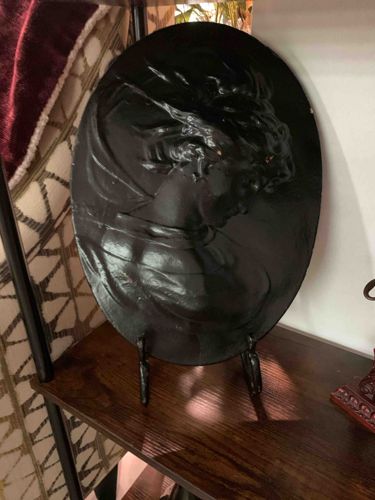
AI identification & appraisal estimate

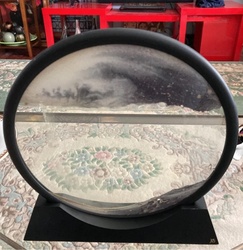
Oval Bas-Relief Plaque of a Woman's Profile, possibly Art Nouveau style

Submitted photo of Oval Bas-Relief Plaque of a Woman's Profile, possibly Art Nouveau style
Photo submitted by the user — not generated by AI

AI Estimated Value

Not an official valuation

$150-250

AI estimate as of September 6, 2025 · verify with a professional before acting

AI-Generated · Verify before acting

Everything on this page is generated by AI for informational purposes only. AI can make mistakes — the AI may misidentify items or misattribute them (artist, maker, brand, designer, origin, era). This is not an official valuation and should not be used for insurance, sale, tax, estate, legal, or lending purposes — or any decision requiring a certified appraisal. It is not an authoritative claim about any person, brand, or rights holder — do not share or rely on it as a factual statement about a third party. Always consult qualified professionals before making financial decisions.

Read the full disclaimer

AI Item Analysis

This item is an oval-shaped bas-relief plaque, predominantly black in color, depicting the profile of a woman. The plaque appears to be cast from a heavy material, possibly plaster, resin, bronze, or cast iron, given its dark, matte finish and the discernible raised sculptural elements. Its dimensions are not explicitly visible, but it appears to be substantial, likely around 12-18 inches in height based on its placement on a shelf. The woman's profile is oriented towards the right, featuring flowing hair that extends dynamically across the upper portion of the plaque, suggesting movement or a stylized windblown effect. Her facial features are somewhat obscured by the dark color and low lighting, but an aquiline nose and a defined jawline are visible. A drapery or garment is sculpted around her shoulders and upper torso, adding to the classical or allegorical feel of the piece. The overall impression is one of elegance and graceful lines, characteristic of Art Nouveau or similar aesthetic movements from the late 19th to early 20th century. There are no visible maker's marks or signatures from the provided image. The surface appears to have a uniform dark finish, possibly painted or patinated, with some minor scuffs or dust visible that contribute to its aged appearance. There are no obvious signs of significant damage like cracks or chips, indicating fair to good condition. The plaque is displayed on a separate, simple black metal stand, suggesting it is intended for tabletop display rather than wall mounting. The craftsmanship seems solid, with clear definition in the sculpted elements, indicating a mass-produced decorative item or possibly a smaller-scale artistic casting.
AI Appraisal Report

Based on my visual examination of the provided image, this oval bas-relief plaque depicting a woman's profile appears to be in fair to good condition. There are no obvious signs of significant damage like cracks or chips, only minor surface scuffs consistent with age and handling. Authenticity, based purely on imagery, suggests a late 19th to early 20th-century decorative piece, possibly Art Nouveau, or a later reproduction in that style. The uniform dark finish, likely painted or patinated over cast material (resin or plaster seem more probable than bronze or cast iron due to the apparent crispness of detail for its likely age), indicates it was intended as a decorative object rather than a fine art sculpture by a known artist, given the lack of visible maker's marks. From a market perspective, similar untraced plaques with this aesthetic appeal tend to fall into the decorative arts category rather than collectible fine art, unless a significant artist or foundry can be attributed. Demand for such pieces is moderate, driven by those seeking period-appropriate decor. The item is not exceptionally rare; countless similar mass-produced decorative sculptures were made during that era. Factors impacting value include the lack of a known artist, material (if it were verifiable bronze, value would increase), and its decorative rather than functional nature. Without a visible signature or foundry mark, establishing a precise origin or artist is impossible from images alone. An in-person examination would allow for tactile inspection of material, weight, and surface texture. Provenance documentation could significantly increase value if it linked the piece to a specific artist or important collection. Scientific testing, like material analysis, would confirm the composition, influencing valuation. Given these limitations, I assess its decorative market value.

Keep exploring

More decorative art object appraisals

Get your items appraised

Instant AI-powered appraisal estimates from a photo

Browse More Appraisals