AI identification & appraisal estimate

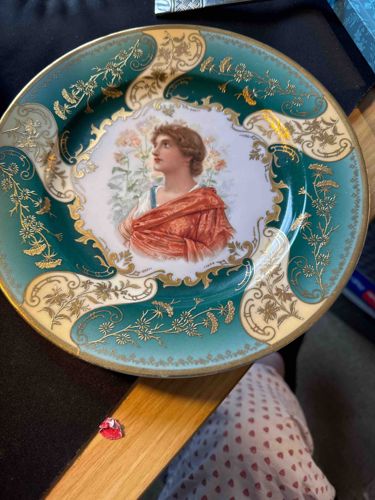
Royal Vienna Style Portrait Plate with Gilded Emerald Border

Submitted photo of Royal Vienna Style Portrait Plate with Gilded Emerald Border
Photo submitted by the user — not generated by AI

AI Estimated Value

Not an official valuation

$450 - $650

AI estimate as of January 9, 2026 · verify with a professional before acting

AI-Generated · Verify before acting

Everything on this page is generated by AI for informational purposes only. AI can make mistakes — the AI may misidentify items or misattribute them (artist, maker, brand, designer, origin, era). This is not an official valuation and should not be used for insurance, sale, tax, estate, legal, or lending purposes — or any decision requiring a certified appraisal. It is not an authoritative claim about any person, brand, or rights holder — do not share or rely on it as a factual statement about a third party. Always consult qualified professionals before making financial decisions.

Read the full disclaimer

AI Item Analysis

This is a decorative porcelain cabinet plate, approximately 9 to 10 inches in diameter, crafted in the 'Royal Vienna' style aesthetic common in the late 19th and early 20th centuries. The central well features a finely painted transfer-ware portrait of a young woman in classical or neo-romantic attire, draped in a vibrant rust-colored shawl against a background of soft floral sprays. The inner medallion is framed by a heavy, rococo-style gold scroll border. The wide rim is executed in a rich emerald green to teal gradient, intricately embellished with raised gold gilt. Notable pattern elements include alternating cream panels with gold floral sprigs and larger gilt botanical sprays on the green field. The craftsmanship is high, utilizing 'beaded' gilding techniques. In terms of condition, there appears to be minor loss to the gilding on the outer rim and a faint surface scratch in the lower-right area of the center portrait. There are visible markings beneath the portrait that likely identify the artist or subject, though a specific maker's mark on the reverse would be required for definitive manufacturer attribution. The style suggests a manufacturing date between 1890 and 1920, frequently produced by companies in Germany, Austria, or Bohemia for the export market.
AI Appraisal Report

I have virtually examined this Royal Vienna style cabinet plate. The piece displays characteristic high-Victorian/Edwardian luxury, featuring a central hand-finished transfer portrait and intricate raised 'beaded' gilding over an emerald ground. The presence of cream-colored floral panels suggests a Bohemian origin, likely produced by firms such as Schmidt & Co. or Oscar Schlegelmilch between 1895 and 1915. While the central portrait remains vibrant, I observed minor gilt loss on the outer serrated rim and a localized surface scratch on the portrait’s lower-right quadrant, which prevents this from reaching 'mint' valuation tiers. Markets for 'Royal Vienna' style porcelain remain stable but selective; collectors currently prioritize pieces with signed portraits (e.g., 'Wagner') and verified blue beehive marks. Without a physical inspection of the reverse, I cannot confirm if the mark is an authentic Imperial Vienna beehive (unlikely for this period) or a period-correct studio mark. Authentication from photographs is limited by the inability to feel the texture of the gilding or check for professional restorations under UV light. To finalize this appraisal, an in-person examination of the base markings and translucency is required to differentiate between high-end German porcelain and lower-tier decorative exports. Provenance of ownership would further solidify its historical context.

Keep exploring

More antique porcelain & ceramics appraisals

Get your items appraised

Instant AI-powered appraisal estimates from a photo

Browse More Appraisals