AI Appraisal Estimate

AI-generated estimates · not official valuations

From the user

What was submitted

Photo and notes provided by the user — not generated by AI

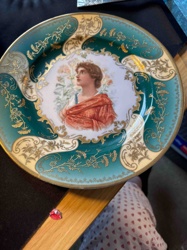
Submitted item photo
Submitted photo · June 10, 2026

User's notes

No additional notes provided.

AI analysis below

AI appraisal

AI analysis & estimate

AI-Generated · Verify before acting

Everything below is generated by AI for informational purposes only. AI can make mistakes — the AI may misidentify items or misattribute them (artist, maker, brand, designer, origin, era). This is not an official valuation and should not be used for insurance, sale, tax, estate, legal, or lending purposes — or any decision requiring a certified appraisal. It is not an authoritative claim about any person, brand, or rights holder — do not share or rely on it as a factual statement about a third party. Always consult qualified professionals before making financial decisions.

Read the full disclaimer

AI Identification

·Not independently authenticated·Verify before acting

Nippon Three-Footed Porcelain Bowl

Antique Porcelain & Ceramics

AI Estimated Value

·Not an official valuation·Verify before acting

$45.00 - $75.00

As of June 10, 2026

AI Item Analysis

·AI can make mistakes·Verify before acting
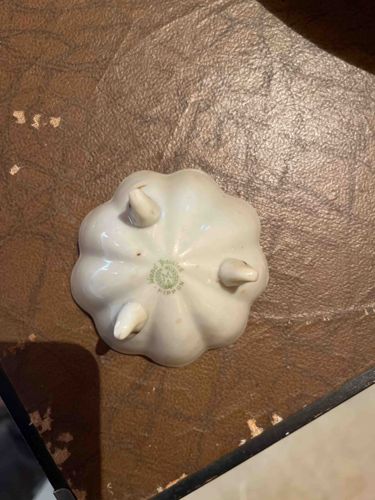
This item is a vintage porcelain footed bowl, identifiable by its lobed or scalloped 'pumpkin' shape and a distinctive tripod base consisting of three small, tapered porcelain feet. The piece is constructed from fine white porcelain with a glazed finish. Centered on the underside is a green Morimura Brothers backstamp, which features a 'M' inside a wreath surmounted by the words 'Hand Painted' and flanked by 'Nippon' at the bottom. This specific mark was used approximately between 1911 and 1921. The bowl exhibits a soft white body with evidence of light surface grime and minor brown spotting, suggesting a need for gentle cleaning. Many items of this era and maker featured elaborate hand-painted floral motifs or moriage (beaded) decoration on the interior or rim, though those details are obscured in this bottom-up view. The craftsmanship is characteristic of the export porcelain produced in Japan for the Western market during the early 20th century. Condition-wise, the feet show expected wear at the contact points, but no major chips, cracks, or structural repairs are visible from this angle. The use of 'Nippon' in the mark indicates it predates 1921, when US customs regulations began requiring 'Japan' instead of 'Nippon' on imports.
AI Appraisal Report

·AI can make mistakes·Verify before acting
I have examined the images of the Nippon three-footed porcelain bowl, featuring the green Morimura Brothers 'M-in-Wreath' backstamp. Authenticity appears consistent with the period of 1911–1921 based on the mark's typography and the characteristic porcelain body. The lobed 'pumpkin' form is a classic Noritake/Nippon profile, and the tripod feet show the expected unglazed wear consistent with a century of use. The condition is graded as 'Good' to 'Very Good.' While no structural cracks or chips are evident, the presence of brown spotting and surface grime suggests minor oxidation or environmental pollutants that require professional cleaning. The primary value driver for Nippon porcelain is the complexity of the interior hand-painting (moriage, gold tapestry, or floral motifs), which is not visible here. Without seeing the interior decoration, the valuation rests on the standard market performance for footed 'blanks' or moderately decorated export pieces. The market for Nippon remains stable but has softened from its peak in the late 1990s. Comparables for standard floral hand-painted bowls of this size and mark typically realize between $40 and $80 at auction. Rare patterns or heavy moriage could quintuple this value. Limitation of Appraisal: This assessment is based on visual photographic evidence only. A physical examination is required to verify the 'ring' of the porcelain (checking for hidden hairlines), the presence of any professional overpainting/restoration, and the quality of the interior enamel. Full authentication would benefit from tactile inspection of the glaze texture and provenance documentation regarding the item's history.

Get your items appraised

Instant estimates of your treasures with AI-powered appraisals

Browse More Appraisals