AI estimate as of October 1, 2025 · verify with a professional before acting
AI-Generated · Verify before acting
Everything on this page is generated by AI for informational purposes only. AI can make mistakes — the AI may misidentify items or misattribute them (artist, maker, brand, designer, origin, era). This is not an official valuation and should not be used for insurance, sale, tax, estate, legal, or lending purposes — or any decision requiring a certified appraisal. It is not an authoritative claim about any person, brand, or rights holder — do not share or rely on it as a factual statement about a third party. Always consult qualified professionals before making financial decisions.
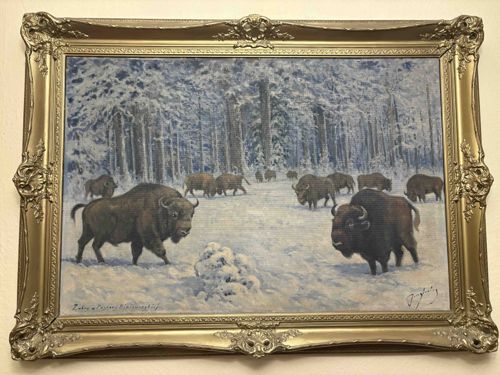
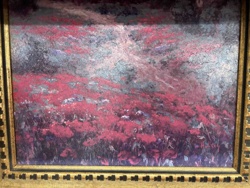
This item is a framed oil or acrylic painting depicting a herd of European bison, also known as Żubry, within a snow-covered forest landscape. The painting is rendered in a naturalistic style with visible brushstrokes, particularly noticeable in the snow and the textured coats of the bison. The color palette is dominated by cool blues and whites for the snowy environment and forest background, contrasting with the rich browns and darker tones of the bison. The foreground features two prominent bison, one walking towards the viewer from the left and another standing to the right, both exhibiting detailed fur and powerful physiques. A larger herd of bison is visible in the middle ground, traversing the snowy terrain, while the background shows a dense forest of snow-laden trees, creating a sense of depth. In the lower left, there is a distinct inscription that appears to read in Polish, 'Żubry w Puszczy Białowieskiej' (Bison in Białowieża Forest), suggesting the specific location depicted. A legible signature, possibly 'Zygmunt' or a similar Polish name, is present in the lower right corner. The painting is housed in an elaborately carved, ornate gold-colored frame, likely made of wood or a composite material with a gesso and gilding finish. The frame features floral and scroll motifs at the corners and along its inner and outer edges, indicative of a Rococo revival or late 19th/early 20th-century decorative style. The frame shows minor signs of wear consistent with age, such as small nicks or slight tarnishing, but appears to be in good overall condition. The overall presentation suggests a piece created with attention to detail and traditional artistic techniques, likely dating from the mid-20th century or slightly earlier based on its style and subject matter.
AI Appraisal Report
I have examined the provided image of the framed oil or acrylic painting depicting European Bison in a Winter Forest Scene. The painting appears to be in good overall condition, with a naturalistic style and visible brushstrokes. The vibrant depiction of the bison and the snowy landscape, along with the detailed fur and powerful physiques, contribute to its aesthetic appeal. The cool color palette effectively conveys the winter environment. The inscription 'Żubry w Puszczy Białowieskiej' suggests a specific and culturally significant location, which could enhance its appeal to collectors interested in Polish art or wildlife. The signature, possibly 'Zygmunt', would require further investigation to confirm the artist's identity and potential market value. The elaborately carved, ornate gold-colored frame, indicative of a Rococo revival or late 19th/early 20th-century decorative style, adds to the overall presentation and value, despite minor signs of wear consistent with age. This style and subject matter suggest a likely date from the mid-20th century or slightly earlier.
Market conditions for naturalistic wildlife art, particularly European scenes, are generally stable, with demand influenced by the identifiable artist, quality of execution, and subject appeal. Comparables would include other realist wildlife paintings from named but not necessarily highly celebrated artists. While the painting is attractive, without a confirmed prominent artist, it would fall into the decorative art category with added value for its aesthetic quality and thematic appeal. Demand might be higher among those with a connection to Polish culture or wildlife enthusiasm. The main factor significantly impacting value, beyond the inherent quality, would be the definitive identification of the artist. The rarity is moderate; similar wildlife paintings can be found, but this specific artist and depiction might be unique.
Limitations in authenticity verification from images alone are significant. While the inscription and potential signature are visible, definitive authentication of the artist and the specific location depicted would require in-person examination. This would allow for a closer inspection of brushwork, paint quality, and condition of both the canvas and frame. Provenance documentation, such as bills of sale or exhibition history, would be crucial for verifying the artist’s identity and the painting's history. Scientific testing, like pigment analysis, could help confirm the age and medium. Without these, the appraisal remains an estimation based on visual attributes and general market trends.