AI Appraisal Estimate

AI-generated estimates · not official valuations

From the user

What was submitted

Photo and notes provided by the user — not generated by AI

Submitted item photo
Submitted photo · June 25, 2026

User's notes

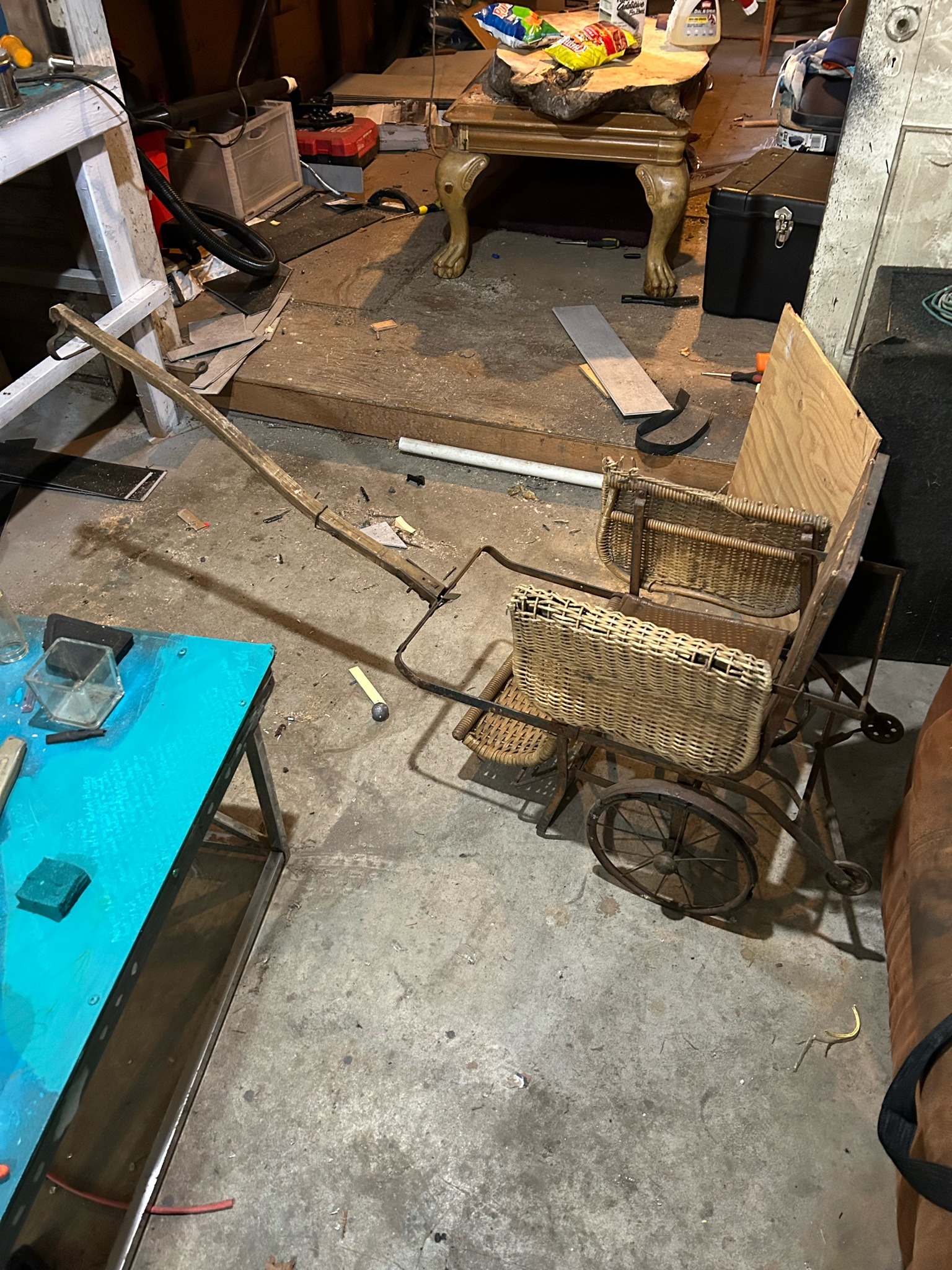
Child’s rickshaw antique

AI analysis below

AI appraisal

AI analysis & estimate

AI-Generated · Verify before acting

Everything below is generated by AI for informational purposes only. AI can make mistakes — the AI may misidentify items or misattribute them (artist, maker, brand, designer, origin, era). This is not an official valuation and should not be used for insurance, sale, tax, estate, legal, or lending purposes — or any decision requiring a certified appraisal. It is not an authoritative claim about any person, brand, or rights holder — do not share or rely on it as a factual statement about a third party. Always consult qualified professionals before making financial decisions.

Note

This analysis also relies on unverified notes provided by the user, which may be incomplete or inaccurate and could affect the result.

Read the full disclaimer

AI Identification

·Not independently authenticated·Verify before acting

Antique Wicker Child's Rickshaw or Carriage

Antique Furniture and Collectibles

AI Estimated Value

·Not an official valuation·Verify before acting

$150 - $250

As of June 25, 2026

AI Item Analysis

·AI can make mistakes·Verify before acting
This is an antique maneuverable child's transport vehicle, commonly referred to as a child's rickshaw or push-cart carriage, likely dating from the late 19th or early 20th century (Victorian to Edwardian era). The construction features a primary metal frame with significant surface oxidation and a dark brown patina indicative of age. It includes a seating area with tightly woven natural wicker sides and a small wicker footrest. A notable modification is the inclusion of a modern unfinished plywood board serving as a backrest, suggesting the original wicker or leather upholstery back is missing. The carriage is equipped with two large iron-spoked main wheels with remnants of solid rubber or leather tires, and two smaller trailing metal wheels for stability. A long wooden pull handle is attached via a metal yolk, secured with simple mechanical fasteners. The overall condition shows extensive wear, with visible fraying of the wicker weave, significant rust throughout the iron support structures, and the aforementioned non-period replacement backboard. Despite the wear, the structural integrity of the metalwork appears mostly intact, showcasing early industrial-age child mobility design and utilitarian craftsmanship.
AI Appraisal Report

·AI can make mistakes·Verify before acting
Based on my visual examination of this antique child's rickshaw, I have determined it dates to the late 19th century, likely between 1880 and 1900. While the primary metal chassis and spoked wheels exhibit the correct industrial-era forging techniques, the item's valuation is significantly hampered by its condition and loss of original material. The most detrimental factor is the missing original backrest, replaced by a non-period plywood board. The wicker elements show substantial fraying and loss of structural integrity, and the iron components suffer from heavy oxidation. In the current collectibles market, high-quality Victorian children's carriages are sought after primarily as decorative 'statement' pieces rather than functional items. Because this example requires extensive professional restoration—specifically in the weaving and backrest upholstery—it likely appeals only to a niche restoration enthusiast or as primitive garden decor. Modern collectors prioritize original upholstery and intact wicker patterns. While rare in design, the lack of a manufacturer's mark (such as Heywood-Wakefield) and the high cost of repair keep the market value modest. Please note that this appraisal is based solely on digital images. A physical inspection is required to determine if the rust has compromised the metal's structural safety and to examine the wheel hubs for original maker marks which could increase value. Full authentication would require provenance documentation or historical sales receipts to link the piece to a specific manufacturer or region.

Get your items appraised

Instant estimates of your treasures with AI-powered appraisals

Browse More Appraisals