AI estimate as of September 13, 2025 · verify with a professional before acting
AI-Generated · Verify before acting
Everything on this page is generated by AI for informational purposes only. AI can make mistakes — the AI may misidentify items or misattribute them (artist, maker, brand, designer, origin, era). This is not an official valuation and should not be used for insurance, sale, tax, estate, legal, or lending purposes — or any decision requiring a certified appraisal. It is not an authoritative claim about any person, brand, or rights holder — do not share or rely on it as a factual statement about a third party. Always consult qualified professionals before making financial decisions.
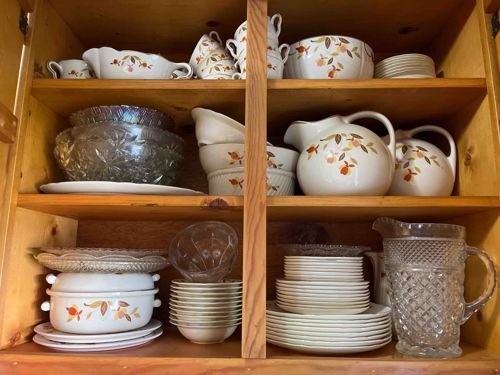
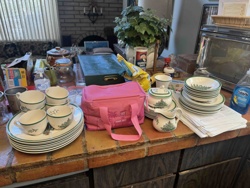
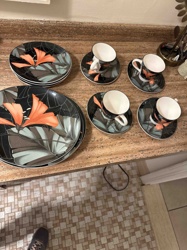
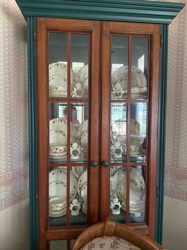
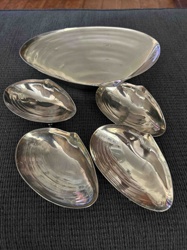
This collection features an assemblage of various dinnerware pieces and glassware, primarily comprised of ceramic items with a distinct autumnal leaf pattern and several glass bowls and pitchers. The ceramic dinnerware, including a gravy boat, bowls (some lidded), pitchers/milk jugs, and what appear to be teacups or small dessert bowls, is uniformly characterized by a creamy white or off-white glaze adorned with a repeating pattern of stylized leaves in shades of orange, yellow, and brown/green. This 'fall foliage' design suggests a mid-20th century aesthetic, likely 1950s-1970s. The ceramic pieces generally appear to be in good condition, with no immediately visible chips or cracks, although closer inspection would be required to confirm. The glassware includes several large, heavy cut-glass or pressed-glass bowls, one with an iridescent sheen suggesting carnival glass or similar finish, and a large clear glass pitcher with a distinct diamond-patterned texture. There are also stacks of plain white ceramic dinner plates and smaller bowls, contrasting with the decorated pieces but providing a more neutral foundation. The craftsmanship of the decorated ceramic ware points to mass production, common for dinnerware of its presumed era, yet the consistent pattern and color suggest a complete or nearly complete set of the decorated items. The cut-glass pieces show intricate patterns, typical of decorative pressed glass. No specific maker's marks are discernible from the images, which would be crucial for a definitive appraisal. The overall condition, based on visual assessment, seems good for vintage items, with no obvious major damage, though minor wear, scratches, or crazing typical of age and use may be present.
AI Appraisal Report
This collection, based on the provided images, presents an interesting mix of vintage dinnerware and glassware. The ceramic pieces, with their autumnal leaf pattern, strongly suggest a mid-20th century origin, likely 1950s-1970s. Visually, their condition appears good, with no obvious chips or cracks, which is positive for vintage items of this type. However, without physical examination, I cannot rule out minor crazing, glaze imperfections, or hairline cracks typical of age and use. The glassware, including cut-glass bowls and a diamond-patterned pitcher, also appears consistent with mid-century styles. The iridescent sheen on one bowl could indicate carnival glass, which often holds collectible appeal. The presence of plain white ceramic plates suggests these were likely used as a supplementary, more neutral base.
Authenticity is difficult to fully assess from images alone. Maker's marks, crucial for definitive identification and potential value enhancement, are not visible. In-person inspection would be essential to locate and identify these marks, assess the true condition of each piece (including any hidden damage), and determine manufacturing quality.
Market conditions for vintage dinnerware like this are generally moderate. While complete, well-preserved sets with desirable patterns can fetch decent prices, individual pieces or sets lacking strong brand identification are typically valued for their decorative appeal and usability. The 'fall foliage' pattern is charming but not exceedingly rare or highly sought after by discerning collectors, though it has good seasonal appeal. Demand is steady among those furnishing vintage-themed homes or seeking unique serving pieces. Comparables suggest similar unmarked sets generally fall into the mid-range vintage market. Given the assortment and presumed mass-produced nature, rarity is not a significant factor here. The good visual condition and cohesive theme of the decorated ceramics are positive value drivers.
To fully authenticate and precisely value this collection, an in-person examination is critical. This would allow for checking maker's marks, assessing the integrity of the glaze and glass, and conducting a thorough condition report on each individual piece. Provenance documentation, if available, would also be invaluable, though unlikely for mass-produced dinnerware.