AI identification & appraisal estimate

Roman Chariot Sculpture

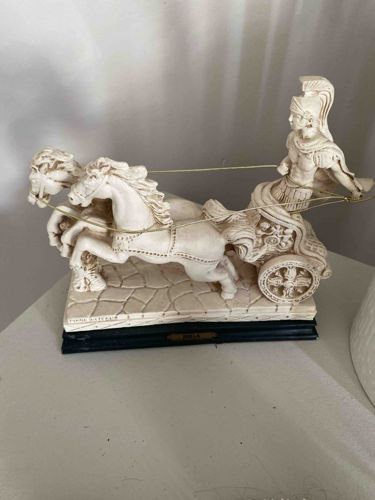
Submitted photo of Roman Chariot Sculpture
Photo submitted by the user — not generated by AI

User's notes

Has small triangle marking on top of base

These notes were written by the person who submitted this item. Appraiser.AI has not verified them, and the AI's identification and estimate may rely on them.

AI Estimated Value

Not an official valuation

$75-125

AI estimate as of June 12, 2025 · verify with a professional before acting

AI-Generated · Verify before acting

Everything on this page is generated by AI for informational purposes only. AI can make mistakes — the AI may misidentify items or misattribute them (artist, maker, brand, designer, origin, era). This is not an official valuation and should not be used for insurance, sale, tax, estate, legal, or lending purposes — or any decision requiring a certified appraisal. It is not an authoritative claim about any person, brand, or rights holder — do not share or rely on it as a factual statement about a third party. Always consult qualified professionals before making financial decisions.

This analysis also relies on unverified notes provided by the user, which may be incomplete or inaccurate and could affect the result.

Read the full disclaimer

AI Item Analysis

This item is a decorative sculpture depicting a Roman or Greek figure in a two-horse chariot. The sculpture is rendered in a pale, creamy material, likely resin or a similar composite, with a textured finish that mimics carved stone. The figure is depicted wearing a helmet with a crest, armor, and a flowing cloak, driving the two horses that are harnessed to the chariot. The chariot itself has intricate details on the wheels and sides. The entire scene is mounted on a rectangular base designed to resemble cobblestones or ancient paving, which sits atop a darker, likely wooden or resin, plinth. The plinth features a small, rectangular plaque on the front with illegible lettering. There appears to be a thin wire or cord connecting the figure's hands to the horses' mouths, simulating reins. The overall condition appears good, with no obvious signs of chips or breaks visible in the image. The style suggests a revivalist or neoclassical influence, common in decorative pieces from the 20th or 21st century. Specific details such as the small triangle marking mentioned are not clearly visible in the provided image. The craftsmanship appears moderately detailed, suitable for a mass-produced decorative item.
AI Appraisal Report

Based on my visual examination via image, this sculpture depicts a Roman or Greek figure in a chariot, rendered in a material mimicking stone. The condition appears good, with no visible damage. The style suggests it is a decorative piece from the 20th or 21st century, likely resin or a similar composite. The small triangle marking mentioned by the owner was not clearly identifiable in the image. The presence of a plaque with illegible lettering and the overall level of detail point towards a mass-produced item. Similar decorative chariot sculptures in composite materials typically sell in the range of $50 to $150 on the retail market. Market conditions for such decorative pieces are generally stable, with modest demand. They are not considered rare. Factors significantly impacting value would be the maker's mark (if identifiable), the actual material composition (if more than resin), and any historical significance, which for a decorative item is unlikely. It is crucial to note that I cannot definitively verify the material, age, or exact maker's mark without a physical inspection, including potential testing of materials. Provenance documentation would also be necessary for any claims of greater historical authenticity or rarity beyond a modern decorative piece.

Keep exploring

More sculpture appraisals

Get your items appraised

Instant AI-powered appraisal estimates from a photo

Browse More Appraisals