AI Appraisal Estimate

AI-generated estimates · not official valuations

From the user

What was submitted

Photo and notes provided by the user — not generated by AI

Submitted item photo
Submitted photo · June 22, 2026

User's notes

No additional notes provided.

AI analysis below

AI appraisal

AI analysis & estimate

AI-Generated · Verify before acting

Everything below is generated by AI for informational purposes only. AI can make mistakes — the AI may misidentify items or misattribute them (artist, maker, brand, designer, origin, era). This is not an official valuation and should not be used for insurance, sale, tax, estate, legal, or lending purposes — or any decision requiring a certified appraisal. It is not an authoritative claim about any person, brand, or rights holder — do not share or rely on it as a factual statement about a third party. Always consult qualified professionals before making financial decisions.

Read the full disclaimer

AI Identification

·Not independently authenticated·Verify before acting

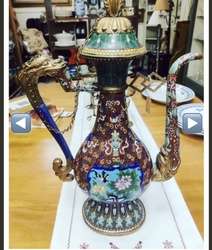
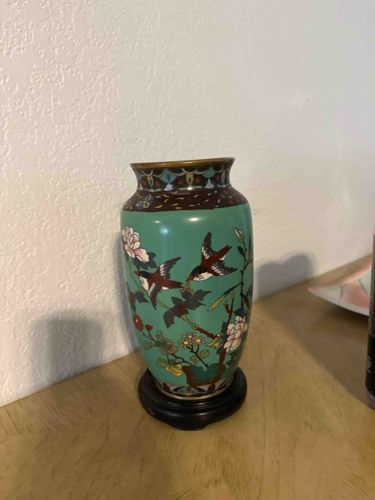
Chinese Cloisonné Enamel Bird and Flower Vase on Wooden Stand

Asian Art and Antiques - Chinese Decorative Arts

AI Estimated Value

·Not an official valuation·Verify before acting

$400 - $600

As of June 22, 2026

AI Item Analysis

·AI can make mistakes·Verify before acting
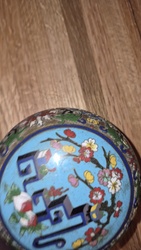
This is a decorative Chinese cloisonné enamel vase, likely dating to the mid-to-late 20th century. The vase features a classic ovoid or ginger-jar shape with a slightly flared rim, resting on a carved dark wood (potentially rosewood or stained cherry) pedestal base. The body is characterized by a vibrant turquoise-green enamel ground, meticulously decorated using the 'wired' technique where thin brass or copper wires (cloisons) form the outlines of the design. The central motif depicts two swallows in flight amidst a garden scene featuring blossoming peonies and smaller floral sprigs. The color palette includes shades of white, pink, brown, and yellow. The neck of the vase is adorned with a decorative geometric ruyi-head or floral band on a dark brown background, matched by a similar border at the foot. The rim and base ring appear to be of gilded brass or bronze. Regarding condition, the enamel surface shows a smooth, high-gloss finish typical of modern production, with no visible 'pitting' or significant cracking (crackle). The metal wires appear intact without major oxidation or lifting. The wooden base shows some minor scuffing consistent with age. This item is a fine example of traditional Chinese craftsmanship adapted for the decorative export market, showcasing high quality in the intricate placement of wirework and the harmonious graduation of enamel colors.
AI Appraisal Report

·AI can make mistakes·Verify before acting
I have virtually examined this Chinese cloisonné enamel vase, featuring a classic bird-and-flower motif on a turquoise ground. Based on the uniform high-gloss finish, the thinness of the cloisons, and the specific color palette of the floral registers, I have identified this as a high-quality export-market piece likely produced between 1950 and 1980. The craftsmanship is excellent, particularly the graduation of pinks in the peonies and the dynamic positioning of the swallows, which suggests a skilled workshop rather than mass factory production. The condition appears to be near-mint; I observed no 'bruising' or loss of enamel, though the wooden base shows minor oxidation. The market for mid-century Chinese export cloisonné remains stable, though it lacks the explosive growth seen in early Ming or Qing dynasty pieces. Current auction comparables for vases of this size and quality typically hammer in the mid-hundreds. Rarity is moderate; while the 'bird and flower' theme is common, the execution here is above average. I must note that this appraisal is based solely on digital imagery. A definitive authentication and valuation would require an in-person physical inspection to assess the weight of the bronze body, check for filled pitting, and examine the underside for any marks (such as Jingtai Lan marks or factory stamps). To confirm an earlier provenance, I would need documented sales receipts or a known collection history. Scientific testing, such as X-ray fluorescence (XRF) on the metal substrate, would be necessary to verify the exact alloy composition if an older origin were suspected.

Get your items appraised

Instant estimates of your treasures with AI-powered appraisals

Browse More Appraisals