These notes were written by the person who submitted this item. Appraiser.AI has not verified them, and the AI's identification and estimate may rely on them.
AI Estimated Value
Not an official valuation
$250-450
AI estimate as of September 10, 2025 · verify with a professional before acting
AI-Generated · Verify before acting
Everything on this page is generated by AI for informational purposes only. AI can make mistakes — the AI may misidentify items or misattribute them (artist, maker, brand, designer, origin, era). This is not an official valuation and should not be used for insurance, sale, tax, estate, legal, or lending purposes — or any decision requiring a certified appraisal. It is not an authoritative claim about any person, brand, or rights holder — do not share or rely on it as a factual statement about a third party. Always consult qualified professionals before making financial decisions.
This analysis also relies on unverified notes provided by the user, which may be incomplete or inaccurate and could affect the result.
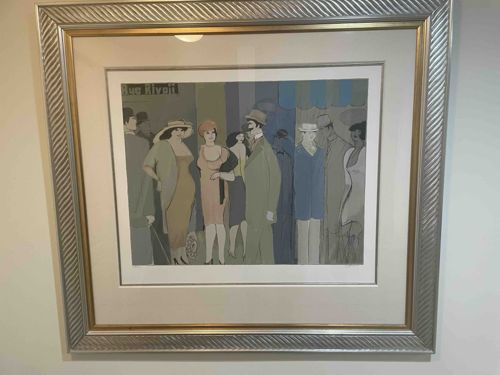
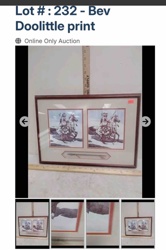
This item is a framed art print depicting a vibrant city street scene, likely 'Rue Rivoli' given the visible inscription in the upper left corner of the artwork. The print features a stylized representation of several figures, both male and female, dressed in what appears to be early to mid-20th-century attire. The color palette is somewhat muted yet distinct, utilizing shades of green, beige, pink, blue, and gray, which gives the scene a sophisticated and somewhat nostalgic feel. The figures are rendered with simple lines, emphasizing their silhouettes and clothing rather than detailed facial features. The overall composition suggests a bustling urban environment. The print is housed in a substantial frame, which appears to be made of wood or a composite material with a silver or pewter-toned finish. The frame features a decorative, ridged or reeded pattern along its inner and outer edges, with a smooth, slightly convex center section. A thin gold-colored fillet separates the artwork from the matting. The matting is a wide, off-white or light cream color, providing ample breathing room for the artwork. The print itself appears to be in good condition with no immediately visible damage like tears, creases, or significant discoloration. The frame also appears structurally sound with no major nicks or scratches. No specific maker's marks are visible on the print or frame other than the contextual information of it being signed by David Schneider, which indicates the artist's signature on the print itself, although it is not visible in the provided image. The style suggests a modern or contemporary print, possibly from the late 20th or early 21st century, often characterized by its narrative quality and stylized figuration. The quality of the framing and the apparent preservation of the print indicate a well-cared-for piece of art.
AI Appraisal Report
Based on my examination of the provided image and the owner's details, this 'Rue Rivoli City Scene Print' by David Schneider appears to be in very good condition. The print itself shows no immediate signs of damage such as tears, significant creases, or fading. The framing, with its substantial silver-toned profile and well-proportioned off-white matting, also appears structurally sound and well-preserved. The thin gold fillet adds a nice touch, enhancing the presentation. The style is consistent with Schneider's known work, characterized by its stylized figures and narrative urban scenes.
Regarding market conditions, David Schneider's prints, particularly signed editions, typically generate moderate interest among collectors of contemporary urban art. While not exceedingly rare, a well-preserved, framed piece like this holds consistent demand. Comparable sales of similar signed David Schneider prints of this size and subject matter, framed, generally fall within the $250-$450 range. The quality of the framing significantly adds to its value, making it a ready-to-display piece.
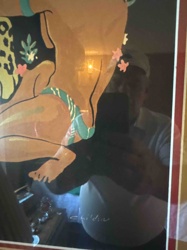
A key factor impacting value is the purported signature. If it is indeed a hand-signed original print (e.g., a limited edition serigraph or giclée), its value is higher than an unsigned, open-edition reproduction. However, a significant limitation here is the inability to verify the signature's authenticity from an image alone. For full authentication, I would need to physically inspect the print for the artist's signature, examine the printing technique (e.g., screen printing dots vs. digital printing), and ideally review any provenance documentation (e.g., certificates of authenticity, purchase receipts) from the owner. Without physical inspection, I cannot definitively confirm if it is an original hand-signed print or a reproduction, which would influence the upper range of the valuation. My current appraisal assumes a signed piece given the owner's statement.