AI Appraisal Estimate

AI-generated estimates · not official valuations

From the user

What was submitted

Photo and notes provided by the user — not generated by AI

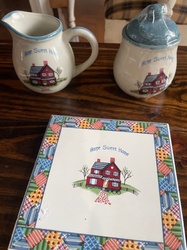
Submitted item photo
Submitted photo · June 14, 2026

User's notes

No additional notes provided.

AI analysis below

AI appraisal

AI analysis & estimate

AI-Generated · Verify before acting

Everything below is generated by AI for informational purposes only. AI can make mistakes — the AI may misidentify items or misattribute them (artist, maker, brand, designer, origin, era). This is not an official valuation and should not be used for insurance, sale, tax, estate, legal, or lending purposes — or any decision requiring a certified appraisal. It is not an authoritative claim about any person, brand, or rights holder — do not share or rely on it as a factual statement about a third party. Always consult qualified professionals before making financial decisions.

Read the full disclaimer

AI Identification

·Not independently authenticated·Verify before acting

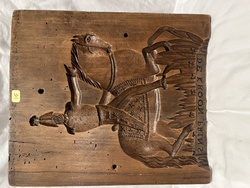
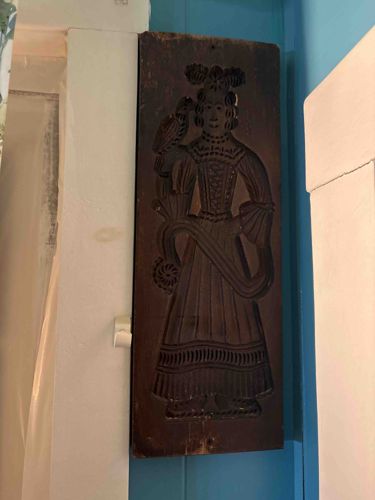
Dutch Speculaas Wooden Gingerbread Mold

Antique Kitchenware and Folk Art

AI Estimated Value

·Not an official valuation·Verify before acting

$450 - $650

As of June 14, 2026

AI Item Analysis

·AI can make mistakes·Verify before acting
This is a large, rectangular hand-carved wooden cookie mold, historically used for making Dutch Speculaas or German Springerle-style biscuits. The mold is crafted from a single solid plank of dense hardwood, likely pear or beech, which has developed a deep, dark brown patina from age and repeated contact with oils. The relief carving features a prominent female figure, possibly a 'lady of fashion' or a representation of a folk figure, dressed in traditional 17th or 18th-century attire. She is depicted with an elaborate headdress, a ruff collar, a laced bodice, and a tiered, patterned skirt. A bird, likely a parrot or falcon, is perched on her right shoulder, adding a layer of symbolic detail often found in European folk art. The carving exhibits high-quality craftsmanship with intricate gouge work and cross-hatching to create textures in the fabric. The condition shows visible signs of historical use, including minor chipping along the edges of the board, surface scratches, and a soft rounding of the internal details suggestive of many years of dough pressing. There is a small mounting hole near the top center, indicating it has been used as a decorative wall piece in recent history. Based on the style of dress and the wear of the wood, this piece likely dates from the early to mid-19th century.
AI Appraisal Report

·AI can make mistakes·Verify before acting
I have conducted a visual inspection of this hand-carved Dutch Speculaas mold. The workpiece exhibits characteristics consistent with 19th-century European folk art, specifically the use of dense fruitwood—likely pearwood—which was preferred for its fine grain and ability to hold intricate detail. The patina appears authentic, showing the deep oxidation and oil absorption typical of a utilitarian object that has undergone decades of use and cleaning. The iconography of the 'Fashionable Lady' with a perched bird suggests a high level of craftsmanship, moving beyond simple domestic tools into the realm of professional bakery equipment. The condition is 'good' for its age. While there is peripheral chipping and a soft rounding of the internal gouge marks due to long-term dough release, the integrity of the central figure remains sharp. The presence of a mounting hole slightly detracts from the value for purist collectors but confirms its secondary life as a decorative object. Market demand for Dutch kitchenalia remains steady, with similar carved planks showing a lady figure commanding higher prices than generic geometric or floral patterns. However, there are limitations to this digital appraisal. Without a physical inspection, I cannot confirm the absence of modern wood-staining agents or verify the specific density of the wood to rule out modern reproductions. A full authentication would require macro-photography of the tool marks to ensure they were made with traditional hand chisels rather than CNC machinery. Furthermore, provenance documentation or a chemical analysis of residual oils within the grain would be necessary to definitively confirm a pre-1850 origin. For insurance purposes, I recommend a formal in-person handle to assess the weight and scent of the wood.

Get your items appraised

Instant estimates of your treasures with AI-powered appraisals

Browse More Appraisals