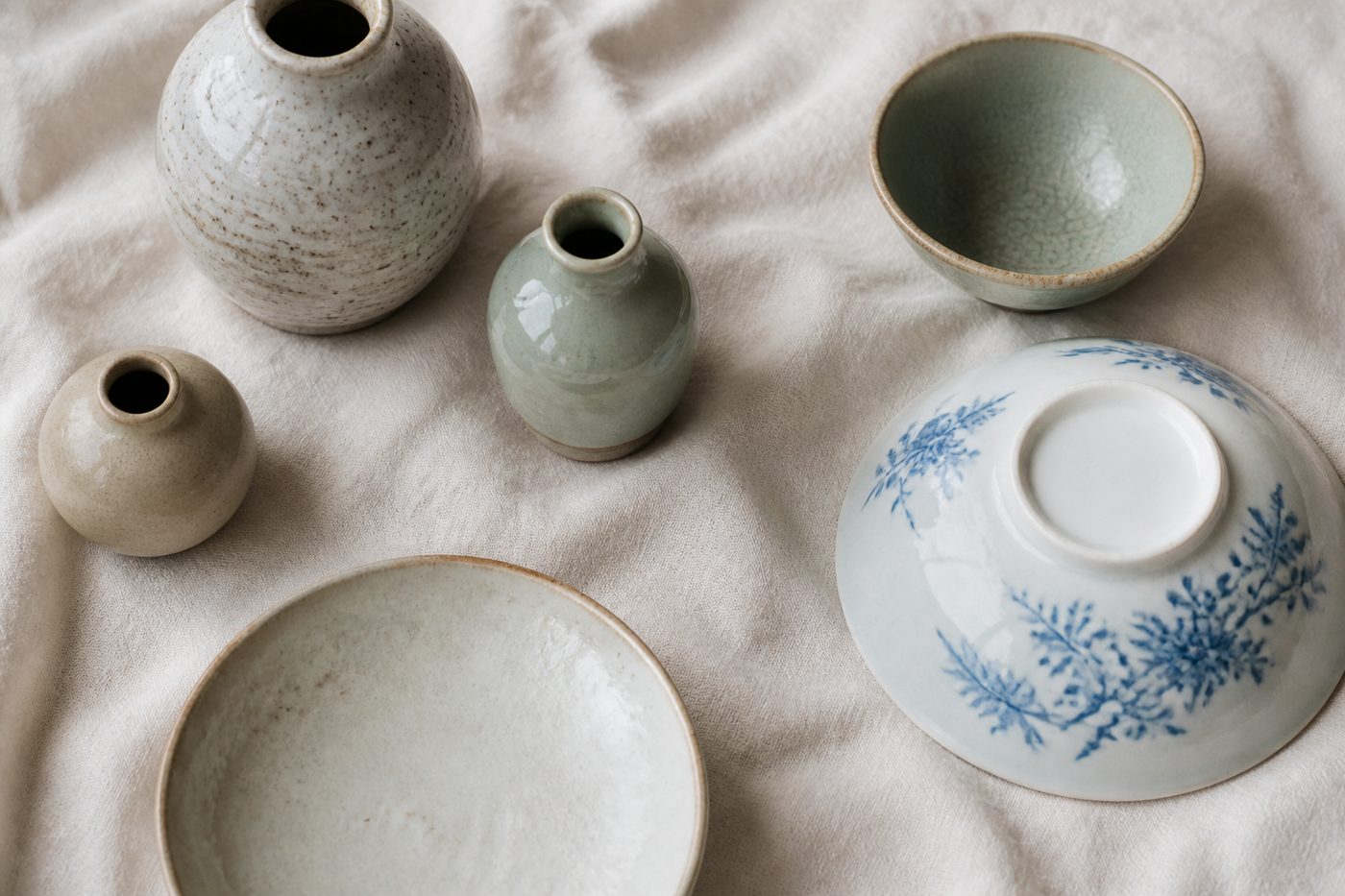
Pottery and ceramics form one of the broadest collecting categories there is, spanning everything from 18th-century European porcelain and Chinese export china to Victorian majolica, Dutch delftware, and signed studio pottery made within living memory. Because so many pieces look superficially alike — and because value can hinge on a maker's mark smaller than a fingernail — this is a category where owners often have no idea whether they are holding a common reproduction or something genuinely scarce.
What this category covers
This guide series covers fired clay wares of all kinds: hard-paste and soft-paste porcelain, bone china, earthenware, stoneware, faience, majolica, delftware, transferware, and modern studio ceramics. Dinner services, figurines, vases, tiles, and one-off art pottery all fall under the same umbrella, even though their markets behave quite differently.
Why people get ceramics appraised
Ceramics turn up constantly in estates, inheritances, and downsizing moves. Owners typically want to know whether a piece is worth insuring, worth selling, or simply worth keeping — and whether a mark on the base points to a notable maker.
What an AI estimate can and cannot tell you
Appraiser.AI gives an instant AI-powered estimate from your photos, which can help you recognize the type of ware, spot maker's marks worth researching, and get a general sense of the market range similar pieces occupy. What it cannot do is authenticate a piece, detect skilled restoration, or account for provenance documents. Treat the estimate as a starting point, not an official valuation — for insurance, estate, or sale decisions, always have the piece examined by a qualified professional appraiser.