AI Appraisal Estimate

AI-generated estimates · not official valuations

From the user

What was submitted

Photo and notes provided by the user — not generated by AI

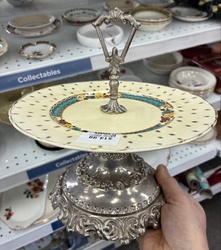
Submitted item photo
Submitted photo · June 15, 2026

User's notes

No additional notes provided.

AI analysis below

AI appraisal

AI analysis & estimate

AI-Generated · Verify before acting

Everything below is generated by AI for informational purposes only. AI can make mistakes — the AI may misidentify items or misattribute them (artist, maker, brand, designer, origin, era). This is not an official valuation and should not be used for insurance, sale, tax, estate, legal, or lending purposes — or any decision requiring a certified appraisal. It is not an authoritative claim about any person, brand, or rights holder — do not share or rely on it as a factual statement about a third party. Always consult qualified professionals before making financial decisions.

Read the full disclaimer

AI Identification

·Not independently authenticated·Verify before acting

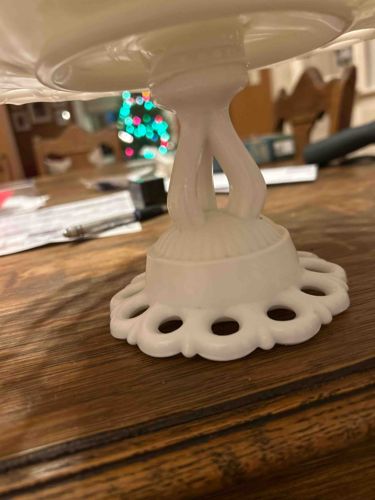
Milk Glass Cake Stand with Openwork Base

Serveware

AI Estimated Value

·Not an official valuation·Verify before acting

$60-90

As of June 15, 2026

AI Item Analysis

·AI can make mistakes·Verify before acting
This item is a milk glass cake stand, characterized by its opaque, milky white appearance. The stand features a circular platform for holding a cake, which is supported by a central pedestal. The pedestal itself has a distinctive design, appearing to be composed of two intertwined or 'crisscross' elements, giving it an elegant and somewhat classical form. The base of the stand is circular and wider than the pedestal, featuring an intricate openwork or 'lace-like' scalloped edge with numerous circular cut-outs. This openwork design adds a decorative flourish and suggests a period style that often favored ornate details. The overall construction appears to be solid and uniform in color, indicating it's likely a single molded piece of milk glass. The surface finish seems smooth and glossy, typical of milk glass. There are no visible chips, cracks, or significant wear evident in the provided image, suggesting it's in good condition. No specific maker's marks or signatures are discernible from this angle. Given the style, especially the openwork base and the use of milk glass, this piece likely dates from the late 19th to mid-20th century, a popular era for this type of glassware. The craftsmanship appears to be functional and decorative, suitable for display and serving.
AI Appraisal Report

·AI can make mistakes·Verify before acting
Upon visual examination of the provided image, this milk glass cake stand presents in what appears to be excellent condition. The opaque, milky white glass exhibits no visible chips, cracks, or significant wear. The intricate openwork base with its scalloped, lace-like edge and circular cut-outs is a classic design feature, suggesting an authentic period piece, likely from the late 19th to mid-20th century when milk glass was highly popular. The 'crisscross' pedestal design adds to its decorative appeal. Market conditions for vintage milk glass cake stands are generally stable, with demand driven largely by collectors and individuals seeking decorative or functional serving pieces with a nostalgic aesthetic. While milk glass itself is not exceptionally rare, a piece in this condition with such detailed openwork can command a fair price. Comparable sales of similar milk glass cake stands with elaborate bases typically range in the $50-$100 bracket, depending on condition, specific pattern, and manufacturer (if identifiable). The absence of visible maker's marks, which are common on some higher-end pieces, slightly impacts the top-end valuation. Factors impacting value positively include the excellent apparent condition and the detailed openwork. The primary limitation in authenticity verification from images alone is the inability to physically inspect for subtle flaws, repairs, or determine if it's a reproduction. An in-person examination would allow me to check for mold lines, specific textural qualities, weight, and any faint manufacturer's marks or pontil marks that might indicate its origin more precisely. Provenance documentation, such as original sales receipts or family history, would also further confirm its age and authenticity.

Get your items appraised

Instant estimates of your treasures with AI-powered appraisals

Browse More Appraisals