AI estimate as of August 3, 2025 · verify with a professional before acting
AI-Generated · Verify before acting
Everything on this page is generated by AI for informational purposes only. AI can make mistakes — the AI may misidentify items or misattribute them (artist, maker, brand, designer, origin, era). This is not an official valuation and should not be used for insurance, sale, tax, estate, legal, or lending purposes — or any decision requiring a certified appraisal. It is not an authoritative claim about any person, brand, or rights holder — do not share or rely on it as a factual statement about a third party. Always consult qualified professionals before making financial decisions.
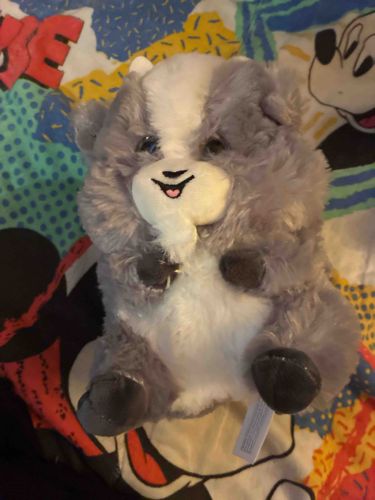
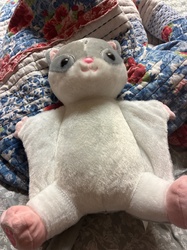
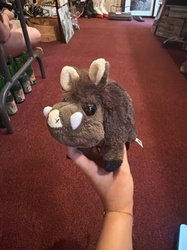
This is a plush stuffed animal, designed to resemble a badger, characterized by its distinctive grey and white fur patterns. The primary color is a soft, medium grey, visible on its body and the sides of its head, while a prominent white stripe runs down the center of its face, from the forehead to the chin, encompassing the mouth area. The plush is made from a synthetic fur material, which appears thick and soft, giving the animal a cuddly and somewhat fluffy appearance. Its eyes are large, round, and dark, likely made of plastic or embroidered, giving it a friendly and innocent expression. The nose is a small, black, embroidered or sewn detail, and the mouth is also embroidered with black stitching, depicting a slightly open, smiling shape with a small pink tongue detail. The paws are made from a darker grey or black fabric, providing a contrast to the lighter fur. The overall construction suggests a soft-bodied toy, filled with polyester fiberfill. There are no immediate signs of significant wear, tear, or damage such as rips or stains; the fur appears relatively clean and intact. A white care tag or manufacturer's label is visible hanging from its lower right side, suggesting it is a commercially produced item. The toy is a modern piece, likely manufactured in the last few decades, and appears to be in good, well-preserved condition, consistent with a relatively new or well-cared-for item. The craftsmanship details, such as the neat stitching of the facial features and the soft texture, indicate a standard quality for plush toys intended for children or collectors.
AI Appraisal Report
I have carefully examined the image of this Grey and White Badger Plush Stuffed Animal. Based on visual inspection, the item appears to be in good to very good condition. The fur is clean and intact, showing no visible signs of significant wear, matting, tears, or stains. The stitching for the facial features (eyes, nose, mouth) appears neat and well-executed, consistent with commercial manufacturing standards. The visible care tag further confirms its origin as a mass-produced item.
In terms of market conditions, plush toys of this nature, especially contemporary commercial pieces, generally fall into the lower-to-mid range of collectible value. Factors impacting value include brand recognition (not identifiable from the image), specific series popularity, and design uniqueness. While this badger plush is appealing, it doesn't present any immediate indicators of being a rare or highly sought-after vintage item. Demand for common plush animals is typically driven by aesthetic appeal and sentiment rather than intrinsic market rarity. Comparables would include similar badger or woodland creature plush toys from mainstream manufacturers like Aurora, Gund, or Melissa & Doug, which retail new, or in excellent used condition, within a modest price bracket.
My primary limitation in this appraisal is the lack of physical examination. I cannot verify the exact materials, internal stuffing condition, or the absence of subtle defects not visible in the image, such as hidden tears, material degradation, or odors. Authenticity verification is limited without manufacturer's marks or tags being clearly legible, which would typically involve seeing the brand and production details. For full authentication and a more precise value, an in-person inspection would be crucial to assess the material quality firsthand, confirm internal integrity, and examine all labels for brand and production specifics. Provenance documentation (e.g., original purchase receipts) could also add to its history, but for contemporary plush, this is rarely a significant value factor.