AI estimate as of August 8, 2025 · verify with a professional before acting
AI-Generated · Verify before acting
Everything on this page is generated by AI for informational purposes only. AI can make mistakes — the AI may misidentify items or misattribute them (artist, maker, brand, designer, origin, era). This is not an official valuation and should not be used for insurance, sale, tax, estate, legal, or lending purposes — or any decision requiring a certified appraisal. It is not an authoritative claim about any person, brand, or rights holder — do not share or rely on it as a factual statement about a third party. Always consult qualified professionals before making financial decisions.
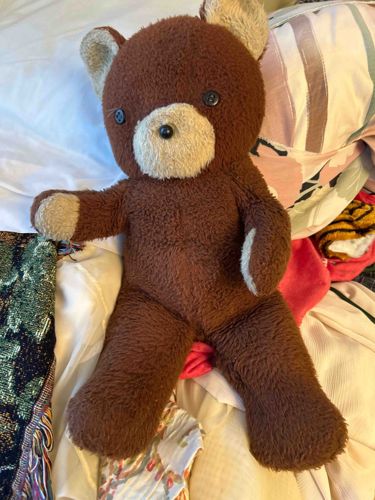
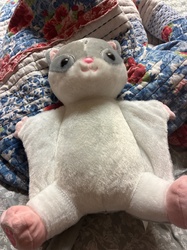
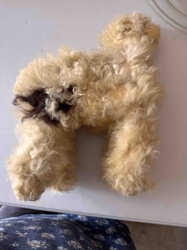
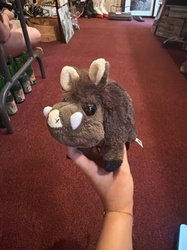
This is a vintage-style plush teddy bear, approximately 18-24 inches tall when seated, featuring a classic design. The bear is primarily dark brown, made from what appears to be a soft, short-pile plush or faux fur fabric that gives it a slightly shaggy but uniform texture. Its muzzle, the inner ears, and the pads on the paws are a lighter, contrasting beige color, likely made from a similar plush material. The eyes are dark, hard plastic buttons, round in shape, and appear to be securely fastened. The nose is a smaller, oval-shaped black plastic piece, prominently situated on the beige muzzle. The construction suggests a traditional stuffed animal, likely filled with a soft batting material, giving it a somewhat floppy but retainable shape. There are no readily visible seams or stitching issues, indicating a decent level of craftsmanship. The overall condition shows some signs of use consistent with age; the plush material appears slightly matted in areas, particularly around the face and extremities, and the color might be subtly faded from original. There are no obvious tears, rips, or major stains. It lacks any discernible maker's marks or tags in the visible areas, which could suggest it's a generic brand or an older production where tags might have been removed or deteriorated. The style points towards a mid to late 20th-century production, possibly 1970s or 1980s, given its simple, endearing expression and lack of modern embellishments. Its charm lies in its well-loved appearance and traditional teddy bear aesthetic.
AI Appraisal Report
Upon visual examination of the provided image, I assess this vintage-style brown plush teddy bear. Its condition appears consistent with a well-loved item of its age, showing minor matting of the plush, particularly around the face and extremities, and potential subtle fading of color. However, there are no visible tears, rips, or prominent stains, indicating decent preservation. Authenticity, based solely on the image, points to a traditional stuffed animal, likely from the mid to late 20th century (1970s-1980s), given its classic design and lack of modern features.
Market conditions for generic vintage plush toys like this are generally moderate. While there's a steady demand for nostalgic items, the absence of discernible maker's marks or tags significantly limits its value compared to branded or artist-made bears. Comparables in similar condition, without clear provenance or brand recognition, typically fetch lower prices. Rarity is not a significant factor here; these types of bears were mass-produced. The primary value drivers are its charming, well-loved aesthetic and its appeal as a decorative or nostalgic item, rather than its collectible scarcity.
A significant limitation in this appraisal is the lack of physical examination. Without handling the bear, I cannot definitively confirm the exact plush material, filler type, or internal construction, which could impact its perceived quality and durability. Furthermore, the absence of maker’s tags from the image makes full authentication of its origin impossible. An in-person examination would allow for precise material assessment, discovery of hidden tags or identifying marks, and a thorough check for any structural issues. Provenance documentation, if available, such as original purchase receipts or family history, would greatly enhance its authenticity and potential value by linking it to a specific manufacturer or unique story.