AI Appraisal Estimate

AI-generated estimates · not official valuations

From the user

What was submitted

Photo and notes provided by the user — not generated by AI

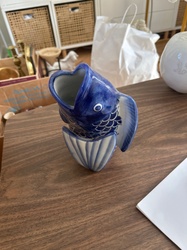
Submitted item photo
Submitted photo · June 18, 2026

User's notes

No additional notes provided.

AI analysis below

AI appraisal

AI analysis & estimate

AI-Generated · Verify before acting

Everything below is generated by AI for informational purposes only. AI can make mistakes — the AI may misidentify items or misattribute them (artist, maker, brand, designer, origin, era). This is not an official valuation and should not be used for insurance, sale, tax, estate, legal, or lending purposes — or any decision requiring a certified appraisal. It is not an authoritative claim about any person, brand, or rights holder — do not share or rely on it as a factual statement about a third party. Always consult qualified professionals before making financial decisions.

Read the full disclaimer

AI Identification

·Not independently authenticated·Verify before acting

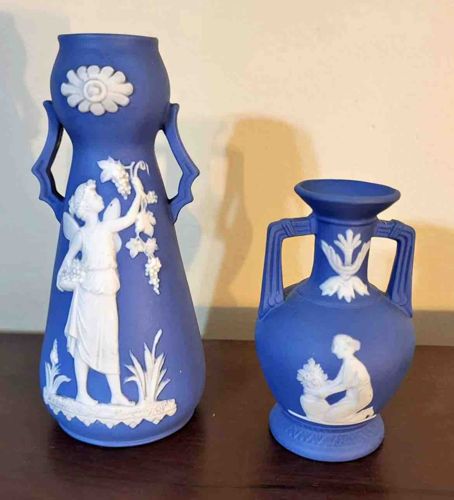
Pair of Wedgwood Cobalt Blue Jasperware Vases

Ceramics and Decorative Arts

AI Estimated Value

·Not an official valuation·Verify before acting

$250 - $400

As of June 18, 2026

AI Item Analysis

·AI can make mistakes·Verify before acting
This pair of decorative vases is crafted in the iconic Jasperware style, most famously produced by the English pottery company Wedgwood. The set consists of two distinct shapes featuring a deep cobalt blue (or 'royal blue') matte-finish stoneware body. The larger vase on the left features a tapered oviform body with two geometric, angular handles and is decorated with a large white bas-relief cameo of a neoclassical female figure, possibly a grape harvester or Bacchante, standing amidst foliage and grapevines. Above this figure is a large white floral rosette. The smaller vase on the right has a bulbous body on a pedestal foot with similar angular handles, decorated with a kneeling female figure tending to flowers. Both items exhibit the characteristic unglazed, vitrified stoneware texture known as 'biscuit' finish. The application of the white relief motifs, known as sprigging, appears crisp, though there may be minor firing specks or slight surface dirt commensurate with age. There are no visible chips or major fractures in the image, though the matte surface is prone to scuffing and fingerprints. While maker's marks are likely located on the underside of the base (standard for Wedgwood), the style and quality suggest a production date from the mid-20th century. The handles reflect a simplified neoclassical influence typical of later Jasperware iterations.
AI Appraisal Report

·AI can make mistakes·Verify before acting
I have conducted a visual examination of this pair of Wedgwood cobalt blue Jasperware vases. The deep 'Royal Blue' stoneware exhibits the characteristic matte, vitrified finish. The sprigging—featuring neoclassical cameos and floral rosettes—appears crisp and well-applied, suggesting high-quality mid-20th-century production. The angular handles indicate a later neoclassical revival style. Based on the images, the items appear in good condition with no visible chips or hairlines, though minor surface scuffs and firing specks are present. Market demand for mid-century Wedgwood remains steady, though values have softened compared to 18th and 19th-century 'Solid Jasper' examples. Recent auction comparables for similar paired vessels in this specific cobalt hue range from $100 to $200 per piece depending on size. The disparity in shapes—a tapered oviform versus a bulbous pedestal vase—suggests these may be a 'composed' pair rather than a matching set, which slightly limits the premium usually associated with identical garnitures. Factors impacting value include the popularity of the deep cobalt color versus lighter 'Wedgwood Blue' and the integrity of the white relief. Without physical inspection, I cannot verify the specific impressed marks (e.g., 'MADE IN ENGLAND' vs. 'ENGLAND') which distinguish early 20th-century pieces from later versions. Full authentication requires an in-person examination to check for internal stress cracks, 'marriage' of parts, and tactile verification of the stoneware's grain. Documentation of original purchase or family provenance would further solidify this valuation.

Get your items appraised

Instant estimates of your treasures with AI-powered appraisals

Browse More Appraisals