AI Appraisal Estimate

AI-generated estimates · not official valuations

From the user

What was submitted

Photo and notes provided by the user — not generated by AI

Submitted item photo
Submitted photo · July 21, 2026

User's notes

No additional notes provided.

AI analysis below

AI appraisal

AI analysis & estimate

AI-Generated · Verify before acting

Everything below is generated by AI for informational purposes only. AI can make mistakes — the AI may misidentify items or misattribute them (artist, maker, brand, designer, origin, era). This is not an official valuation and should not be used for insurance, sale, tax, estate, legal, or lending purposes — or any decision requiring a certified appraisal. It is not an authoritative claim about any person, brand, or rights holder — do not share or rely on it as a factual statement about a third party. Always consult qualified professionals before making financial decisions.

Read the full disclaimer

AI Identification

·Not independently authenticated·Verify before acting

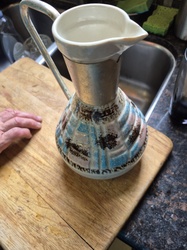
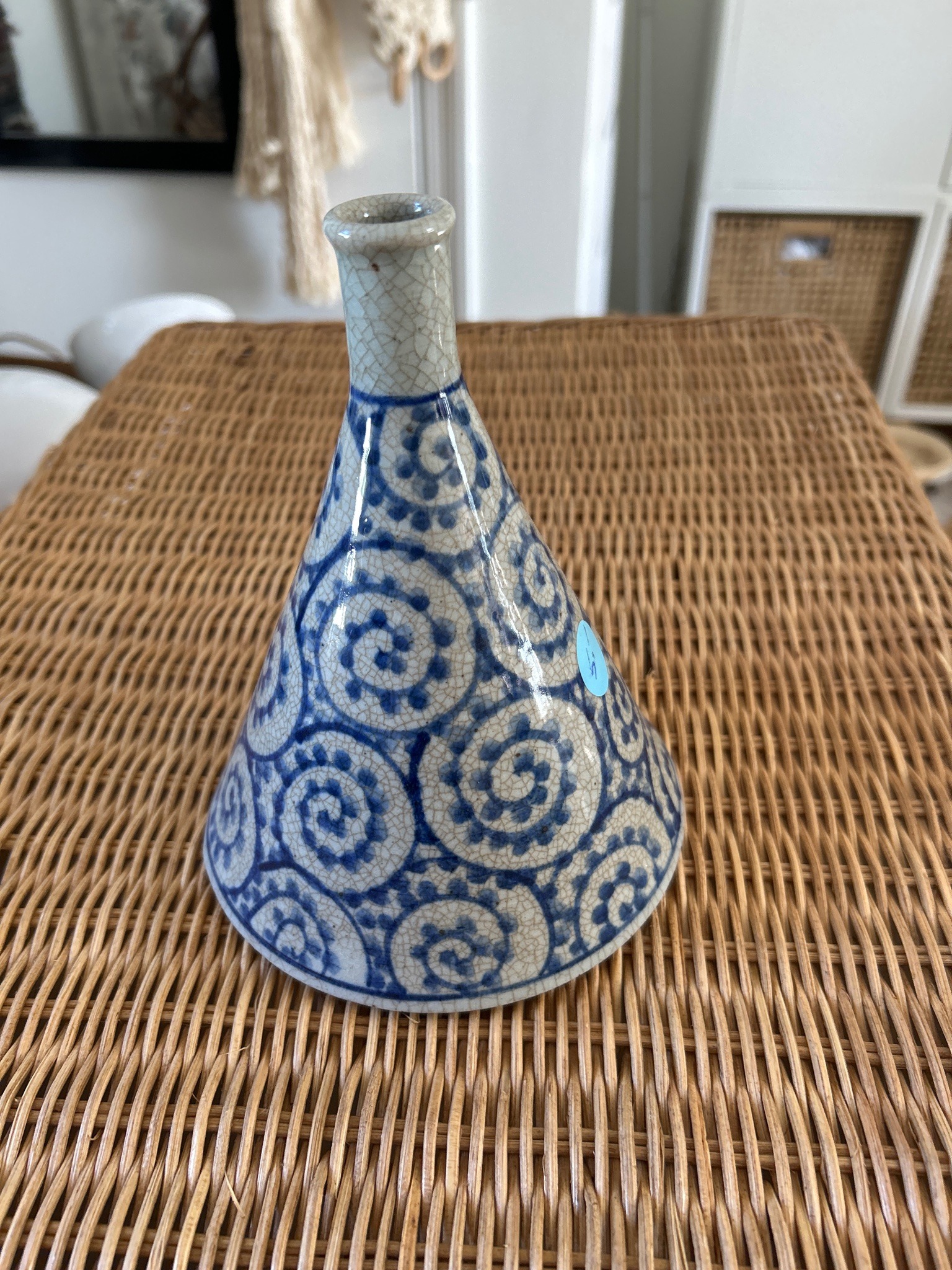
Conical ceramic vase in the style of Japanese Seto or Nabeshima ware

Ceramics and Decorative Arts

AI Estimated Value

·Not an official valuation·Verify before acting

$400 - $800

As of July 21, 2026

AI Item Analysis

·AI can make mistakes·Verify before acting
This ceramic vase features a distinctive conical or 'tent-like' body narrowing into a slender, cylindrical neck with a slightly flared rim. The exterior is decorated with an underglaze blue octopus-vine (tako-karakusa) scroll pattern, which is stylistically consistent with Edo or Meiji period Japanese ceramics, particularly those from the Seto or Nabeshima traditions. The glaze exhibits a prominent fine-line crackle (crazing) across the entire surface, which may be intentional or a result of natural aging. The color palette consists of a cream-toned or off-white ground with cobalt blue decoration. Physically, the piece appears to be made of stoneware or porcelain, though the base is not visible to confirm the clay body. There is a small circular blue sticker on the side, possibly from a gallery or estate sale, but no maker's marks or signatures are visible in the provided view. The craftsmanship shows a repetitive, hand-painted aesthetic consistent with late 19th or early 20th-century production styles. Condition-wise, the glaze remains glossy, though there is a visible dark speck near the rim that could be a firing flaw or a minor nick. Due to the absence of a visible hallmark or signature, this attribution is based entirely on stylistic motifs and form; an in-person inspection is required to determine the exact origin and age.
AI Appraisal Report

·AI can make mistakes·Verify before acting
Based on my examination of the image provided, this conical ceramic vase exhibits characteristics consistent with Japanese Seto or Nabeshima ware from the late 19th to early 20th century. My valuation of $400 to $800 is a hypothesis based on the assumption that the item is a period-accurate piece of high-quality Japanese porcelain or stoneware featuring the 'tako-karakusa' (octopus-vine) motif. I can see a well-executed underglaze blue scroll pattern and a fine-line crackle glaze, both indicative of Meiji-era production styles. However, without a physical inspection of the base and clay body, I cannot verify the exact origin or age. The presence of a possible collection sticker suggests some history, but I have no provenance to review. Because I am evaluating this from a photograph, I must treat the attribution as unconfirmed; should the piece be identified as a modern reproduction or 'in the style of' rather than a period piece, its market value would likely decrease to $50 - $150. The current market for Meiji-period decorative arts remains stable, with demand driven by the quality of the hand-painted decoration and the uniqueness of the 'tent-like' form. To increase confidence in this estimate, an in-person examination by a specialist is necessary to check for a hidden signature, evaluate the foot rim for wear, and confirm the density of the ceramic body. Factors such as firing flaws or the visible dark speck near the rim have been factored into this range, but any undocumented repairs would further negatively impact the value estimate provided here. This value represents what comparable items might achieve in an estate or gallery setting, assuming the attribution is accurate despite the lack of a visible hallmark in the photo.

Related Tags

Explore similar items and categories

Get your items appraised

Instant estimates of your treasures with AI-powered appraisals

Browse More Appraisals