AI estimate as of August 11, 2025 · verify with a professional before acting
AI-Generated · Verify before acting
Everything on this page is generated by AI for informational purposes only. AI can make mistakes — the AI may misidentify items or misattribute them (artist, maker, brand, designer, origin, era). This is not an official valuation and should not be used for insurance, sale, tax, estate, legal, or lending purposes — or any decision requiring a certified appraisal. It is not an authoritative claim about any person, brand, or rights holder — do not share or rely on it as a factual statement about a third party. Always consult qualified professionals before making financial decisions.
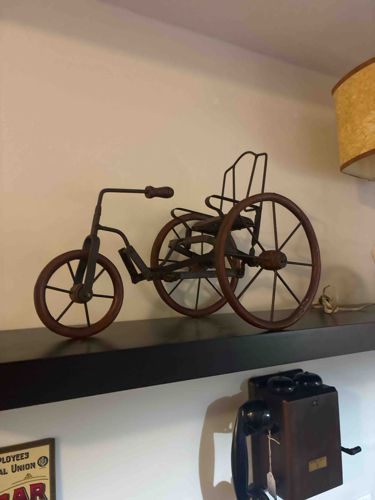
This item is a decorative miniature model of a vintage tricycle or possibly a pedicab/rickshaw. It appears to be constructed primarily of metal, likely wrought iron or a similar dark-colored alloy, with wooden accents for the wheel rims and possibly the handlebar grips. The metal components show a dark, almost black or heavily patinated dark brown finish, suggesting age or an intentional antique look. The wooden elements have a reddish-brown hue, indicative of a natural wood finish, possibly stained or aged. It features three wheels with visible spokes – one smaller wheel at the front and two larger, equally sized wheels at the rear. The design includes a seat with a distinct backrest, characteristic of early tricycles or a two-person pedicab, hinting at a nostalgic style. There are pedals visible on either side of the front fork. The construction seems robust, indicating good craftsmanship, though the small scale suggests it's purely ornamental rather than functional. The entire piece exhibits a rustic, antique aesthetic. There are no obvious signs of significant damage or repairs, but the overall patina and slightly dulled finish on both metal and wood suggest natural aging. No specific maker's marks or signatures are discernible from the image. Its style suggests it might be a reproduction of an late 19th or early 20th-century vehicle, or a decorative piece made in that style.
AI Appraisal Report
Based on my visual examination of the provided image, this Vintage-Style Decorative Tricycle/Pedicab Model presents as a charming ornamental piece. The construction appears to be metal, likely wrought iron, with wooden accents, exhibiting a deliberate antique finish that suggests either aging or an intentional rustic aesthetic. The overall condition seems good, with no overt signs of significant damage or repairs, just a natural patina commensurate with age or design intent.
From a market perspective, decorative miniatures like this, especially those evoking vintage transportation, tend to have a stable but not exceptionally high demand. They appeal to collectors of whimsical decorative arts, vintage enthusiasts, or those seeking unique accent pieces for home décor. This particular item's style, reminiscent of late 19th or early 20th-century vehicles, enhances its appeal. Comparables in the market typically include similar metal model vehicles, ranging from bicycles and tricycles to cars and planes. The lack of discernible maker's marks or signatures limits the potential for higher value, as these details often denote a known manufacturer or artisan which can significantly increase an item's desirability and price among dedicated collectors. Rarity is difficult to assess without provenance, but such decorative items are not generally unique, though each may have individualistic charm.
A significant limitation of this appraisal is the reliance solely on images. While the visual details are clear, I cannot ascertain authenticity beyond a visual assessment. An in-person examination would allow me to verify the materials (e.g., confirm true wrought iron versus a painted base metal), assess the quality of construction and joinery more closely, and detect any subtle repairs or alterations. Provenance documentation could reveal its origin, maker, and history, which would greatly assist in authentication and valuation. Scientific testing would be needed to definitively determine material composition and age, especially if there were suspicions about its true vintage versus a modern reproduction. Without these, I must value it as a well-made decorative reproduction.